
Rock Tent Pegs for Hard Stony Ground UK: The Xtremeauto Pegs Are Two Products, and Only One Is Heavy Duty
We earn commission from qualifying Amazon purchases. It costs you nothing and does not affect what we recommend.
The steel drives into a baked, stony pitch better than most pegs at this money. It is the cheerful orange plastic on top that decides whether you are still smiling on Monday morning when it is time to pack up.
- One Peg, Two Very Different Products
- How These Rock Tent Pegs Cope With Hard, Stony Ground
- The Six Who Bent Them, and Where They Were Standing
- The Orange Plastic Is the Real Weak Point
- Why the Head Breaks, and How to Keep Yours Intact
- Awnings, Gazebos and a Garden Arch: Where a Lot of the Five Stars Come From
- The Case, the Count and the Rest of the Small Print
- The Verdict: Should These Go In Your Kit for a Stony Pitch?
"WHY don,t they make hard ground pegs all steel ?" A buyer typed that into an Amazon review box after pulling their new pegs out of soft clay soil with a tent peg puller and watching four of the plastic heads break off. It is, as it turns out, the single most useful question anyone has asked about the Xtremeauto Heavy Duty Tent Pegs.
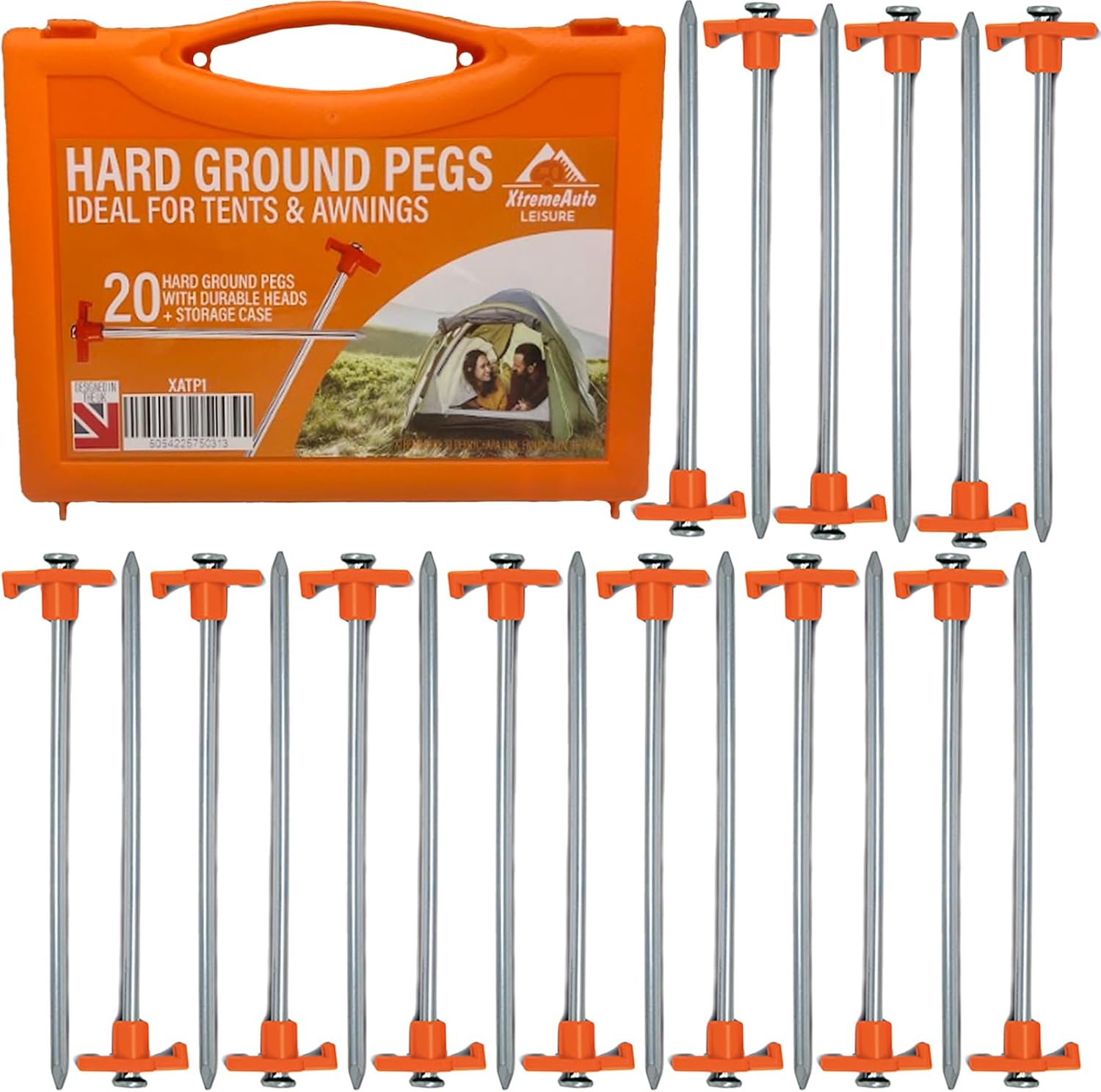
These are sold as rock pegs. The case literally says HARD GROUND PEGS across the front. And if your question is whether a long galvanised steel pin will bite into a baked August pitch, a stony field or a gravel hardstanding, the answer from owners is a fairly emphatic yes. That is not where these let people down.
They let people down on the way back out. And the part that gives up is not the steel at all. We read the 92 most-recent reviews on the listing: 16 of them describe the orange plastic head snapping, splitting or shattering. Six describe bent steel. The weak point on a peg marketed for rock is the bit that never touches the rock.
One Peg, Two Very Different Products
Pick one of these up and you are holding two things that were clearly built to different standards.
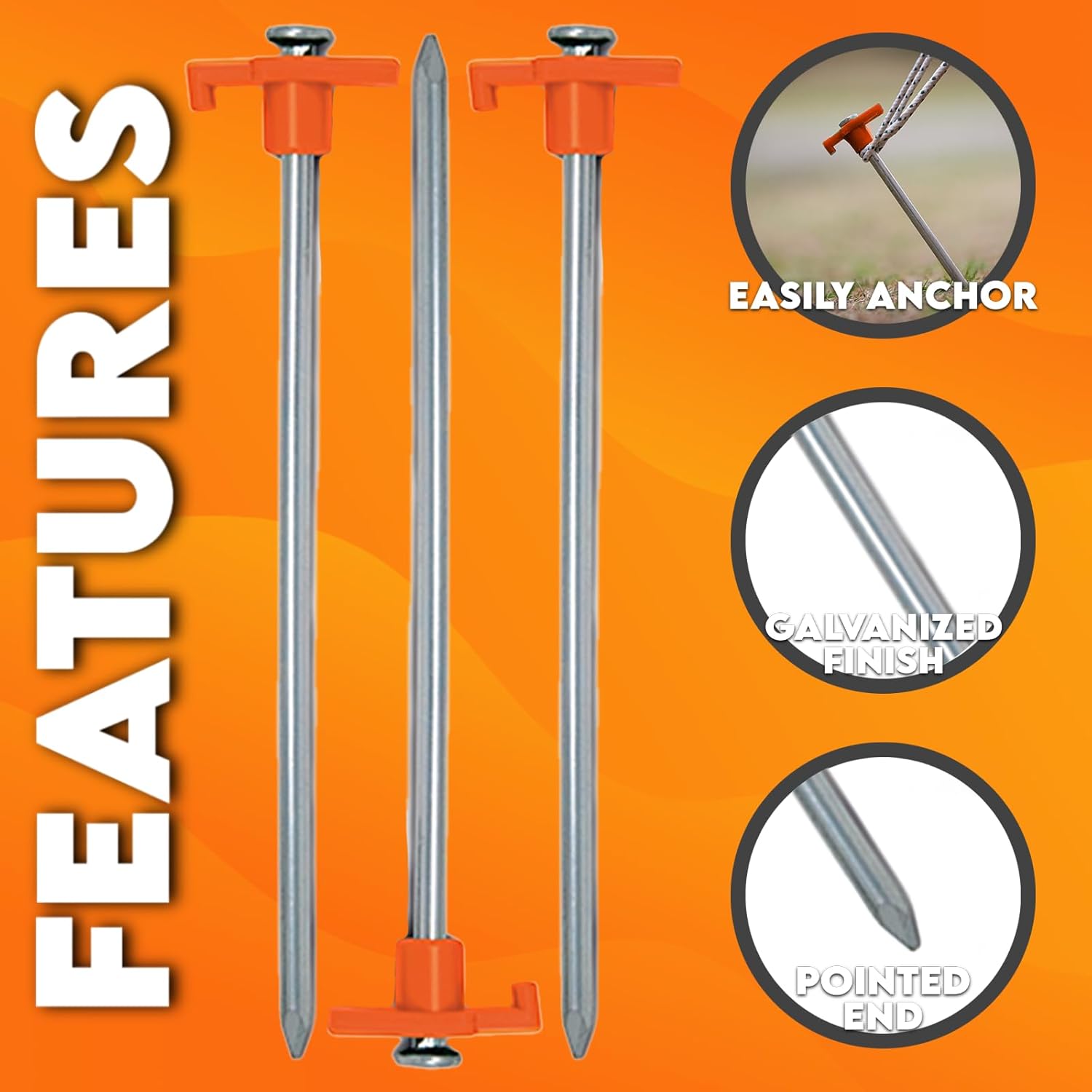
Most of its length is a plain galvanised steel pin with a chisel point, closer to a builder's nail than to the flimsy wire hooks that come free in a tent bag. The listing's feature image calls out the galvanised finish and the pointed end, and that end goes into ground that would fold a standard peg in half. This is the part doing the job the product name promises.
The top is an orange plastic T-head. It carries a hook on one arm and an eyelet through the other, so your guy line can loop over it or thread through it, and a small steel disc is set into the middle of it as a strike cap for your mallet. It is the part you grab, the part you pull, and the part 16 of the 92 most-recent reviewers watched break.
Xtremeauto prints "20 HARD GROUND PEGS WITH DURABLE HEADS" on the case. Hold that word durable in your head for a moment. One reviewer certainly did, describing how "4 of the durable plastic heads broke" on first use.
How These Rock Tent Pegs Cope With Hard, Stony Ground
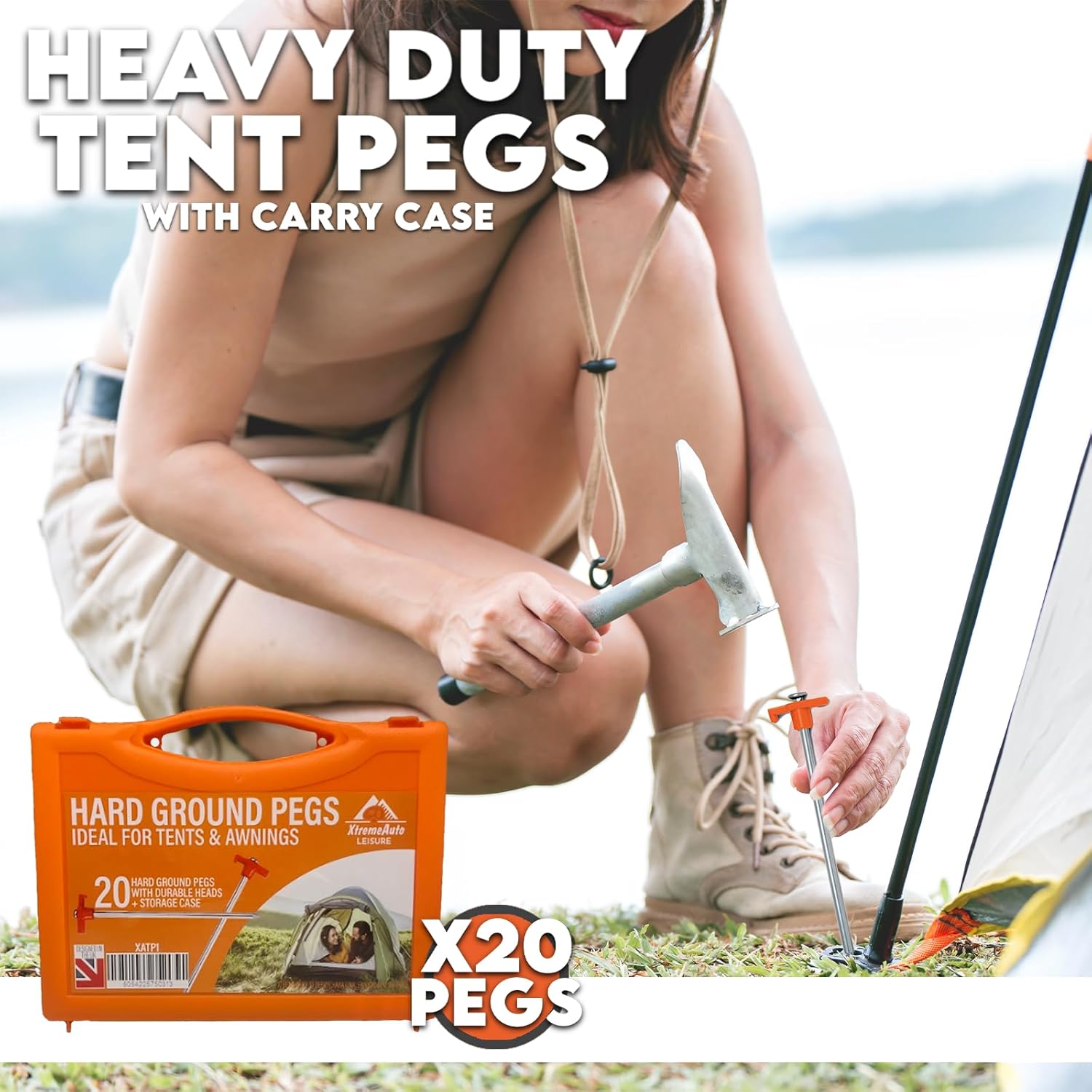
This is what you came for, so let's take it seriously. Of the 92 most-recent reviews, 14 four and five-star buyers say outright that these worked on hard ground, hardstanding or stony pitches. That is a solid body of evidence, and it comes from exactly the people the keyword describes.
Neil B. keeps it short: "They are strong and deal with stony terrain well". Mr. P. R. Haden calls them "decent length and great for the hard pitches at our seasonal site". p clarke bought them as replacements for the pegs supplied with an awning and reports they "will penetrate hard ground with ease". Gary Whitelegg, Shaun Cottrell and kev crook are all hardstanding regulars, and none of them had a problem getting steel into the ground.
The best line comes from Grant Nicholas, who went looking for the failure point on purpose. After praising how easily they drove in, he came back and added an update: "tried and failed to bend one to see how easy it was. I'm an 18 stone guy and still couldn't bend it on hard standing ground!" Swinsper puts it more plainly: "Hard to bend these. Expensive, but you probably won't ever bend them".
Compared with the wire pegs that ship in a tent bag, this is not a close contest. Christopher bland's verdict is representative of the five-star crowd: "Much better than the pathetic pegs that come with tents."
The Six Who Bent Them, and Where They Were Standing
Six of the 92 report bent steel, and three of those name properly hard ground as the reason. They are worth reading closely, because they are not random.
willie grant's whole review is eight words: "Poor quality steel, bend going into hard ground". Seturbo, who titled the review "Should be called sand pegs!", is more specific and more damning: "First time out 7 pegs out of 20 bent on first attempt. This is a hard standing site we have come to for the last 6 years and never experienced anything as weak as these pegs." Mr Allen Easto bent at least six on a hardstanding and dropped the whole set in the metal recycling bin on the campsite, though to his credit he also notes that "a couple of my very strong pegs also bent" that day, because the ground was exceptionally hard.
That last admission matters. Established hardstandings that have been compacted for years are brutal, and no 20cm pin at this money is guaranteed to survive them. But it is fair to hold a product called Rock Ground Pegs to the standard it set for itself, and on the worst surfaces a minority of buyers found the steel folding.
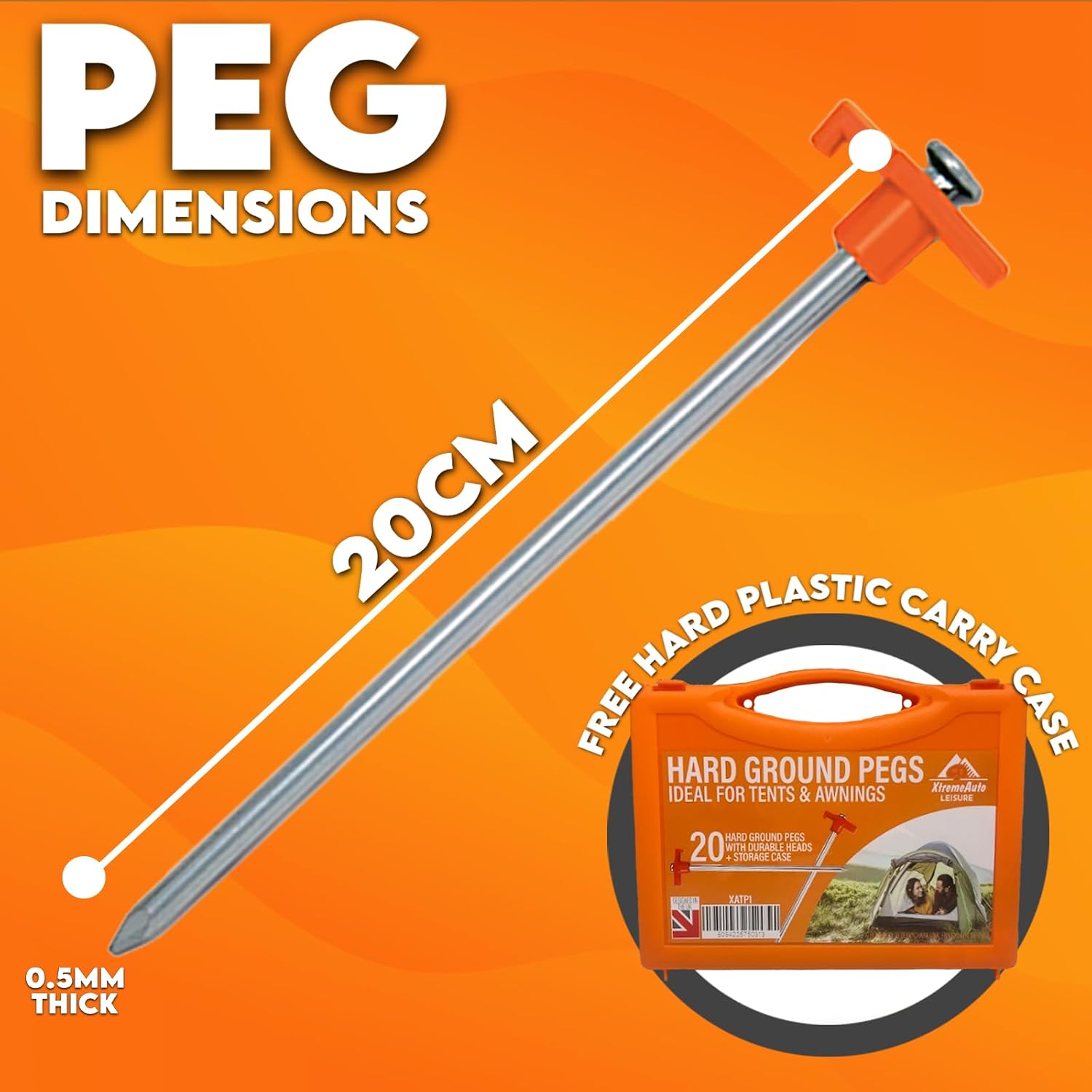
Here is the frustrating bit. The listing's own dimensions slide puts the pegs at 20cm long and then prints a thickness of 0.5mm, which cannot be right for a steel pin you are meant to hammer into rock. No gauge is stated anywhere else. So the one number a hard-ground buyer would most want to check, how thick the shaft actually is, is not reliably published at all. You are buying on the photos and on other people's results.
Xtremeauto Heavy Duty Tent Pegs Ground Pegs, 20 Pack
Twenty 20cm galvanised steel hard-ground pegs with a hard plastic carry case. Strong going into stony pitches and hardstandings, as long as you treat the orange head with respect.
The Orange Plastic Is the Real Weak Point
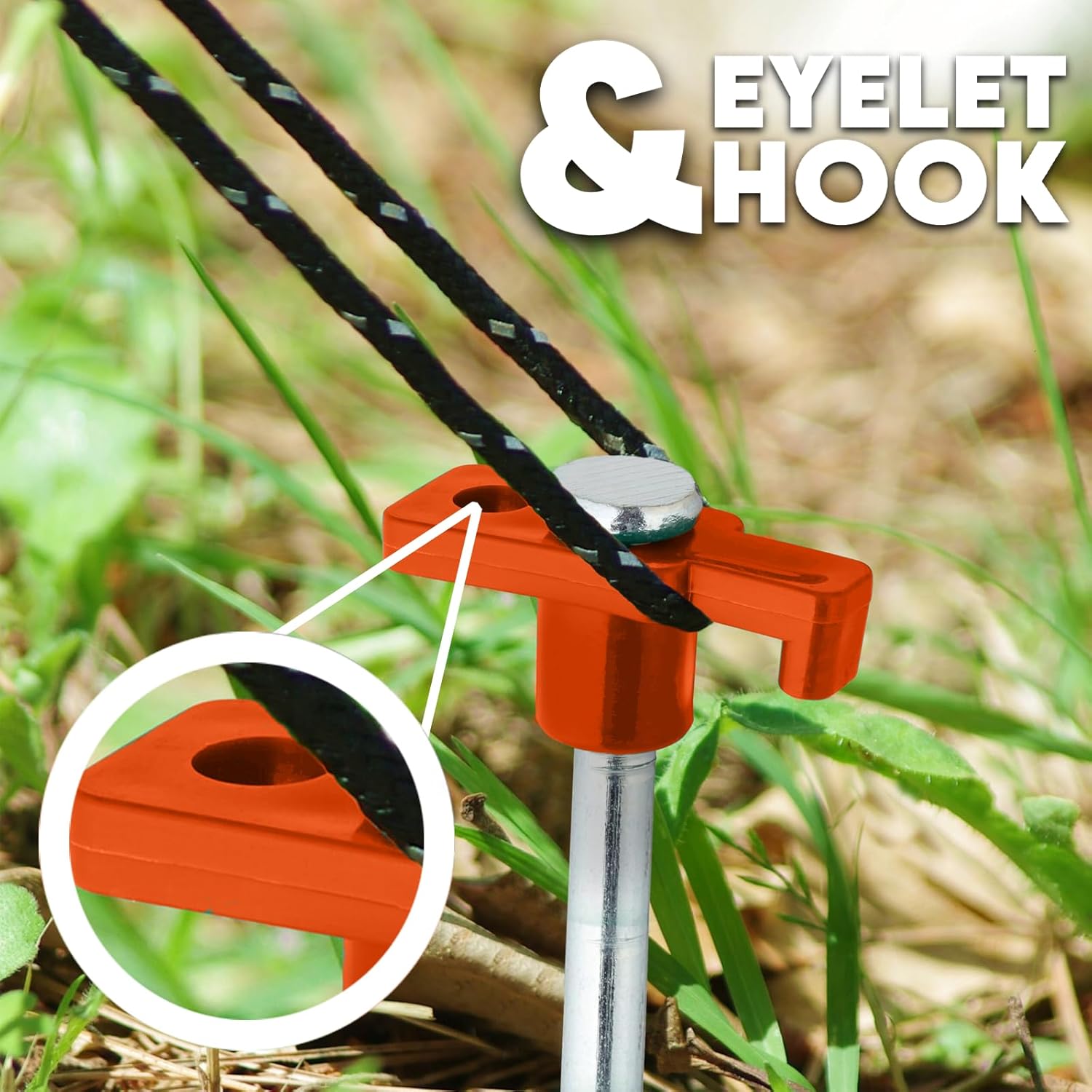
Sixteen of the 92 most-recent reviewers describe the head failing. That is nearly three times the number who bent the steel, and it is the complaint that turns four-star buyers into one-star buyers.
The pattern is remarkably consistent. Martino, who titled the review "Not so heavy duty", writes: "Very sturdy pegs, but plastic tops break easily when removing." Gemma Davison: "The peg did what needed to do but the plastic part on top was very poor". Mark CW, whose three-star review is titled "Okay but not for really hard ground", nails the split: "The physical peg is strong but the pull top is poor. On strong ground they go in well and hold well, but getting them out the plastic snaps or bends too easily".
Now the part that should change how you think about this product. Look at where these failures happened. Angharad pitched "on fairly soft ground during warm weather", and still: "The plastic tops snapped off under pressure, leaving the steel shafts stuck in the ground. We ended up having to dig some out by hand." The buyer who asked why they are not all steel was in soft clay soil, using the correct tool, and lost four heads. Bob reports that "almost all of mine have no plastic left after a few months".
Read that again, because it is the thing the other reviews of these pegs miss. The headline failure on this product has nothing to do with your ground. You can pitch on the softest field in Devon and still snap the tops off. Soil type decides whether the steel bends. It does not protect the plastic.
LJP supplies the clincher. Pitching a new bell tent on hard ground, "the plastic heads broke on multiple pegs during this first use. The same type of pegs that were delivered with the actual tent were fine and worked without snapping." Same design, same job, same ground, no breakages. It is this particular plastic that is the problem, not the concept.
Why the Head Breaks, and How to Keep Yours Intact
Look closely at that head and the failure makes sense. The mallet blow lands on a small steel disc set into the top of the plastic, so hammering these in is usually fine. Every gram of pulling force, though, travels through the orange plastic arms. Going in, the steel does the work. Coming out, the plastic does. Guess which one was specified for the job.
That gives you three things to actually do about it, and owners who follow them are the ones leaving five stars.
- Hit the metal, not the orange. A B. lost almost a whole pack and explained exactly how: "Miss the hit with the hammer just once, and they broke." A glancing blow that catches the plastic T instead of the steel cap will crack it before the peg is even holding anything. Slow down, strike square.
- Pull straight up, never lever sideways. The arms are the weakest geometry on the peg. Twisting or rocking them out is what shears the head off and strands the shaft in the ground.
- Use the eyelet, and loosen the peg first. Fredd1989 found the workaround: "the plastic part has a hole in that you can use a tent peg extractor with". g r i poole agrees that "an extraction tool in hard ground may be needed". M Hickson actually rates these as easier to remove than previous pegs "due to the grippable heads".
One caveat on that last point, and it is an important one. An extractor is not a guarantee. Both Angharad and the soft-clay buyer used a proper puller and still snapped heads off. The tool spreads the load, it does not upgrade the plastic. If a peg is stuck fast, work it loose with a few taps from the side before you lift, rather than hauling harder on an orange handle that is already at its limit. And sarsar124's four-star wish stands: "I wish they came with something to help you get thm out of the ground". They do not. Budget for a peg extractor separately.
Awnings, Gazebos and a Garden Arch: Where a Lot of the Five Stars Come From

Worth knowing before you weigh the ratings: a chunk of the glowing reviews are not from tent campers at all, and Xtremeauto sells this listing hard on that flexibility. The bullets pitch it for tents, awnings, gazebos, marquees, football nets and trampolines.
So S J Thompson, five stars, used them to hold down "a metal garden arch" and reports that "since I pegged it down wind & heavy rain has not moved it". David J. Shipley pegged down Christmas garden decorations, and notes they "came out easily when needed". Slowhand fixed a gazebo "solid". robert ball anchored a fence screen. Debbie secured a pergola. sarsar124 tethered inflatables on "very hard ground". These are real, useful data points about holding power, but a garden arch that stays put over winter is not the same test as a tent that gets struck and repacked every weekend.
The campers and caravanners who love them are mostly awning and hardstanding people, which fits: peg it once, leave it up for a week or a season, pull it out carefully at the end. Vanessa Wright, pete murrie, kev crook and Heather roy all praise them for awnings, and Heather roy has "an extremely large awning and it held well". milliedog calls them "ideal for seasonal campers".
Holding power in wind is the one thing almost nobody argues about. Fredd1989 tested them on a coastal trip "when a full-on gale was coming in. Tent stayed secure, and none of the pegs moved at all." Amy Pitts says they "held the ground even in high winds". MRS ELINOR BROWN reports them "doing a great job, in extremely windy conditions". Exactly one reviewer in the 92 says otherwise: A B., who had already broken all but two pegs in the pack, found they "did not stay in with windy conditions". If your worry is the tent moving overnight, these are not the thing to worry about.
The Case, the Count and the Rest of the Small Print
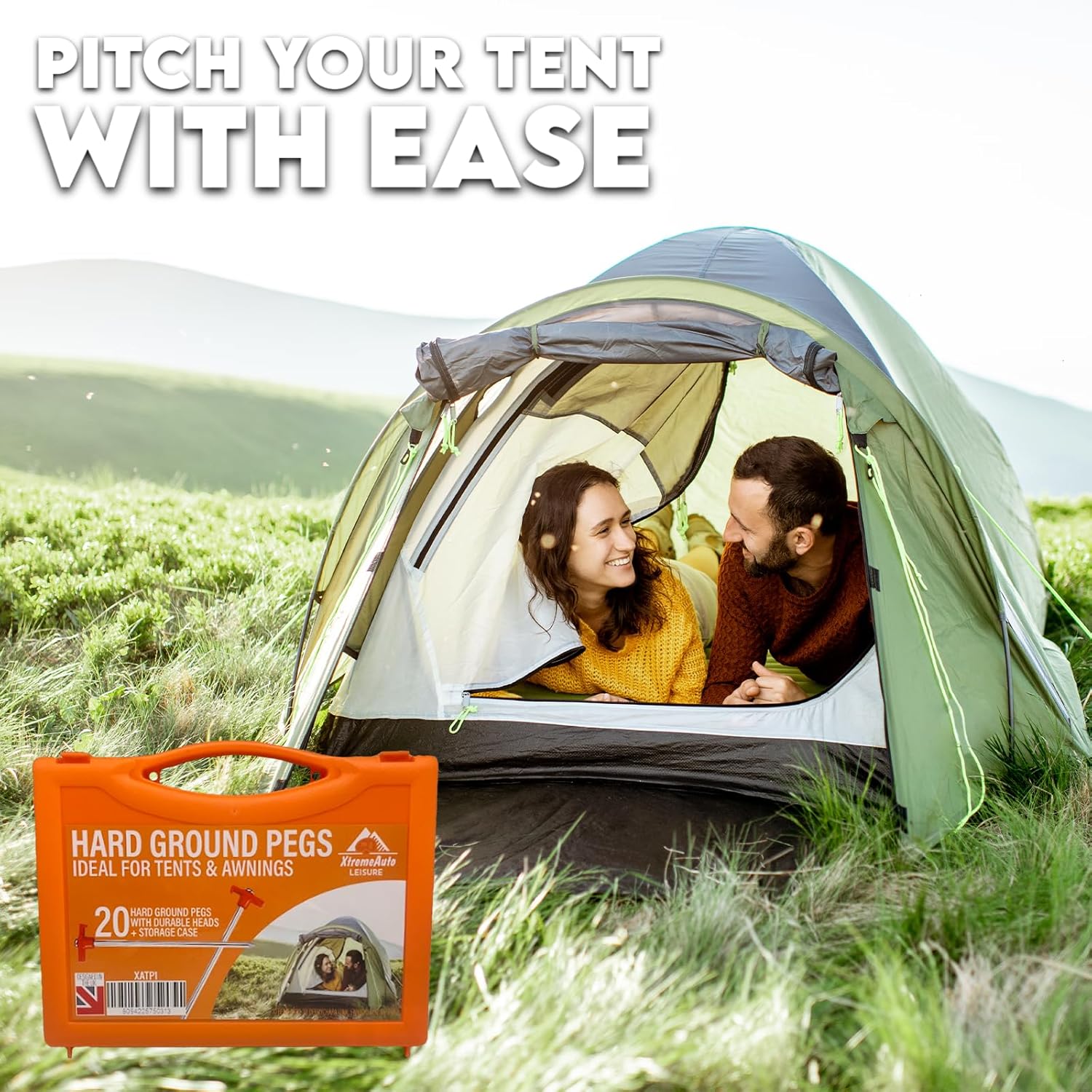
The orange box gets billed on the listing as a free hard plastic carry case. Six of the 92 most-recent reviewers received it broken. martin: "The case was all smashed up very disappointed". Phil Smith: "box arrived damaged and pegs slide straight out of the box". Jay, ryan, Alice and Bunny Warren all say the same, and Bunny Warren's three-star summary needs seven words: "Pegs were great the box was broken".
It clearly does not happen to everyone. julie collingwood calls the "case well made", and Cacourt found the box "a welcome and useful enhancement" over a plastic bag. Fredd1989 thought it "a bit flimsy" and moved the pegs into a bag. One buyer found it oversized and swapped it for a container half the size. Treat the case as a nice-to-have that may or may not survive the courier, not as part of what you are paying for.
Two other things from the small print. Dawn Ingrid Atkins counted what arrived and left one star: "Said 20 pegs on box only 16 in the box!" That is a single miscount in 92 reviews, but it costs nothing to count yours. And these are steel with a galvanised finish, not stainless, so dry them before they go back in the case if you want to keep the rust off.
The Verdict: Should These Go In Your Kit for a Stony Pitch?
Amazon shows a 4.5-star lifetime average from 422 ratings. The 92 most-recent reviews we read average 3.91, and 59% of that sample still handed over five stars. Our score is 3.6, and here is why it sits below both numbers.
On the question this product is named for, it delivers. The steel goes into hard, stony, compacted British ground, it holds through a gale, and 14 buyers in our sample say so from hardstandings and stony pitches. Six bent theirs, three of them on the very worst surfaces, which is a real risk on a long-established hardstanding but is not the typical experience.
The mark comes off for the head. A rock peg whose plastic handle snaps under extraction, in soft clay, with the correct tool, has a design fault rather than a run of bad luck. When it goes, you are on your knees with pliers, trying to get a headless steel shaft out of the ground, which is precisely the situation you bought hard-ground pegs to avoid. Sixteen out of 92 is too many to wave away, and a competitor's pegs that came free with a bell tent survived the same pitch.
Buy them if you are pegging an awning, gazebo or tarp onto a hardstanding or a stony pitch, you own or will buy a peg extractor, and you accept you may lose a few heads over the years. For that job, at this money, they beat almost anything that comes in a tent bag, and a 20-pack with spares built in absorbs the odd casualty.
Skip them if you strike camp every weekend, pitch on ground that grips, and want a peg you can yank out by hand at 7am in the rain without inspecting the damage afterwards. A one-piece steel rock peg with a forged head costs more and does that job without drama. That is the trade you are making, and now you are making it with your eyes open.
Check today's price on Amazon and count them when the box arrives.
Xtremeauto Heavy Duty Tent Pegs Ground Pegs, 20 Pack
Twenty 20cm galvanised steel hard-ground pegs with a hard plastic carry case. Strong going into stony pitches and hardstandings, as long as you treat the orange head with respect.