
Dr.Boat Liquid Patch Repair Kit: Why The Expiry Date On The Tube You Receive Matters More Than The Reviews
We earn commission from qualifying Amazon purchases. It costs you nothing and does not affect what we recommend.
The same little £9.99 tube has rescued hot tubs, inflatable kayaks, paddling pools and airbeds for thousands of buyers. So why do a steady trickle of 1-star reviews all say the same thing about the date on the side of the tube?
- The Expiry Date Check You Need To Do On Day One
- What The Formula Actually Is (And Why It Works Where Patches Don't)
- The Inflatable Hot Tub Crowd: By Far The Biggest User Group
- Where Campers Actually Reach For It: Airbeds, Kayaks And The Occasional Tent
- The Paddling Pool, Hot Tub Liner, And Odd-Use Report
- The Application Method Reviewers Agree On
- The Real Failure Modes Worth Knowing
- At £9.99, Is It Actually Worth Keeping In The Kit Bag?
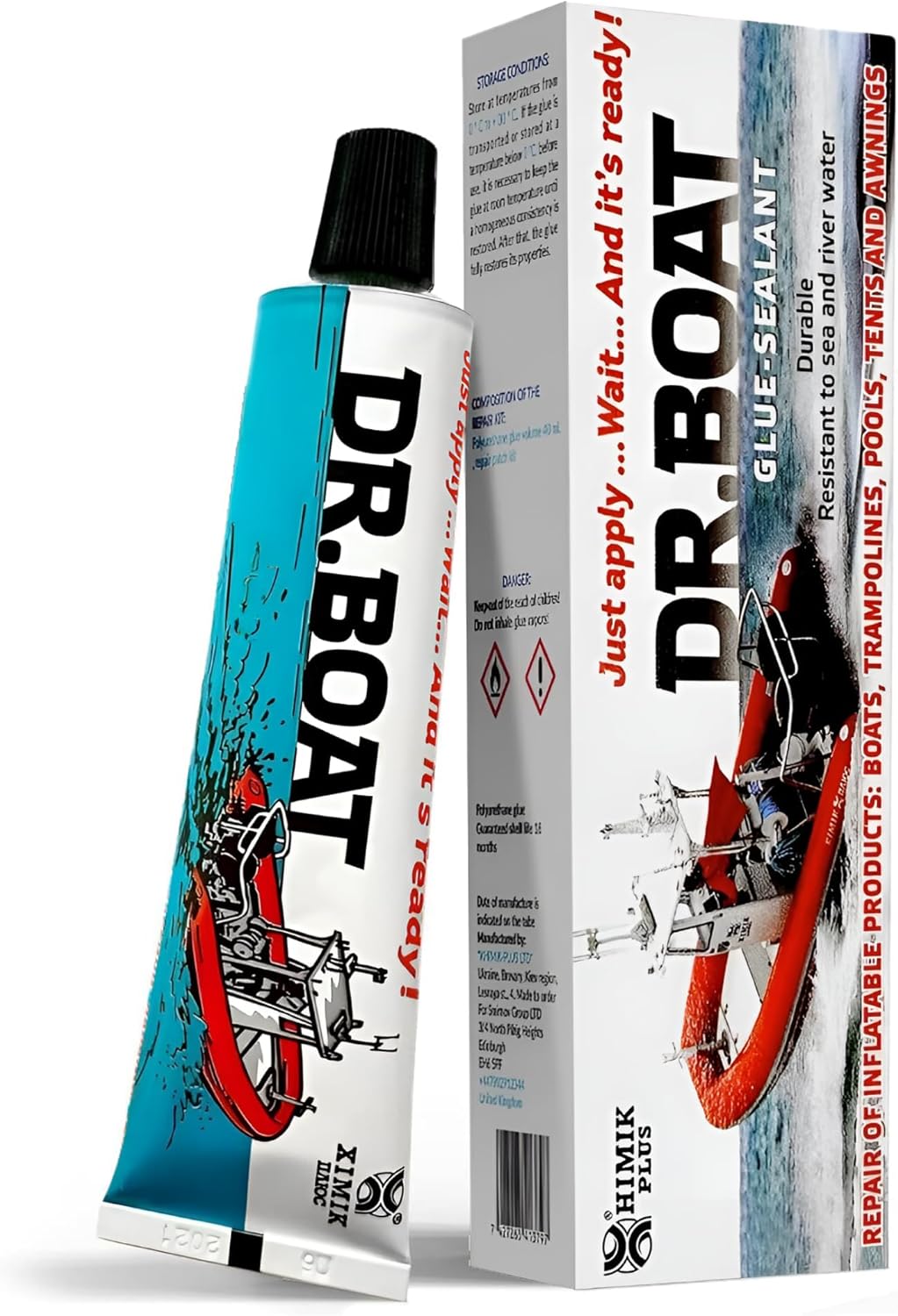
Patch repair kits are one of those things you don't think about until you're standing in the garden next to a slowly-sagging inflatable hot tub, or at a campsite with an airbed that won't hold air past midnight. The Dr.Boat liquid PVC kit has carved out a very loyal following for exactly those moments. It's not a stick-on patch. It's a tube of gel that you squeeze directly onto the hole, wait, add a second layer, wait again, and the PVC fuses to itself.
That's the pitch, and across 1,461 Amazon reviews with a 4.3-star average, a lot of buyers will tell you it works. But when you actually sit with the 1-star reviews, one specific complaint appears so often it reshapes how you should buy this product. It's not about whether the glue works. It's about whether the tube you receive is still fresh.
We read through all 90 of the most recent detailed reviews to work out what Dr.Boat is actually good at, where it falls apart, and the one check you need to do the minute it arrives.
The Expiry Date Check You Need To Do On Day One
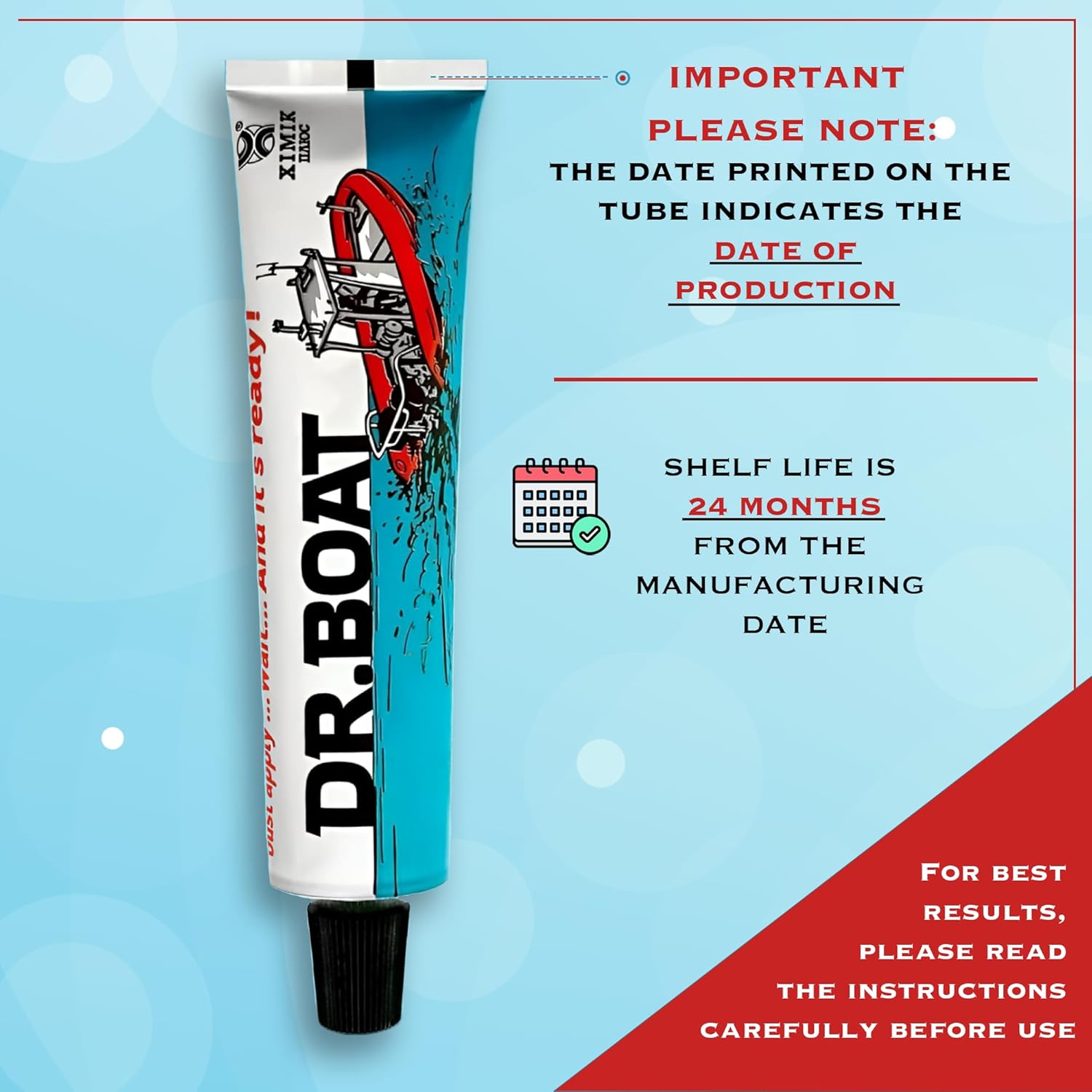
Before anything else, here's the practical warning that threads through the worst reviews. When your tube arrives, flip it over and find the date printed on it. Multiple buyers in the last twelve months have received tubes that expired 1-2 years before delivery.
One buyer in May 2024 received a tube dated 06/2023. Another in May 2025 got one dated 09/2023. One in July 2025 opened a box with a 07/2024 date (a year out). In March 2026, a reviewer received stock dated 10/2025. The pattern is clear: Amazon marketplace stock for this product sometimes sits on the shelf long past its best-before, and the glue inside dries out or goes off.
When that happens, the tube either won't extrude properly (bubbles, lumps, 'came out of the tube congealed') or the cured repair peels off within days. Several 1-star reviews that read like the product failed are almost certainly expired stock, not a faulty formula.
If the date looks wrong, do not try your luck. Return it the same day, get a fresh tube from a different seller, and only then judge the product. A clean in-date tube tells a very different story, which is what the next sections cover.
What The Formula Actually Is (And Why It Works Where Patches Don't)
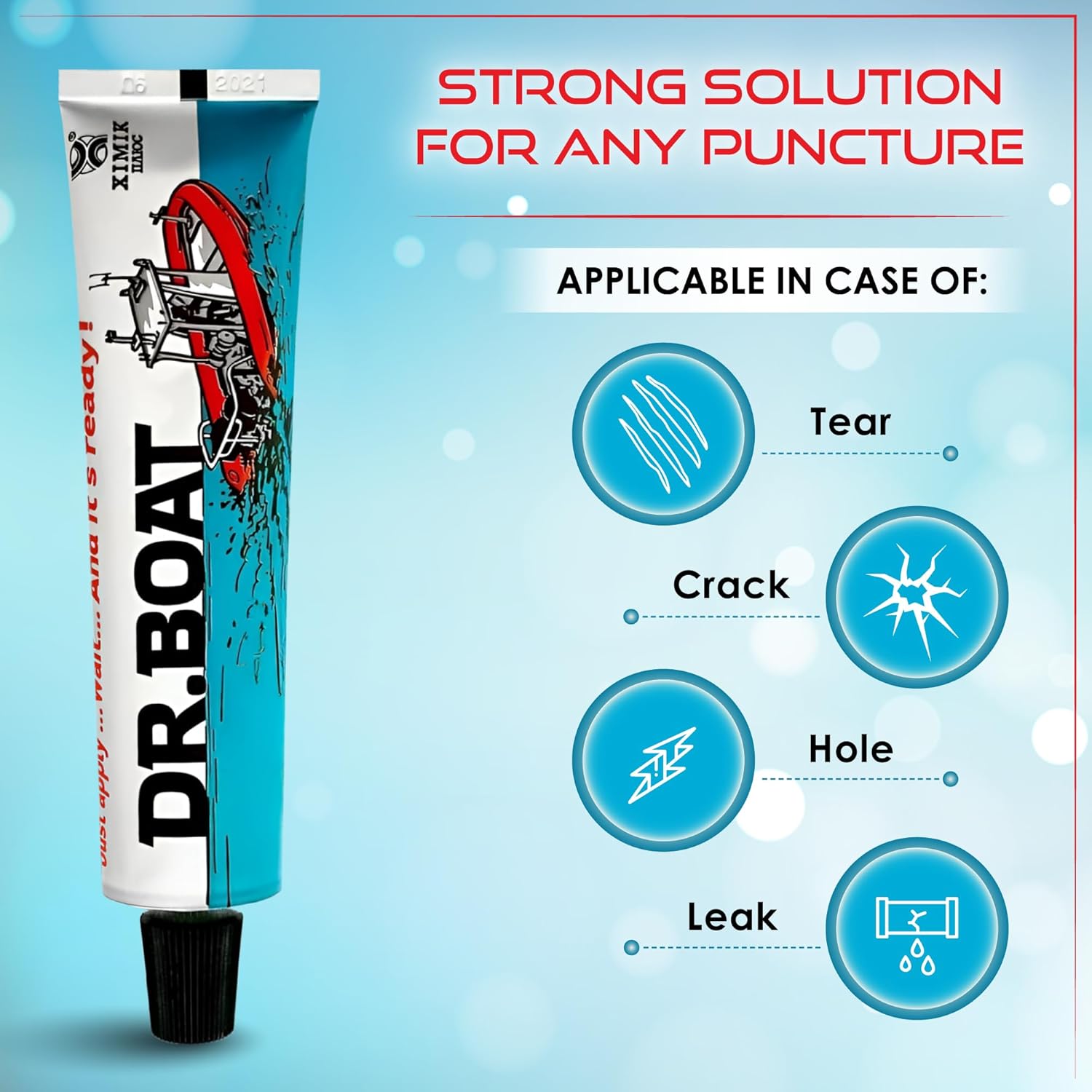
Dr.Boat is a liquid PVC adhesive. The listing calls it 'a liquid form of PVC' and that's more than marketing. Traditional repair kits give you a fabric patch plus a glue, so you're bonding one layer of PVC to another with an adhesive sandwich between them. That works on a flat panel. It fails on a seam, a curve, or right next to a stitched join, because the patch can't sit flat.
The liquid approach fuses to the host material directly. You squeeze a thin first coat across the hole, let it skin over for 15-30 minutes, then put a thicker second layer on top and wait several hours (most reviewers say 5-7 hours minimum, 24 hours to be safe) before returning the item to pressure.
This is why one reviewer described it as 'magic glue' that 'works without a patch in awkward spots'. It's also why it tends to beat the kit that shipped with your hot tub. Several buyers tried the branded Lay-Z Spa patches first, failed, and only got a permanent fix once they switched to this.
The Inflatable Hot Tub Crowd: By Far The Biggest User Group
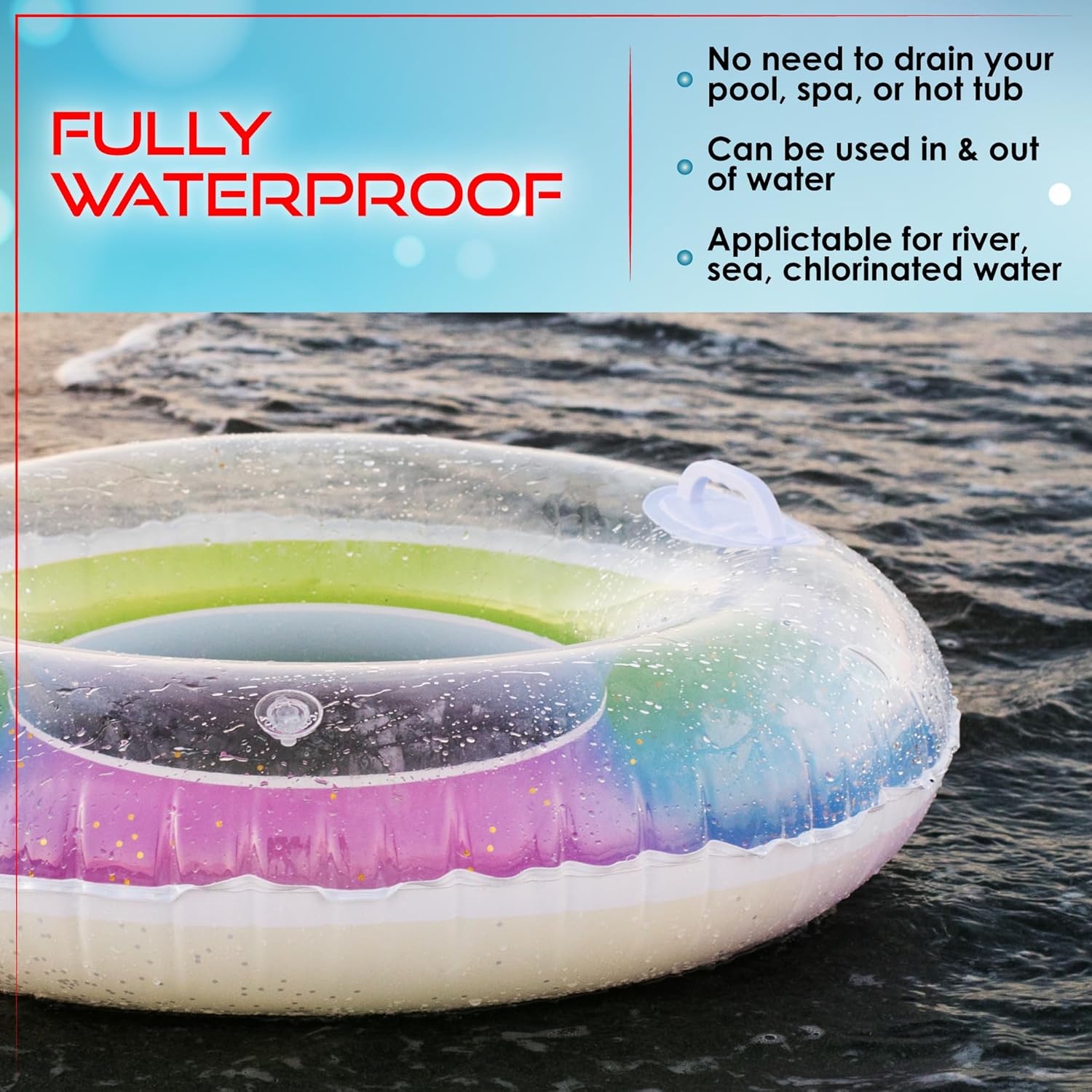
If you drew a pie chart of what Dr.Boat actually gets used on, inflatable hot tubs would take the biggest slice. Lay-Z Spa models in particular. A huge chunk of the 5-star reviews are from people whose spa has sprung a leak, whose branded patch kit has already failed, and who are staring down the cost of a replacement.
One buyer fixed 12 separate leaks in a Lay-Z Spa with a single tube and reported a month later everything was still airtight. Another found the leak was actually on the seam between the white inner and the brown outer liner, applied two coats across the whole seam in about 40 minutes, and sealed it permanently. A third saved a donated hot tub that had 15 punctures after being in storage.
The common thread: people are coming to this product after something else has failed, and they're reporting permanent results measured in months or seasons, not days. For inflatable hot tubs specifically, that's the most useful signal in the whole review set.
Dr.Boat Heavy Duty Liquid Patch Repair Kit
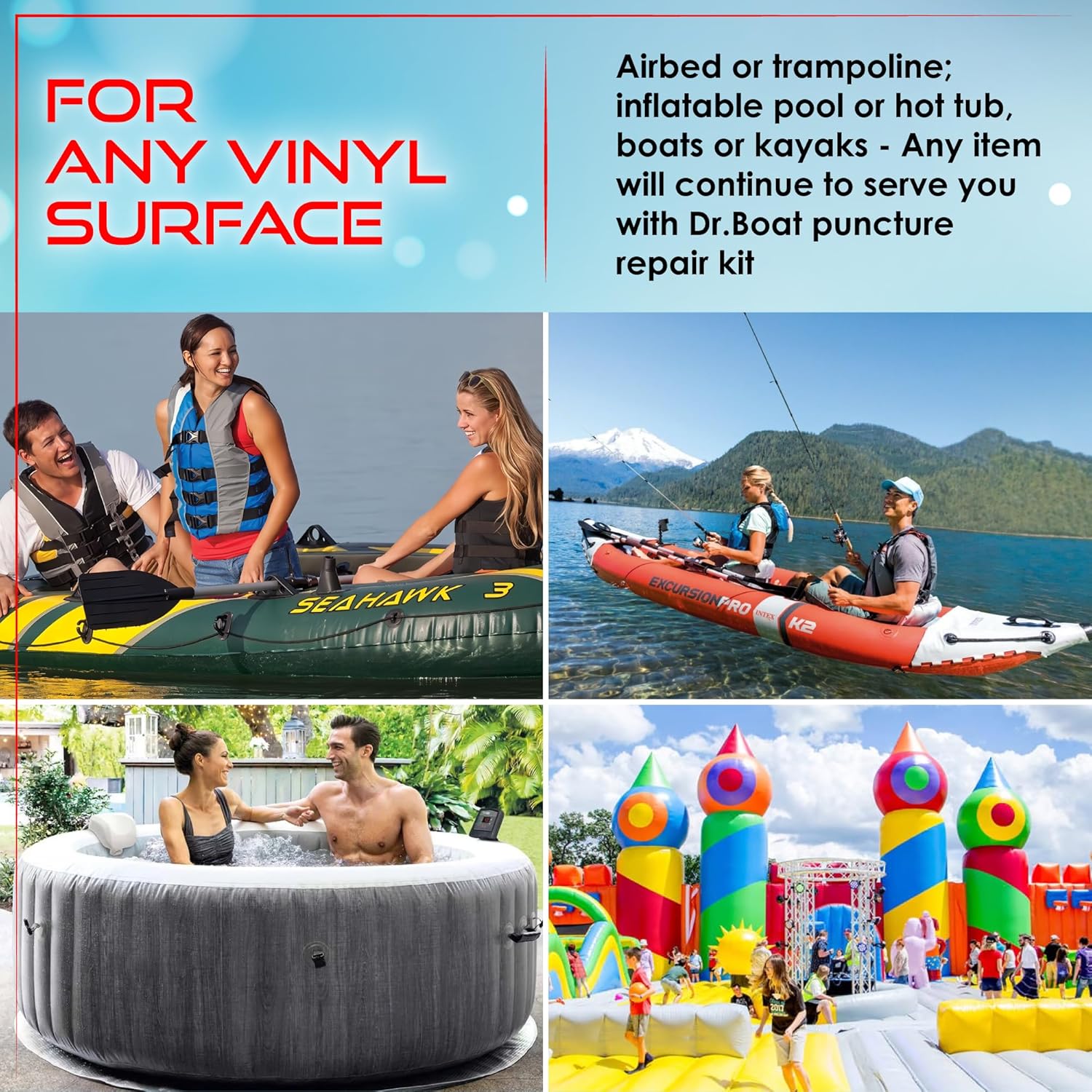
Liquid PVC adhesive for hot tubs, inflatable kayaks, airbeds, paddling pools and PVC inflatables. Works on seams and awkward spots where stick-on patches fail.
Where Campers Actually Reach For It: Airbeds, Kayaks And The Occasional Tent
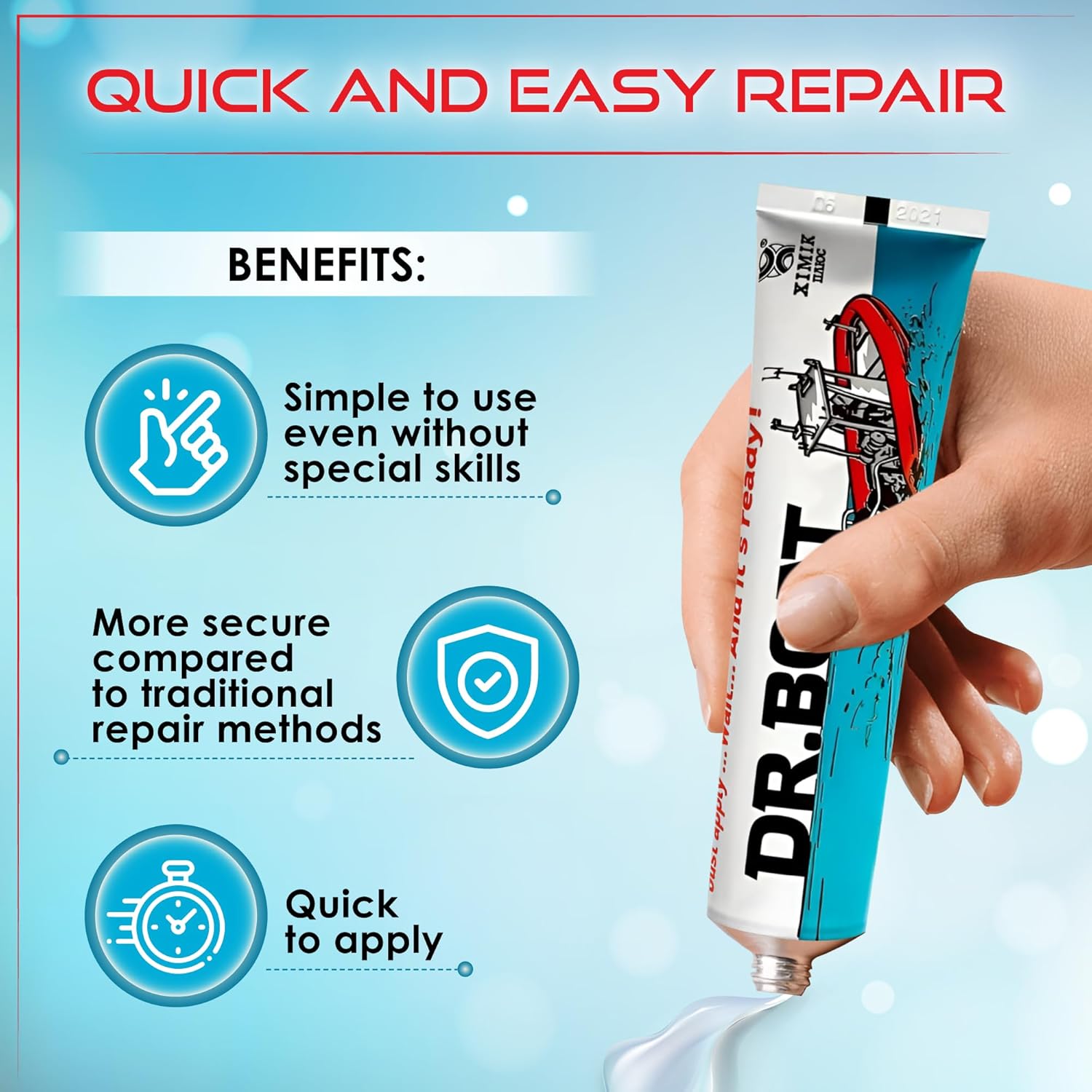
Coming back to the camping angle this blog usually writes for, the liquid patch lives its best life on two things: inflatable airbeds and inflatable kayaks.
Airbed stories run like this. You arrive at the pitch. You blow up the bed. By 2am it's on the floor. You find a pinhole you can't even see, the kit that came with the mattress has already failed or is fiddly, and you need a fix before the next night. Dr.Boat gets on, dries hard, and one buyer reported their repaired bed still holding strong two months in. Another fixed a split airbed with two coats and has slept on it several times since with no issue.
Inflatable kayaks and canoes feature almost as often. One reviewer was quoted £49.99 to attempt a repair on a base bladder by a shop, tried this instead, and the 2cm slice close to the seam held up under inflation. Another sealed a small hole in the floor of an inflatable kayak and it 'did what it said on the packaging'.
For proper inflatable tents, one buyer reported using it successfully on an inflatable tent and hot tub combo, which is consistent with the PVC-on-PVC mechanism. Mainstream polyester tent panels are a different material, and you should use a dedicated tent repair tape for those. This is a tool for vinyl and PVC specifically.
The Paddling Pool, Hot Tub Liner, And Odd-Use Report
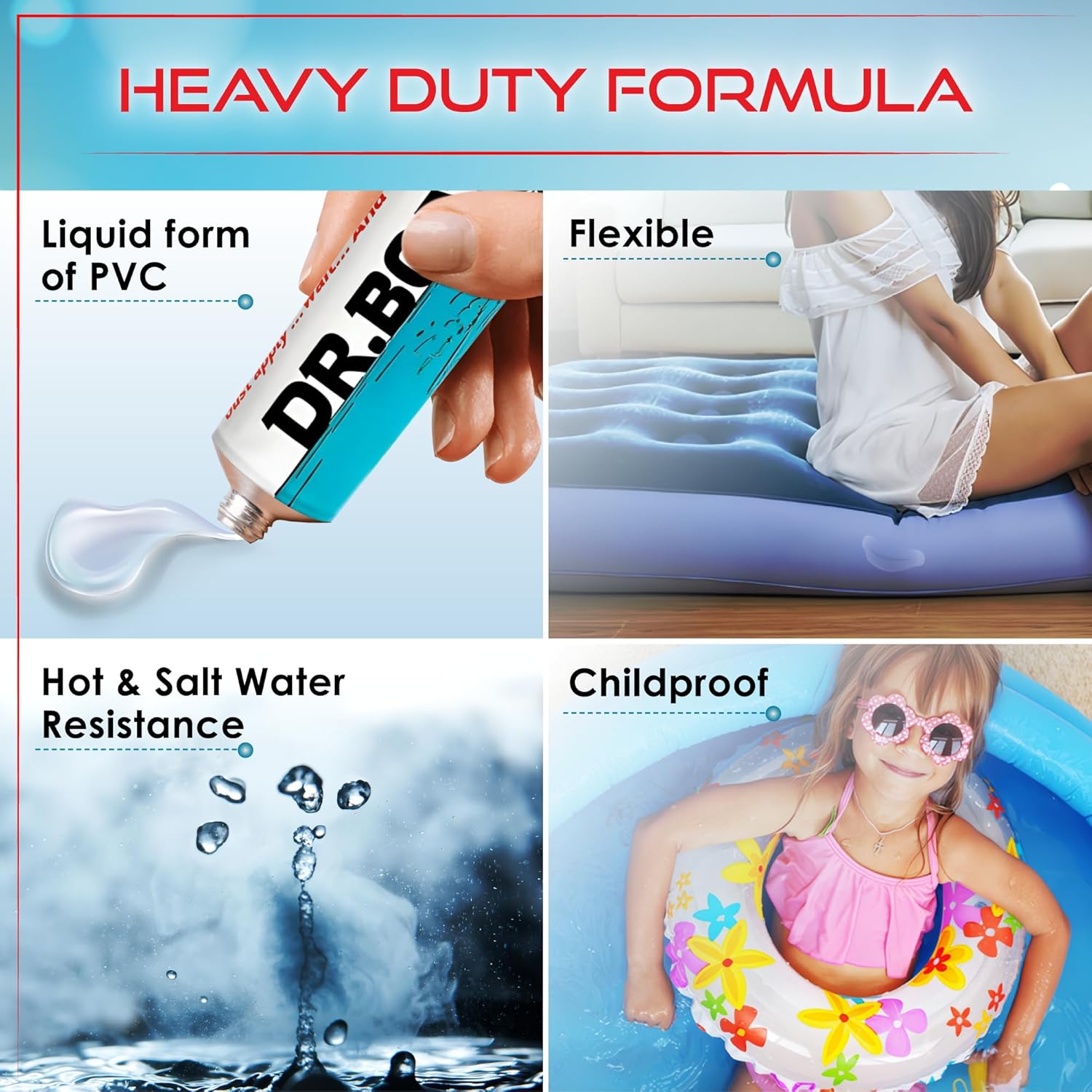
Because the product is just PVC-to-PVC chemistry, reviewers have found uses far beyond the listing. A parent whose kids' inflatable pool had been bitten by foxes (yes, actually foxes) in multiple places used this to reinflate and keep it up through the season. Another buyer saved a paddling pool from landfill with one application and it lasted the whole summer.
On the stranger end: splits in hot tub liners that couldn't be patched, an inflatable air track for gymnastics, a small tear in a Lazy Spa that held up seven months later. One reviewer even used it on the plastic base of a 7-person hot tub with a cloth for reinforcement and got through a following-day event without leaks.
What doesn't work: a reviewer tried to glue a plastic cold water tank and the glue just peeled off. Another tried a motorcycle seat air cushion and the formula appeared to deform the cushion material. A third tried it on a PVC rib dinghy and said it didn't cure properly on that substrate. The takeaway is that the stated use cases (PVC inflatables) are where it works. Adjacent materials that feel similar are where it stops being reliable.
The Application Method Reviewers Agree On
One of the more helpful things about the review set is that successful users describe the same method, almost identically, across dozens of reviews. If you bought this and are about to use it, here's the consensus:
First, find the hole. Several reviewers said the hardest part wasn't the repair, it was locating the pinhole in the first place. Soapy water over an inflated surface is the standard trick.
Second, deflate if you can. Small pinholes can be patched while inflated, and some reviewers successfully did that, but a deflated and clean surface gives you the best chance.
Third, thin first coat. Squeeze a small amount directly over the puncture and spread it so it covers the hole and about a centimetre of surrounding surface. Wait 15 to 30 minutes. Don't add more yet.
Fourth, thicker second coat. Once the first layer has skinned over, apply a heavier second layer on top. Several reviewers add a small fabric patch into this second layer for bigger splits, which is fine, but most holes don't need it.
Fifth, wait properly. The minimum is around 5 to 7 hours. Leaving it overnight (or a full 24 hours) is what most of the positive long-term reports reference. Re-inflating too early is one of the main reasons a 1-star review says the glue blew off.
Sixth, don't forget the lid. One 3-star reviewer flagged that if you leave the tube open to the air, the gel inside goes off quickly. Cap it the moment you finish the second coat.
The Real Failure Modes Worth Knowing
Stripping out the expired-stock complaints leaves a smaller but real set of product limitations worth naming before you buy.
Pressure limits. One reviewer reported that on a kayak, pumping it back up shortly after the repair caused the cured glue to rip and enlarged the hole ten times over. Another said strengthening an existing manufacturer's patch on an airbed with this product turned a slow puncture into a gushing leak. Deflate fully, repair, and leave 24 hours before re-pressurising, especially on kayaks and rigid inflatable boats.
Cold weather. One buyer said a previously successful hot tub repair cracked and broke apart once the cold came in. This matches how PVC behaves in general. If your hot tub stays outside through a UK winter, the repair zone is a thermal stress point.
Yellowing. One 4-star review noted the cured glue went yellow and brittle over time and that they ended up scraping it off and using tape instead. For cosmetic surfaces this is worth knowing, although for most hot tub and pool repairs it's hidden.
Incompatible materials. Plastic water tanks, non-PVC seat cushions, and rigid RIB hulls have all been reported as materials the glue doesn't bond to reliably. Stick to flexible PVC inflatables.
At £9.99, Is It Actually Worth Keeping In The Kit Bag?
Here's the maths that makes this an easy yes for most UK campers, boat owners and hot tub owners. Replacement inflatable hot tubs start around £300. Inflatable kayaks start around £150. A decent airbed for two is £40-£80. Dr.Boat is £9.99 and reviewers routinely report one tube fixes multiple leaks with plenty left over for future use.
The verdict, once you strip out the expired-tube complaints: when you receive a fresh tube, follow the two-coat-and-wait method, and use it on actual PVC inflatables, it does the job. It is the product hot tub owners end up at after the branded kit has failed, not before.
Our 4.2-star rating reflects both sides: the formula is solid, but the fulfilment issue is common enough that you have to plan for it. Check the date the moment it arrives. Return immediately if it's past. If it's fresh, it will probably outlast whatever you paste it on.
Dr.Boat Heavy Duty Liquid Patch Repair Kit
Liquid PVC adhesive for hot tubs, inflatable kayaks, airbeds, paddling pools and PVC inflatables. Works on seams and awkward spots where stick-on patches fail.