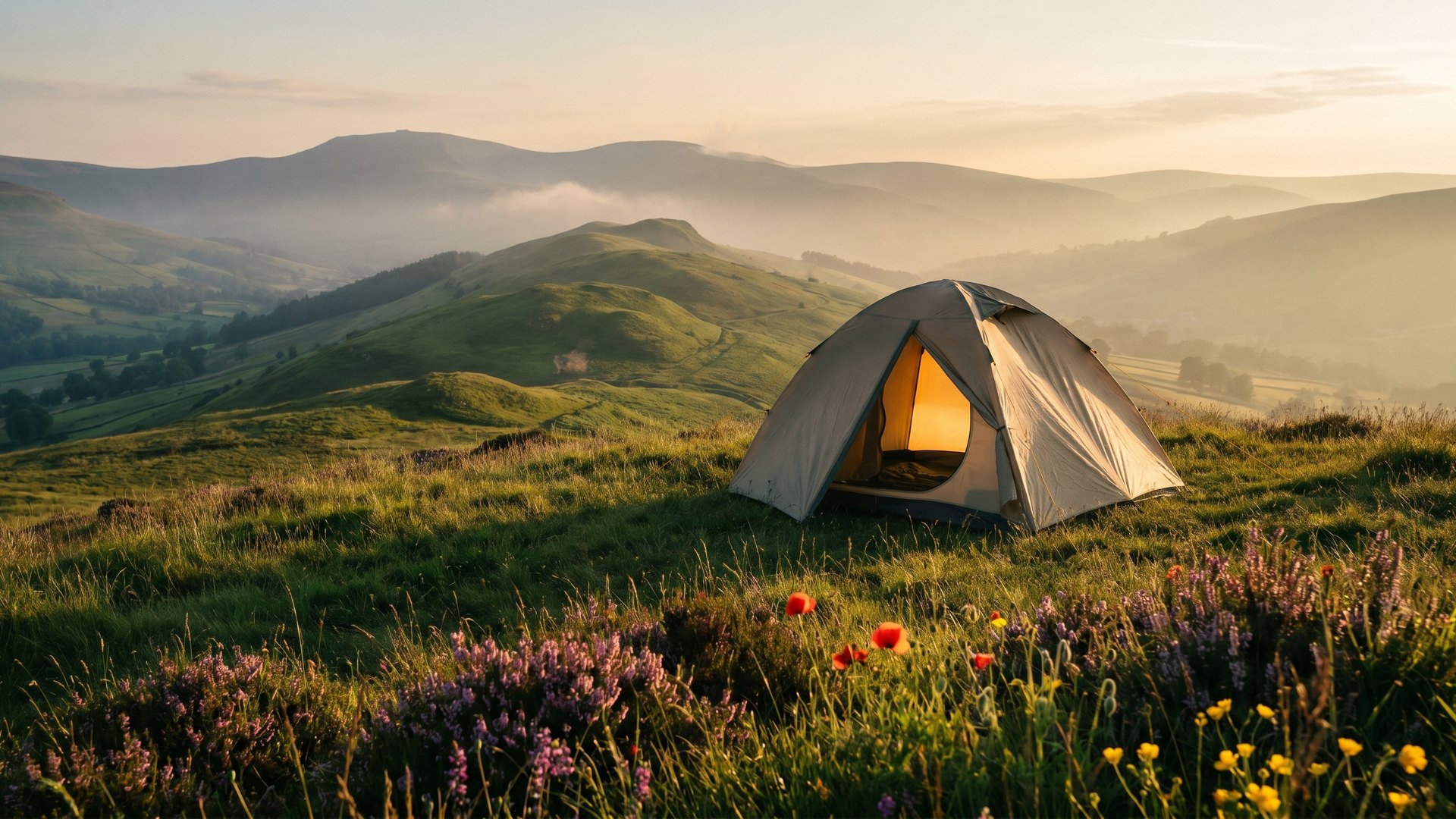
Mil-Tec's Waterproof Bivvy Bag for Wild Camping UK Keeps Rain Out. 12 of the Last 59 Reviews Say the Wet Comes From Inside.
We earn commission from qualifying Amazon purchases. It costs you nothing and does not affect what we recommend.
The word doing all the selling here is waterproof, and the odd thing is that it mostly holds up. What the 59 most recent reviews of Mil-Tec's cover describe instead is condensation: twelve buyers found the inside wet with water the rain never put there. We counted every report before deciding we would not buy one.
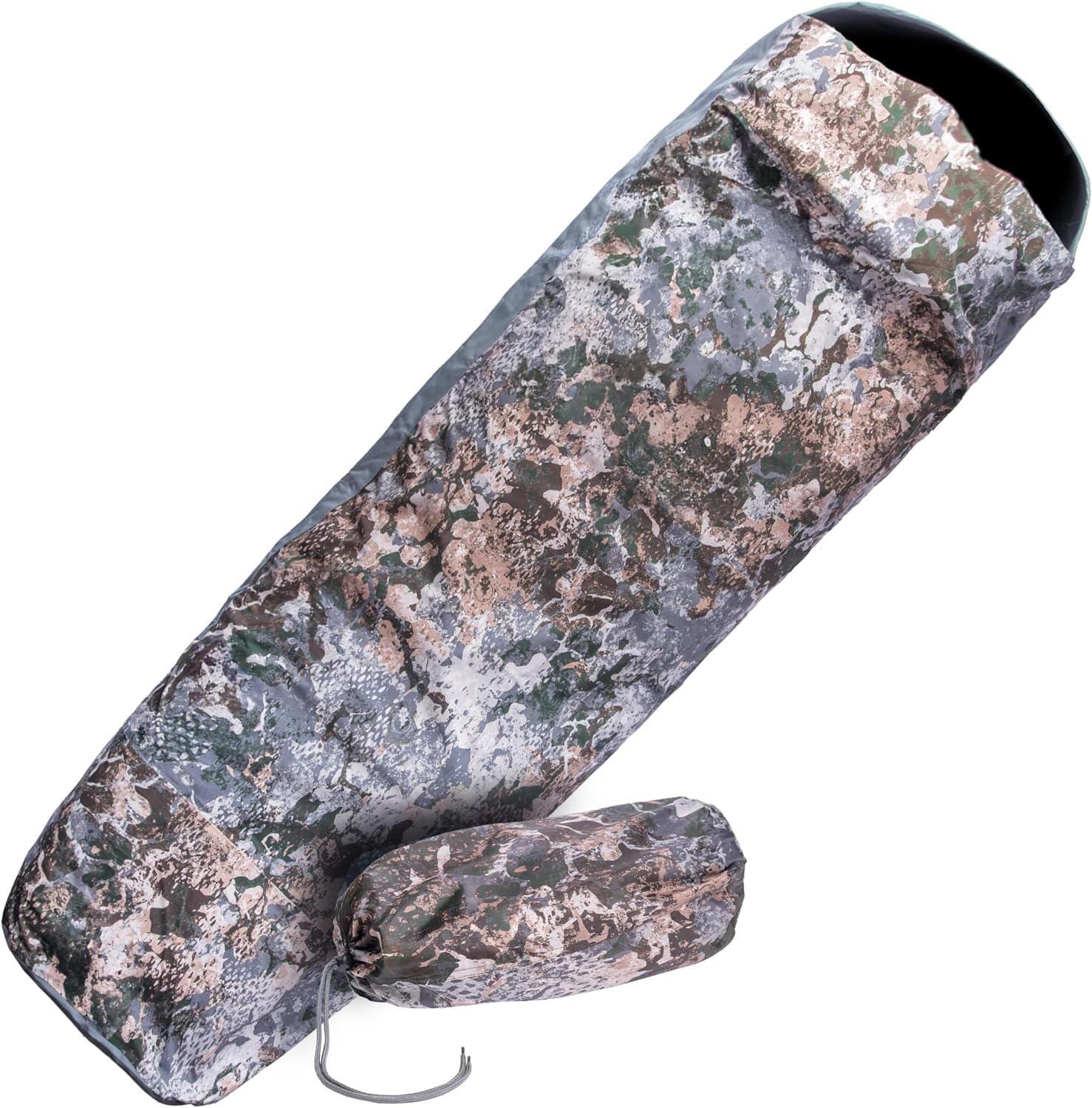
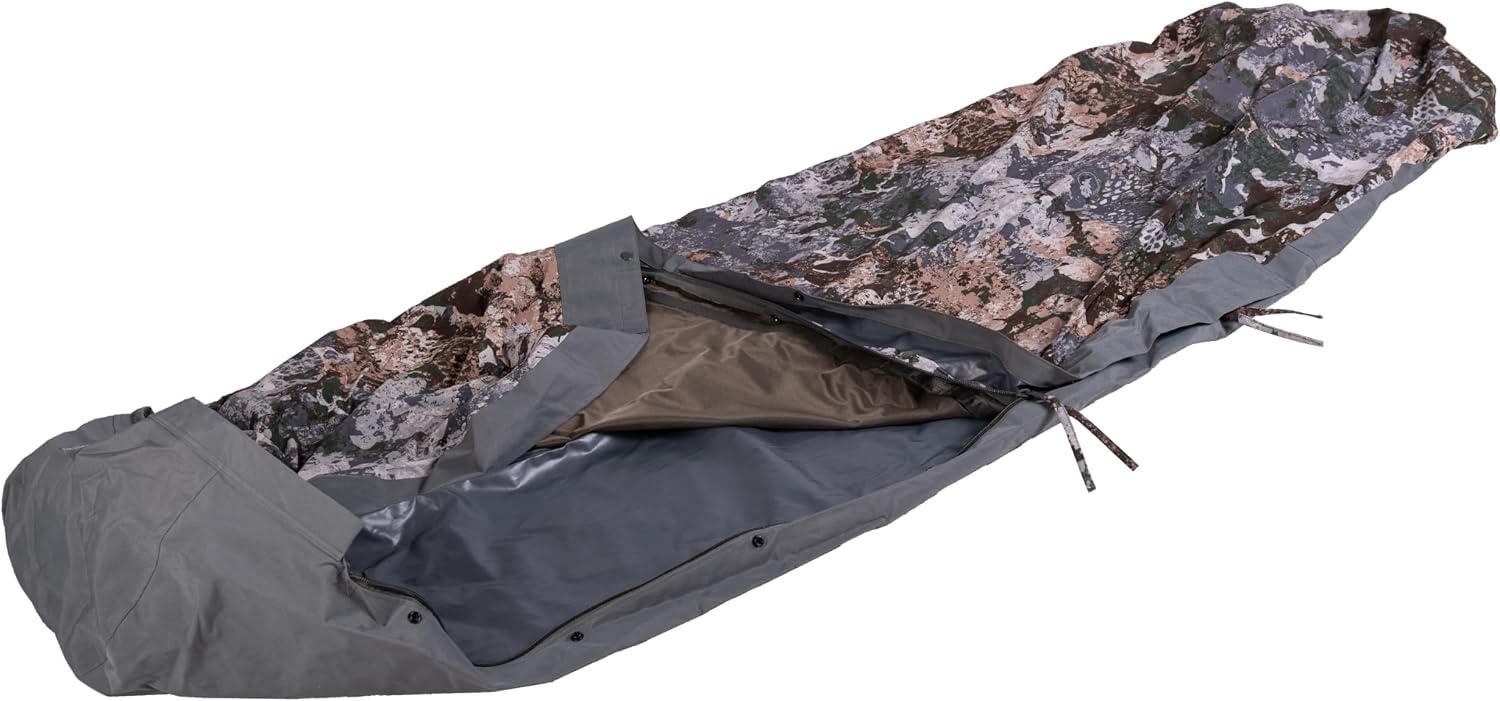
On paper, Mil-Tec's Modular Sleeping Bag Cover reads like the answer to a damp British hillside: a 3-layer laminate with a 5,000 mm hydrostatic head, a storm flap over the zip, an adjustable hood, and a promise that the sleeping climate inside stays "pleasantly dry". The rain-proofing largely survives contact with its buyers, too. Of the 59 most recent reviews on the listing, nine vouch for the waterproofing and only two report water getting through.
We would still not buy this cover, and the reason is the other half of that promise. Twelve of those 59 reviews describe the inside going wet with condensation, reported everywhere from minus 5 C to plus 12 C. The recent reviews average 3.68 stars against the 4.2 badge the listing wears. Here is the full count, review by review, and the bivvy we would point a UK wild camper at instead.
What the 3-Layer Laminate Promises
Mil-Tec is the tactical and outdoor house brand of Sturm, founded in the 1990s and pitched at the police, tactical and outdoor trade. This cover is its budget take on the military bivvy: a weatherproof shell that goes over your sleeping bag so the tent can stay at home.
The listing's claims are specific. The shell is a 3-layer laminate with a 5,000 mm hydrostatic head, which is the water pressure the fabric holds back before it leaks; 5,000 mm is proper shelter-fabric territory, on par with plenty of tent flysheets. A membrane in the laminate is meant to let body moisture out, and the listing promises the sleeping climate stays "pleasantly dry, even in rain, wind or high humidity". Hold onto that sentence: the reviews put it on trial.
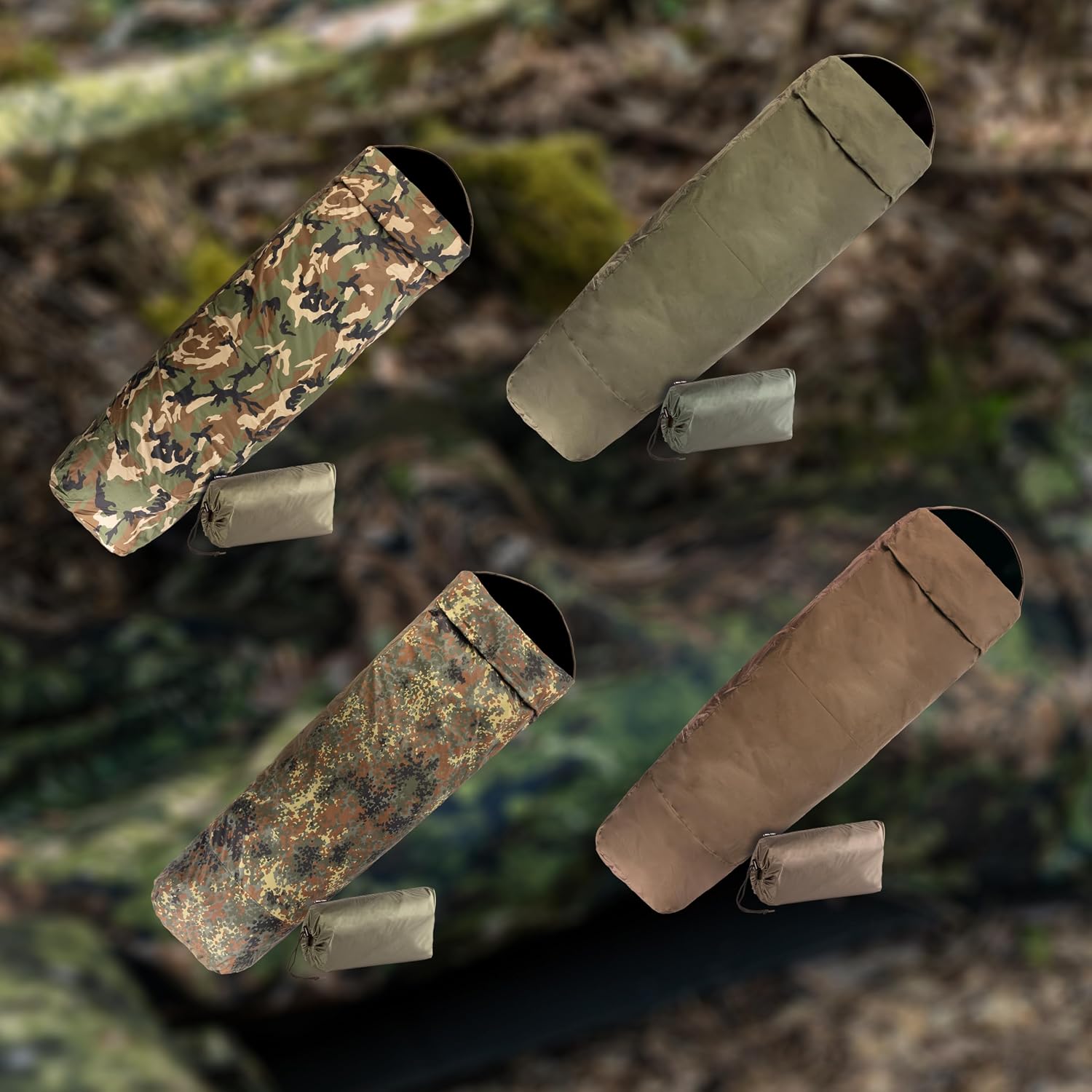
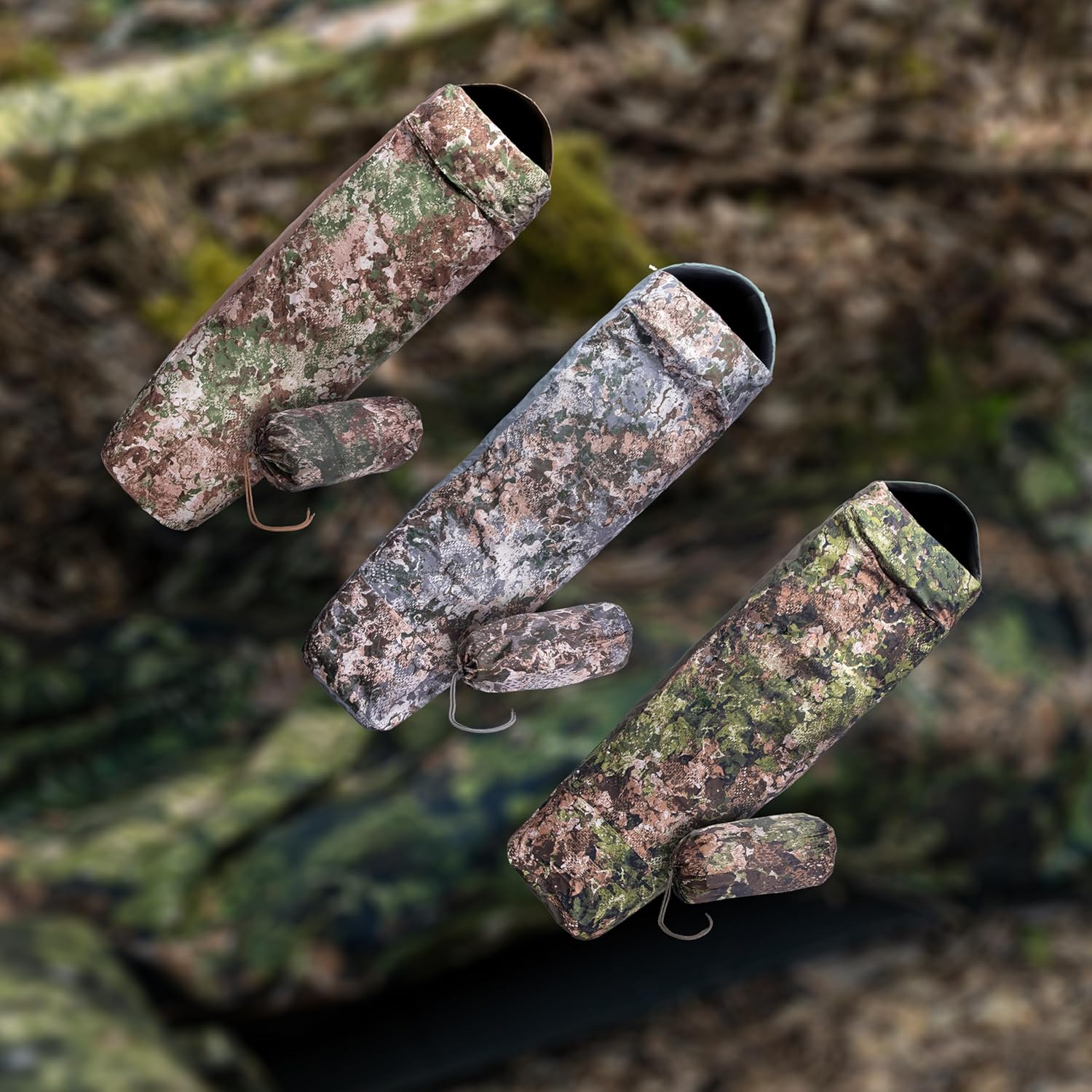
The rest of the spec sheet: 225 x 85 cm with a deliberately loose cut, entry through a 2-way side zip under a press-stud storm flap, an integrated hood with an elastic adjuster, and a quoted weight of approximately 1,300 g packing down to 40 x 8 cm in the supplied stuff sack. Seven finishes appear across the listing photos, from plain olive and coyote brown to woodland, flecktarn and three mottled camouflage patterns; the full set is on the current listing.
59 Reviews in Six Languages, and Only Three From Britain
Before the evidence, the shape of the evidence. We read the 59 most recent reviews on the Amazon listing, every one a verified purchase, and they stretch from June 2026 back to August 2018. That makes them closer to the listing's full written record than a recent snapshot; the 4.2-star badge across 204 ratings also counts star-only scores nobody can read. The written record is harsher than the badge: an average of 3.68, made of 28 five-star, 12 four-star, 3 three-star, 4 two-star and 12 one-star reviews.
Two health warnings on that sample. First, it is not very British. 14 reviews come from Germany, 14 from Italy, 13 from France, 6 from the United States, 6 from Japan, 2 from Spain and 1 from the Netherlands. Just 3 come from the United Kingdom, and they split one five-star against two one-stars, far too small a group to carry a verdict on its own. The overseas reviews appear untranslated, so where we cite one we paraphrase it and name the language, "a buyer writing in Japanese", and we only quote word for word from reviews written in English. The deciding has to be done by the wider 59, many of them campers in climates every bit as damp as ours.
Second, 7 of the 59 are from people who say they had not yet used it, or say nothing about using it at all, and all seven scored it 4 or 5 stars. Strip them out and the 52 reviews from buyers who got it outdoors average 3.56. Amazon also pools reviews across every colourway on the page, so a verdict on the olive version and one on the flecktarn land in the same pot.
Rain, Taped Seams and Three Damaged Deliveries
Nine of the 59 vouch for the waterproofing, and some of them put it through real weather. "It was raining nearly non stop on both of those nights. Stayed dry and couldn't ask for better results," writes Jeff Garner, a US buyer two nights in. Shawn, another American, needs one line: "Everyone else's sleeping bag was wet mine was dry". A buyer writing in Spanish saw off a day of rain and wind with it, and one writing in Italian slept at 1,100 m in the cover alone, no sleeping bag, crediting it against damp and cold.
Two reviews sit on the other side. Daniel N., one of the three UK reviewers, woke at midnight on a trip completely soaked: "It seems as though the base of the bag is waterproof, but the material on the top half is not waterproof whatsoever." He retested it at home, found water still seeping through the top fabric, and notes it was "far too much water for it to have been condensation". A buyer writing in French likewise found damp getting in on a night out. Against nine dry reports it looks like the exception, but his split matches the construction in the listing photos: the floor and lower sides are a plain grey coated fabric with a visibly shinier finish, while the top panel is the thinner camouflage laminate doing the breathable work. The one five-star UK review describes the same two-part build, approvingly: "The zips are strong, the bottom material is highly durable, it's totally waterproof and the top material is breathable," writes ChuckMeehan.
Praise for the finish runs right through the set, even inside complaints; the buyer writing in German who one-starred the fit still rates the workmanship for the price. Taped seams get named twice, by a buyer writing in French crediting the seam strips and a robust zip, and one writing in Italian listing the heat-taped stitching. The factory gate is less tidy, because three deliveries arrived faulty: a US buyer found the top press stud snapped out of the box and kept his five stars anyway, a buyer writing in French received one stud short, and a buyer writing in German got a cover already torn in two places, under a review title that puns Mil-Tec into the German for rubbish.
Snugpak Special Forces Bivvi Bag
The bivvy we would put our money into instead, for the wild camper the Mil-Tec's condensation reports describe. Its listing claims a breathable Paratex Dry fabric.
Twelve Reports of Wet Kit From the Inside
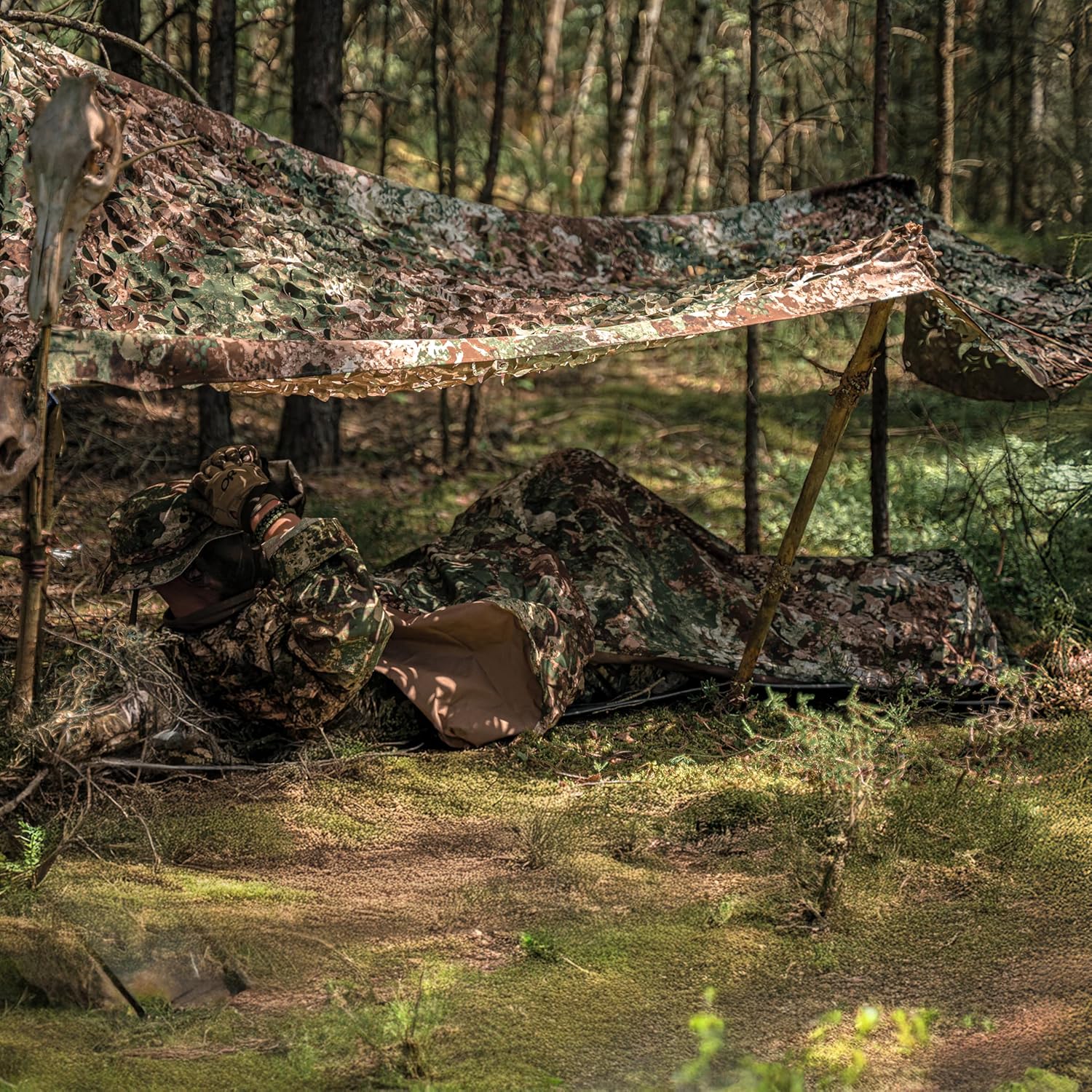
Now the cluster that decides our verdict. Twelve of the 59 reviews report condensation inside the cover as a problem they actually had, not one they feared: soaked sleeping bags, moisture pooling between bag and shell, kit that needed a day of drying. It is the single biggest failure theme in the set, and it lands squarely on the listing's "pleasantly dry" promise.
A buyer writing in Japanese used it at minus 5 C and woke cold with the sleeping bag soaked through and the mopping-up towel wringable, and reckoned frostbite was a real possibility had it gone unnoticed longer. Another, whose husband took it on a late December camp, describes so much moisture between bag and cover that the chill woke him; he finished the night shivering with the cover thrown off. At the other end of the thermometer, a buyer writing in Spanish hit heavy condensation at around 12 C and sent it back. A four-star review written in French even calls the cover too waterproof, reporting serious body condensation with it left open.
Three reviews report the opposite, and they hint at the coping strategy. One writing in Italian says that left slightly open it builds no excessive condensation; one writing in Japanese feared it, camped under a tarp at 3 to 4 C and stayed dry; a buyer writing in French had no moisture between duvet and cover on a 2 C night. So it is not everyone. But venting is the fix, and the design only half allows it: the 2-way zip stops well short of the foot end in the listing photos, and a buyer writing in Italian complains that with no opening down there, condensation collects at your feet and under your back. Even a five-star review written in Italian lists exactly one flaw, the missing vent at the bottom. There is no insect mesh anywhere either, none shows in the photos and a buyer from the Netherlands writing in English says as much, so on a UK hill in midge season an open zip has a cost.
Worth knowing: not one of the three UK reviews reports condensation inside the cover. The cluster is entirely overseas, from Japan, Italy, France, Germany, Spain and the Netherlands. And a buyer writing in Japanese adds the warning we would underline: with this much trapped moisture, a down bag inside is a safety gamble, because wet down stops insulating. Synthetic fill is the safer partner.
Four Sets of Scales Agree. The Tape Measures Do Not.
Weight first, because reviewers did our checking for us. Four independently weighed it: 1.2 kg from a buyer writing in French, 1.3 kg and about 1.3 kg from two writing in Japanese, and 1.4 kg from a third Japanese-language review. The listing sold today says approximately 1,300 g, so the scales back the current claim. Two of those reviewers bought against older listings quoting 950 g and 980 g, so to Mil-Tec's credit the figure on sale now is the corrected, believable one.
Heavy is still the wider mood: eleven reviews call it heavy or too bulky to carry far, against four calling it light, one of whom had not yet taken it outdoors. Even ChuckMeehan, the UK five-star, opens with "Very heavy, nearly a kg!", and the scales say he was being kind. A buyer writing in German frames the real decision: at this weight you are choosing between packing a tent or packing this plus a tarp. The 40 x 8 cm packed size draws the same complaint in milder form from a buyer writing in Italian who hoped it would stow smaller.
Fit is where the reviews flatly contradict each other. Six call it roomy, including a buyer writing in German who fits a Carinthia Defence 4 in size L inside with himself in it, and one writing in French who slides in a small inflatable mat and a sleeping bag together. Two call it tight: a slim buyer writing in German scored it one star for allowing no freedom of movement at all, and a small-framed buyer writing in French found it narrow yet far too long for someone of 1.60 m. Then there is the measured dispute. UK reviewer eifion dransfield taped his: "length is only 185cm width at shoulder 75cm and foot 40cm", which is 40 cm short and 10 cm narrow of the listed 225 x 85 cm. Two readers marked that helpful, six roomy reports implicitly disagree with it, and we cannot settle it from here: either an off-spec unit shipped or the listed dimensions run optimistic. If exact dimensions are why you are buying, read that one-star before you do.
Why We Would Not Buy It, and What We Would
The working, in one place. The 59 most recent reviews average 3.68 stars against a 4.2 lifetime badge, and 3.56 once the seven not-yet-used reviews come out. The largest failure cluster, 12 of 59 finding the inside wet, attacks the exact job the product is sold on, alongside three damaged deliveries and an unresolved measurement dispute. Our score is 3.0 out of 5, deliberately below the badge, and our verdict is plain: we would not buy this cover right now.
That is not calling it junk. The rain protection mostly works, nine reports to two. The materials shrug off rough ground, and it heavily undercuts the Carinthia covers two buyers writing in German measure it against, one calling it thicker and heavier than Carinthia but cheaper, the other admitting the Carinthia simply cost too much. The one US buyer here who also owns a far pricier Snugpak bivvy says he prefers this cover to it. If you camp from a car or a fixed base, run a synthetic bag, and can dry everything daily, the 28 five-star reviews show the good nights are real.
But the reader this review is for, someone carrying their bed up a damp British hill, is exactly who the condensation reports describe. UK wild camping means high humidity most nights of the year, and a cover that copes only with its zip cracked open, no foot vent, no midge mesh, is fighting our conditions rather than suiting them. With a down bag we would not take the gamble at any price. Our money would go on Snugpak's Special Forces Bivvi Bag instead, and the button below points at it. Be clear what that is: our own call on where to spend rather than a finding from this listing, and the one reviewer here who owns both went the other way, his single verdict against twelve buyers who found the inside wet. What sends us there is Snugpak's listing, which leads on breathability: a Paratex Dry fabric it says wicks moisture away. That is the listing's claim, not a verified finding. On the Mil-Tec, our conclusion stands: we would not buy it right now.
Snugpak Special Forces Bivvi Bag
The bivvy we would put our money into instead, for the wild camper the Mil-Tec's condensation reports describe. Its listing claims a breathable Paratex Dry fabric.