
HiiPeak Sleeping Pad: The DofE and Festival Pad That Splits Buyers Into Two Camps
We earn commission from qualifying Amazon purchases. It costs you nothing and does not affect what we recommend.
One reviewer took it from the UK to a US festival in carry-on luggage. Another binned theirs after a single deflated night. The HiiPeak pad is a £23.96 ultralight with a built-in foot pump and a sharp split in opinion that's worth understanding before you buy.
- The Built-In Foot Pump Actually Works (Once You Find The Knack)
- Where It's Earning Its Keep: DofE, Festivals, And Carry-On Travel
- The Comfort Story: Hexagon Air Cells, A Slightly Firm Pillow, And Why Side Sleepers Specifically Approve
- The Crinkle Factor: This Is A Noisy Pad
- The Deflation Lottery: 21% Of Recent Reviewers Hit A Failure
- What's Actually In The Box And What The Listing Doesn't Spell Out
- The Buy Recommendation: A Specific One
The HiiPeak Sleeping Pad sits at £23.96 with a 4.2-star average from over 5,000 ratings, but the deeper review picture is more interesting than that headline. Pull 100 of the most recent reviews and you find a clean split: the people who love it really love it (festivals, DofE trips, fishing, multi-day hikes along Hadrian's Wall, one buyer using it nightly for eight months while their partner recovered from medical treatment). The people who hated it almost all hated it for the same reason: it deflated, sometimes within an hour of inflating it.
That isn't the same as the usual cheap-airbed story. Once you read carefully, this pad starts to show its shape: a clever bit of design that works brilliantly when it works, with a quality control lottery that the pricing reflects. The question worth answering isn't whether it's a good pad in the abstract. It's whether you're the kind of buyer the design suits, and whether you can live with the failure rate that comes with the price.
The Built-In Foot Pump Actually Works (Once You Find The Knack)
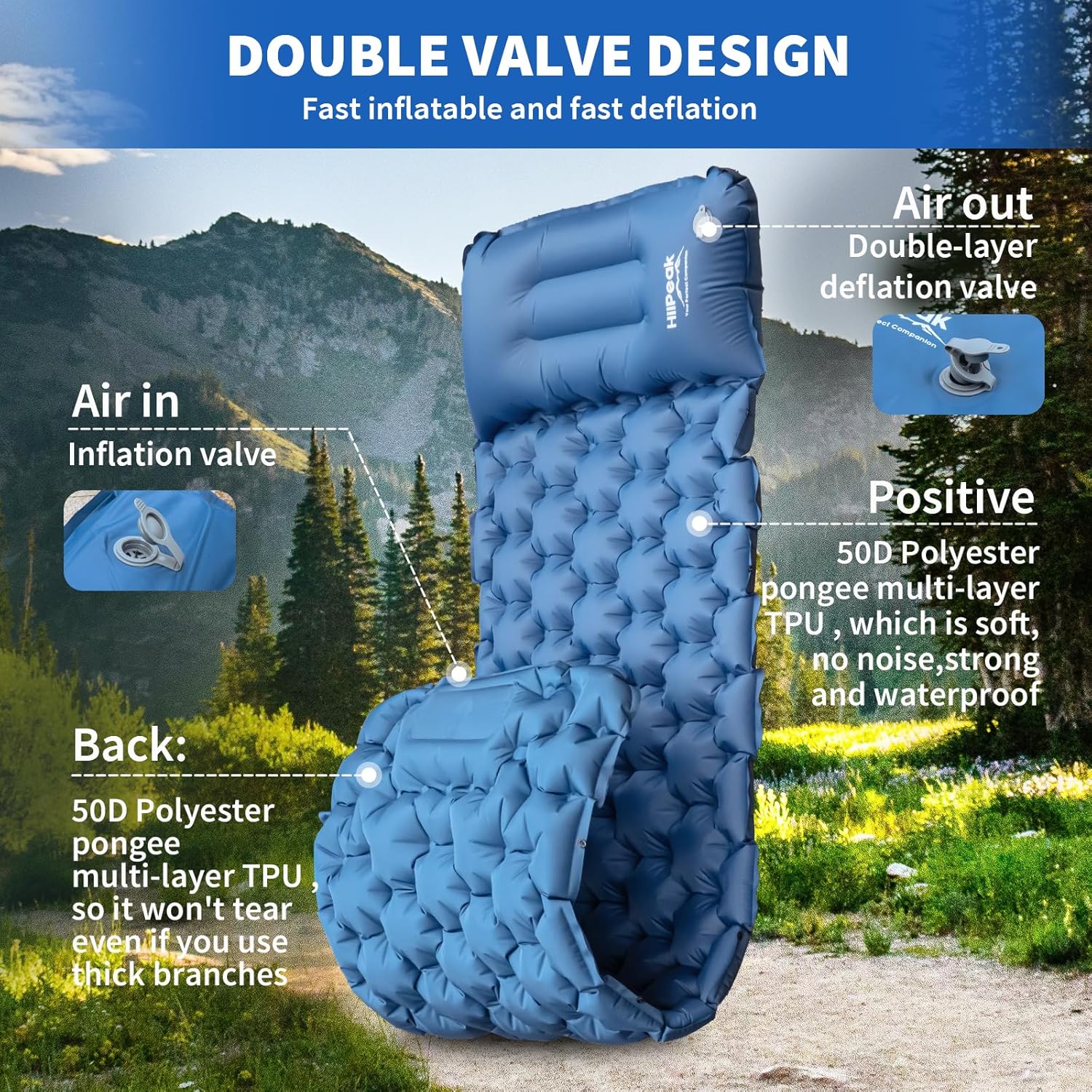
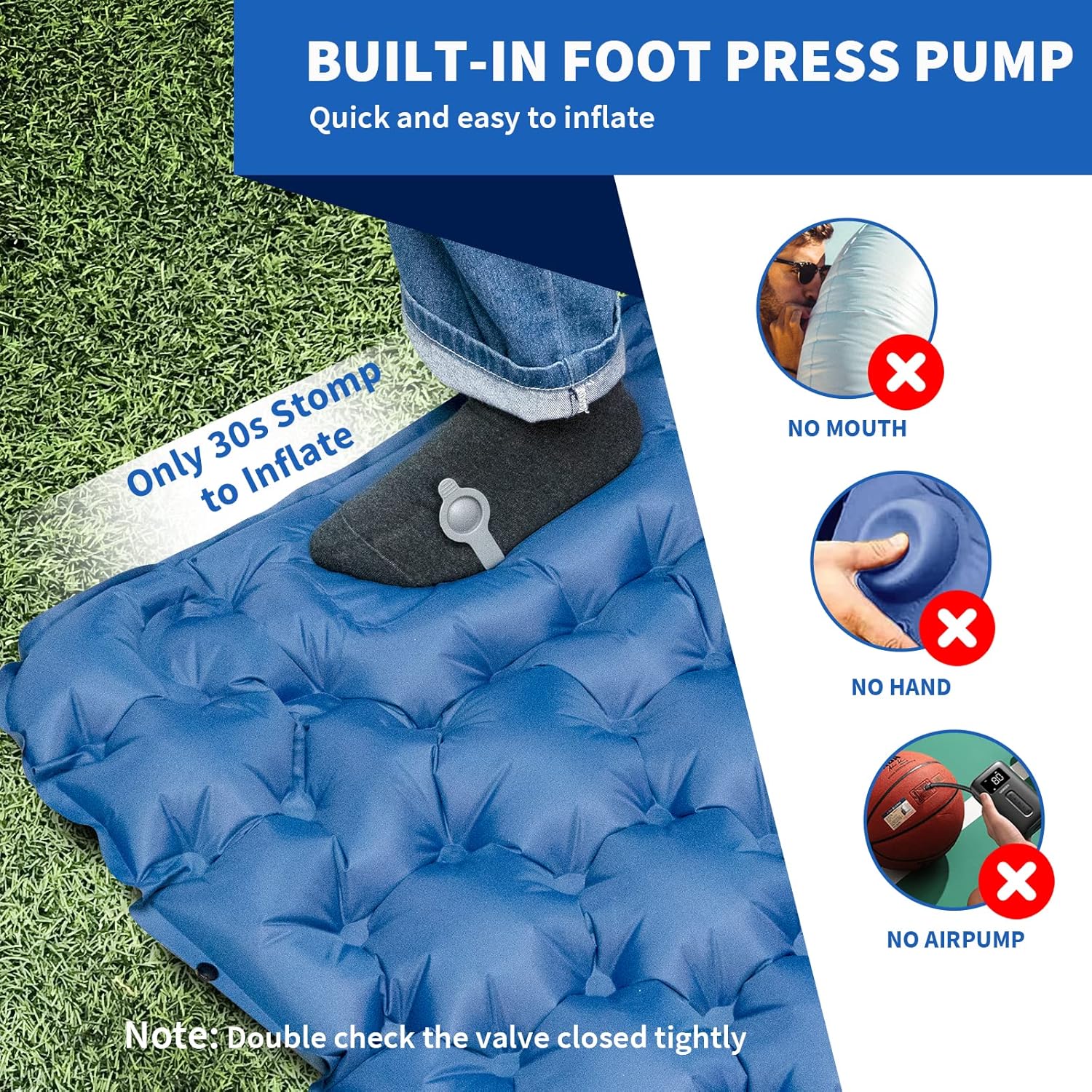
The headline feature is a foot pump built into the bottom of the pad itself. No separate pump, no electric inflator, no lung-busting blow-up session. You unroll it, find a flat surface, and stomp the pump section until the main pad fills up.
The 30-second claim on the listing is optimistic. Most reviewers report 2 to 5 minutes, with one buyer ('Fantastic!', 9 helpful votes) saying inflation took 'a few minutes' the first time and seconds once they'd worked out the foot placement. Another reviewer counted '23 pumps' for a full inflate, which gives you a sense of the rhythm. One buyer described the action as 'pumping your foot like at the start of a hoedown,' which is a useful mental image because the pump cavity is small and you're transferring foot strokes into the pad steadily, not in two big shoves.
One alternative trick worth knowing: a few reviewers found that pressing the pump section with your hands ('CPR chest compression method' as one buyer called it) was faster and less effort than using a foot, especially on hard ground where the pump cavity squashes properly. If you're inflating in a tent on top of a groundsheet rather than on hard ground, the hand method is worth trying.
Deflation is the other half of the equation, and it is fast. There's a separate valve at the pillow end you pop open, and most reviewers report 1 to 10 seconds before the pad is flat. A handful found rolling it back into the supplied bag tricky, with one reviewer admitting they couldn't get it back in the bag at all, but most got the hang of wrapping the rolled pad around the pump section to control the width as they folded.
Where It's Earning Its Keep: DofE, Festivals, And Carry-On Travel
The pattern in the positive reviews is striking. The same use cases keep coming up.
Duke of Edinburgh trips. Multiple parents bought this for their teenagers' DofE expeditions, and the reviews are uniformly positive. The combined weight (930g / 2.05 lbs) and packed size (28 x 10 cm, roughly 11 x 4 inches) are the reason: it's significantly lighter and more compact than the foam roll mats most DofE kit lists default to, and crucially it doesn't strap awkwardly to the outside of a rucksack. One buyer bought a second one for their younger daughter after the older one approved of the first.
Festivals. The festival use case is the second clear pattern. One reviewer flew from the UK to the US for a festival with this pad in carry-on luggage and was 'beautifully' fine. Another did 5 nights at Download festival without a single deflation. A third did 4 days at a festival and was 'very impressed' that it stayed inflated. Festivals are forgiving terrain (grass, no sharp rocks, short trips), which suits the pad's strengths.
Backpacking and hiking. The most stress-tested positive review is the buyer who took it on a 4-day trek along Hadrian's Wall and described it as 'surprisingly comfortable', noting it's 'longer than expected, good for tall people'. Another verified buyer used it for 10 nights of camping in a tent and called the built-in pump 'a treat'. These are real backpacking trips with real distances.
Motorcycle touring. One buyer specifically called out that it fits in motorcycle pannier bags, which is a niche but useful data point if you're packing for two-up touring where space is fierce.
Occasional guest bed. A surprising number of buyers don't camp with this at all. They bought it for unexpected overnight visitors, family sleepovers, or weekend guests. The 28cm packed size makes it easy to stash in a cupboard, and the foot pump means anyone can set it up without rummaging for an electric inflator.
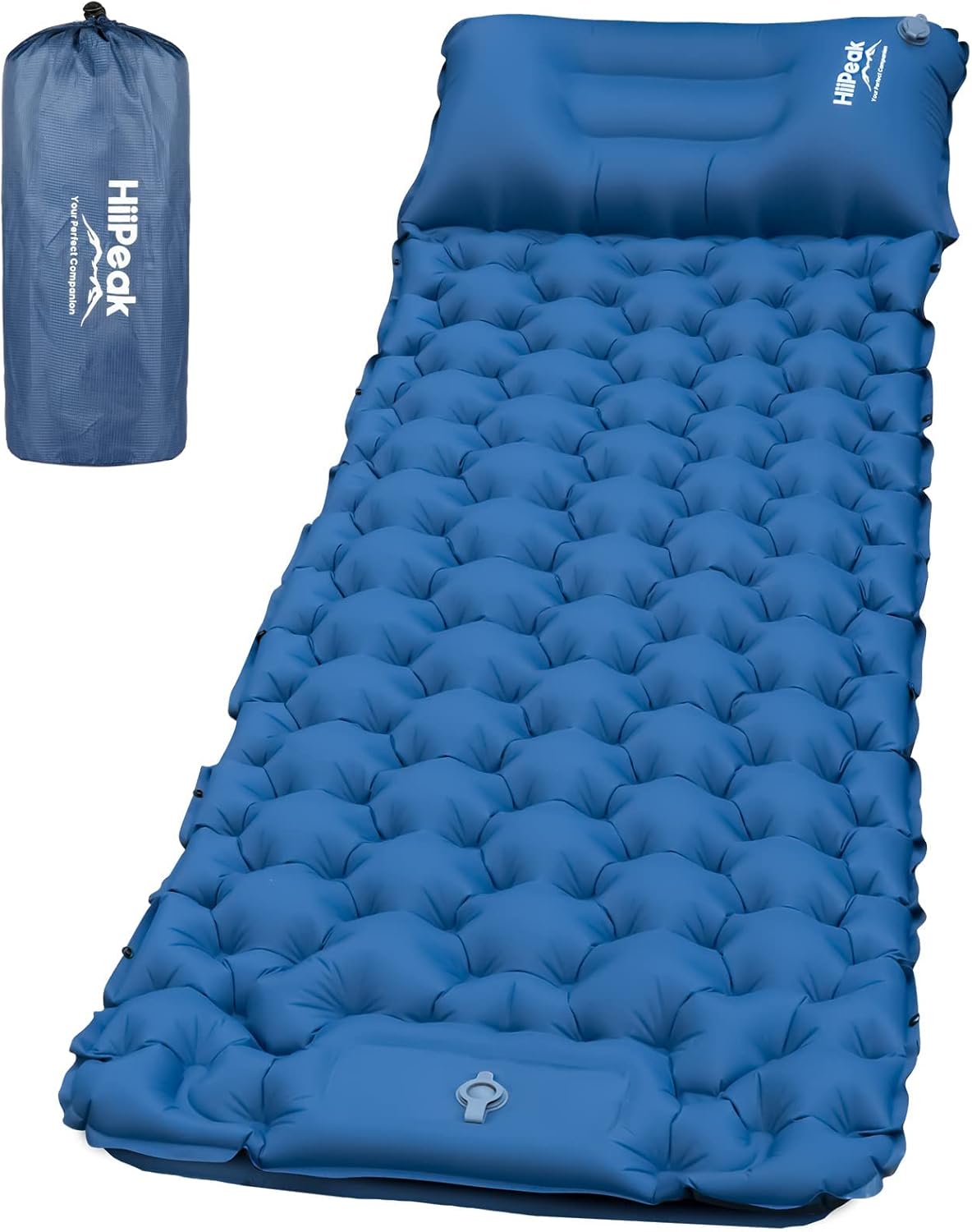
HiiPeak Ultralight Sleeping Pad with Built-In Foot Pump
A compact, lightweight inflatable mat at £23.96, well suited to DofE trips, festivals, and short backpacking routes. Test it at home before your first trip.
The Comfort Story: Hexagon Air Cells, A Slightly Firm Pillow, And Why Side Sleepers Specifically Approve
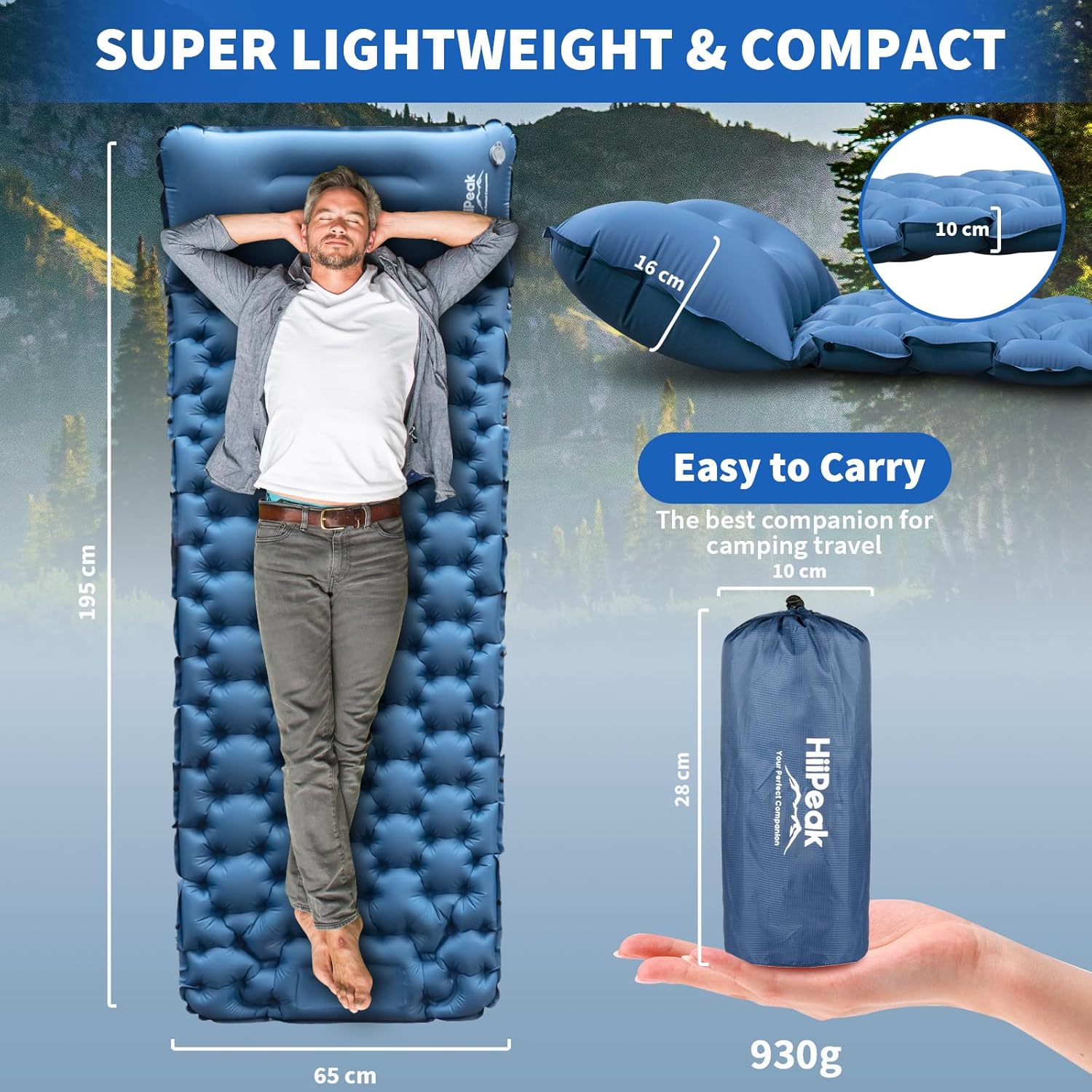
The pad has hexagonal air cells across the surface, with a raised section at one end that acts as a built-in pillow. Inflated, you get roughly 195 x 65 cm of sleeping surface (76.7 x 25.6 inches) with a 3-inch (8 cm) thickness.
The width is on the narrower side compared to a domestic airbed (a typical single airbed is 75 to 90 cm wide), which one reviewer flagged: 'not overly wide but if tent space is limited it is great'. If you're a starfish sleeper who roams across the bed, this isn't your pad. If you stay in roughly the position you fell asleep in, you'll have plenty of room.
The 3-inch thickness is the key spec for ground feel. One reviewer who weighs 20 stone (127 kg) described it as 'perfectly usable for a good night's sleep' and explicitly compared it favourably to thinner inflatables. Another buyer who's a side sleeper called the thickness 'the one for you... you won't have the pain of the hips digging into the ground.' If you've ever woken up on a thinner inflatable with a numb hip, this is the spec to pay attention to.
The built-in pillow section gets mixed reviews. Some buyers love that they can leave a separate pillow at home. Others find it too firm or slightly the wrong shape, and a few specifically end up using their own pillow placed on top or further down the pad. The buyer with 8 months of continuous use noted: 'if it needed a replacement I would get one without a built in pillow as ended up sleeping below that section for comfort as I was using a normal pillow.' Useful warning if you're picky about pillow firmness.
The pro tip from multiple reviewers: don't fully inflate it. Pump it up firm, lie on it, then crack the pillow valve and let air out until it sinks slightly under your body. A rock-hard inflate is the most uncomfortable setting. A gently yielding one is where the hexagon cells do their work.
The Crinkle Factor: This Is A Noisy Pad
Worth flagging up-front because it surprises people. The TPU and polyester fabric used to keep the weight down also makes a noticeable rustling sound when you move on it. Two reviewers used very specific comparisons: 'sleeping on a giant crisp packet' and 'noisier than sleeping on tinfoil.'
If you're a still sleeper or a heavy sleeper, this won't matter. If you fidget, share a tent with someone who fidgets, or have a partner with light sleep, the crinkle is going to be a feature of your night. One buyer specifically said: 'every time she turned over in the night you could hear it. This is despite it having a sheet over it.' A bedsheet doesn't fully solve it.
This isn't a flaw the more expensive Big Agnes or Thermarest equivalents have, and it's a fair trade-off given the pricing here. But it's worth knowing before you buy, especially if you're packing this for a child going on a school trip in a shared tent.
The Deflation Lottery: 21% Of Recent Reviewers Hit A Failure
Now the harder part of this review. Of the 100 most recent reviews, 21 are 1-star, and the failure pattern is consistent enough that it's worth being clear about.
The most common failure mode: deflates within the first one to three nights of use. Some examples from the reviews:
- 'Tested in sitting room over night next morning was flat couldnt find the leak so went in the bin'
- 'Got two great nights of sleep and it deflated during the third night'
- 'The valve seal detached after one night, which meant the pad couldn't hold air at all'
- 'It deflated on the first night within an hour'
- 'Lasted for two nights testing in back garden... has numerous holes in material'
The valve is the failure point for some buyers. The pillow-end deflate valve cap is a small detached part, and one 3-star reviewer reported the whole cap 'came away in my hand and will not reattach' after two nights of use. A few buyers have flagged the inflation valve as failing to seal out of the box.
A second pattern: it works fine for weeks or months, then develops slow leaks. One 2-star reviewer reported air starting to leak 'from all places' after about three months of regular use. Another said it had 'a slow leak' after a while of use.
The pad does ship with adhesive repair patches, which is a telling inclusion (it suggests HiiPeak expect punctures to happen), but multiple reviewers reported the repair patches not holding when they tried them.
If you're buying this for a one-off festival or DofE trip, the failure odds are real but the consequence is a bad night, not a wrecked holiday. If you're planning a multi-day wild camping trip in the Scottish Highlands or Wales where having a working pad is non-negotiable, the failure odds matter more, and you should think hard about whether to spend more on a Thermarest or Big Agnes (one 1-star reviewer specifically recommended this) or to buy two HiiPeaks and take a spare.
What's Actually In The Box And What The Listing Doesn't Spell Out

You get the pad itself with the integrated foot pump, a storage bag, and a small set of repair patches. There's no separate pillow, no separate pump, no groundsheet.
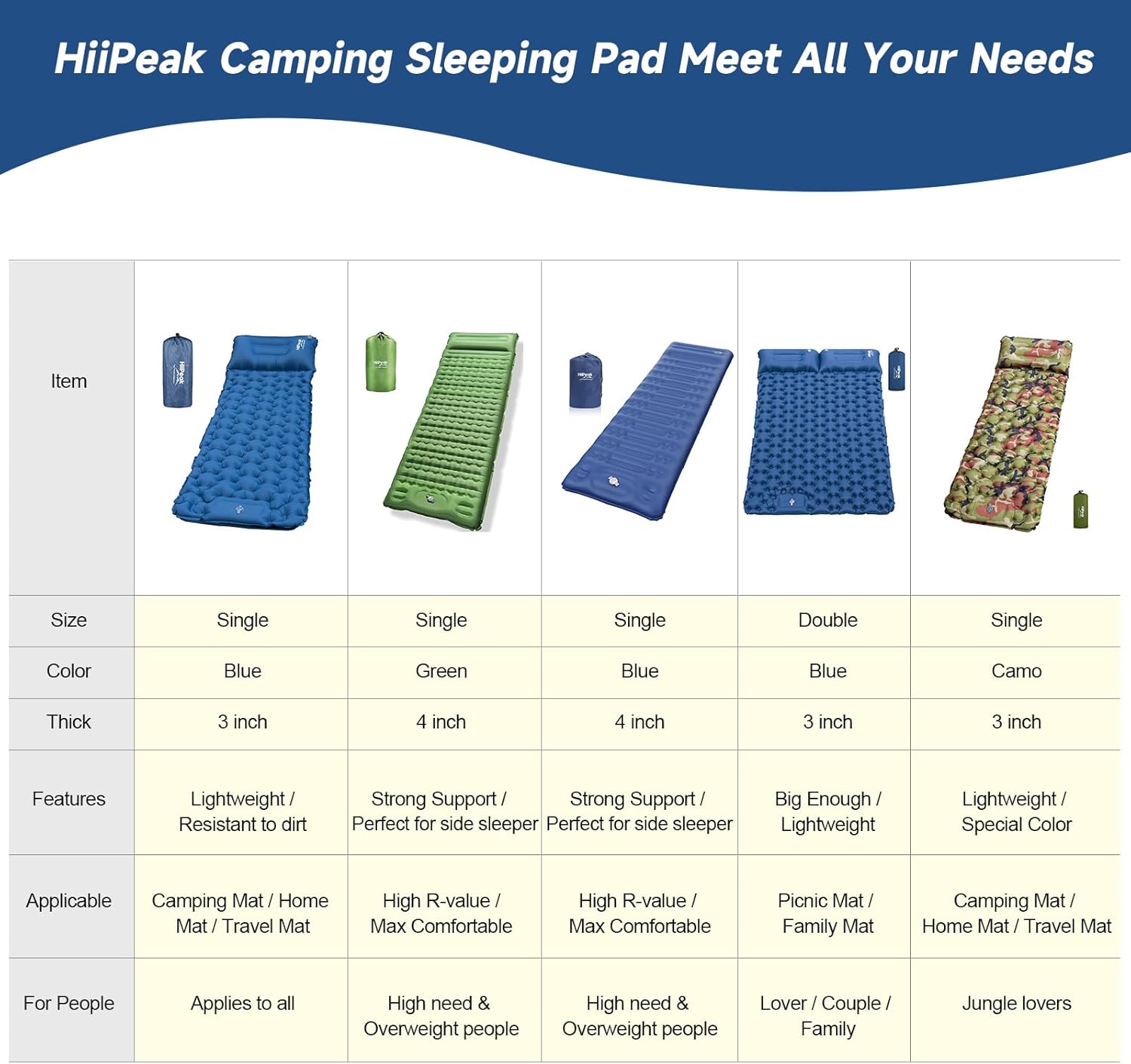
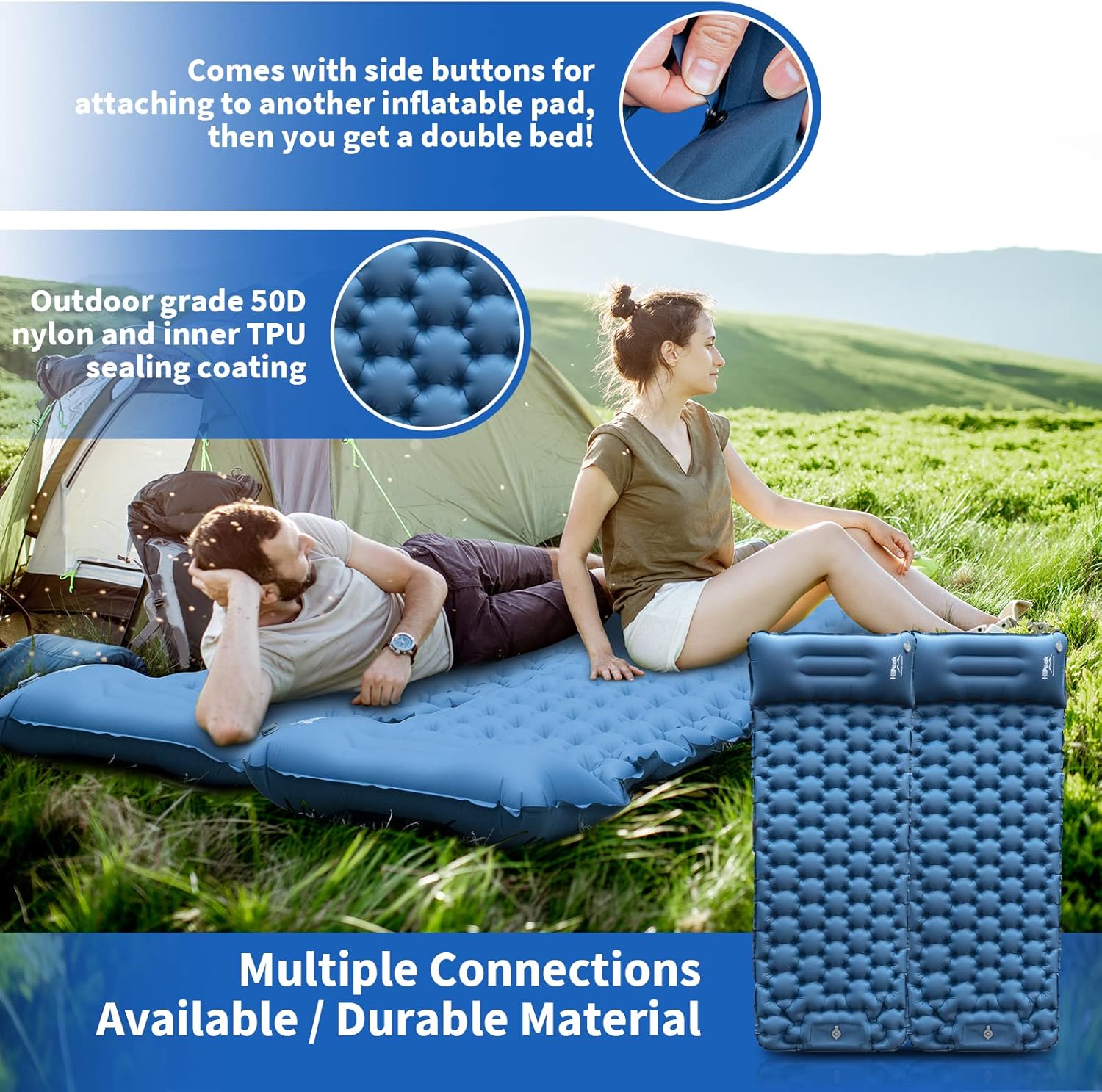
The pad has connection buttons along both long edges, designed to let you clip two HiiPeak pads together to make a wider double-bed surface. If you're a couple buying together for festival or family camping use, this is worth knowing. You can't expand the surface using a different brand, only HiiPeak-to-HiiPeak.
The fabric construction is 50D polyester pongee with TPU coating on both sides. That's a reasonable spec for the price, though it's not ripstop and it's not as puncture-resistant as the heavier base fabrics on premium pads. Pitch on grass, gravel without sharp stones, or inside a tent on a groundsheet, and it should be fine. Pitch directly on heather, sharp gravel, or pine-needle ground without an underlay and you're rolling the dice.
One thing the listing description undersells: the storage bag is on the snug side. A few reviewers reported they couldn't get the pad back in the bag without practice, with the trick being to wrap the rolled pad around the foot-pump section as you fold to keep the width consistent.
The Buy Recommendation: A Specific One
This isn't a pad to buy as a long-term backpacking investment. It's a pad to buy for a defined use case at a price that reflects the failure odds.
It's a strong buy if:
- You need a lightweight pad for a DofE expedition, scout camp, or one-off festival trip
- You want a compact guest sleeping option that lives in a cupboard
- You're a side sleeper who needs the 3-inch thickness more than premium fabric
- You're a tall sleeper who finds standard pads short (the 195 cm length is generous)
- You're packing for occasional fishing, motorcycle touring, or light backpacking where the weight saving over a foam mat actually matters
It's a weaker buy if:
- You camp 30+ nights a year and need long-term durability
- You're going somewhere remote where a deflated pad ruins the trip
- You're a light or sensitive sleeper who'll be bothered by the crinkly fabric
- You sleep alongside someone who'll be woken up every time you turn over
- You're a starfish sleeper who needs a wider surface than 65 cm
The one piece of advice almost every positive reviewer agrees on: test it at home before you take it on a trip. Inflate it on the living room floor, leave it overnight, see if it holds. Many of the failure stories started with someone taking a brand-new pad straight to a campsite without that test. If yours fails the home test, return it within Amazon's 30-day window. If it passes, the odds are good it'll last you the trip you bought it for.
HiiPeak Ultralight Sleeping Pad with Built-In Foot Pump
A compact, lightweight inflatable mat at £23.96, well suited to DofE trips, festivals, and short backpacking routes. Test it at home before your first trip.