
Waterproof Hiking Gaiters for Boggy Moorland UK: Measure Your Calves, Then Read the Small Print
We earn commission from qualifying Amazon purchases. It costs you nothing and does not affect what we recommend.
600D Oxford gaiters close the gap between boot cuff and trouser hem that bog water aims for. The 13 published reviews on this Azarxis pair say the fabric does its job; the size chart is where it can go wrong.
- 600D Oxford and a 6000mm Rating, Translated
- On, Off, and the One Strap You Set Once
- Two Fit Complaints, Both About Women's Legs
- Four Days of Scottish Bog, and the Wash-Down After
- The Top Bungee Is the Weak Point
- Not Snake Proof, by Their Own Photo
- A 4.0 From Us, and Why the Lifetime 4.2 Still Stands
Boggy moorland has a reliable trick: the ground looks like grass until your boot goes in past the cuff, and whatever water misses the boot runs straight down your sock. Gaiters exist for exactly that gap between boot and trouser, and the Azarxis leg gaiters are one of the most popular answers on Amazon UK, a 600D Oxford pair with a 6000mm waterproof rating, a front Velcro opening and a 4.2-star average across 3,049 ratings.
We read the 13 customer reviews published on the listing itself, from a four-day Scottish wilderness trek to a bungee that snapped on first wear, and pulled the size chart out of the product photos, because fit decides more purchases here than fabric does. There is also one claim in the bullet points that the listing's own images quietly take back.
600D Oxford and a 6000mm Rating, Translated
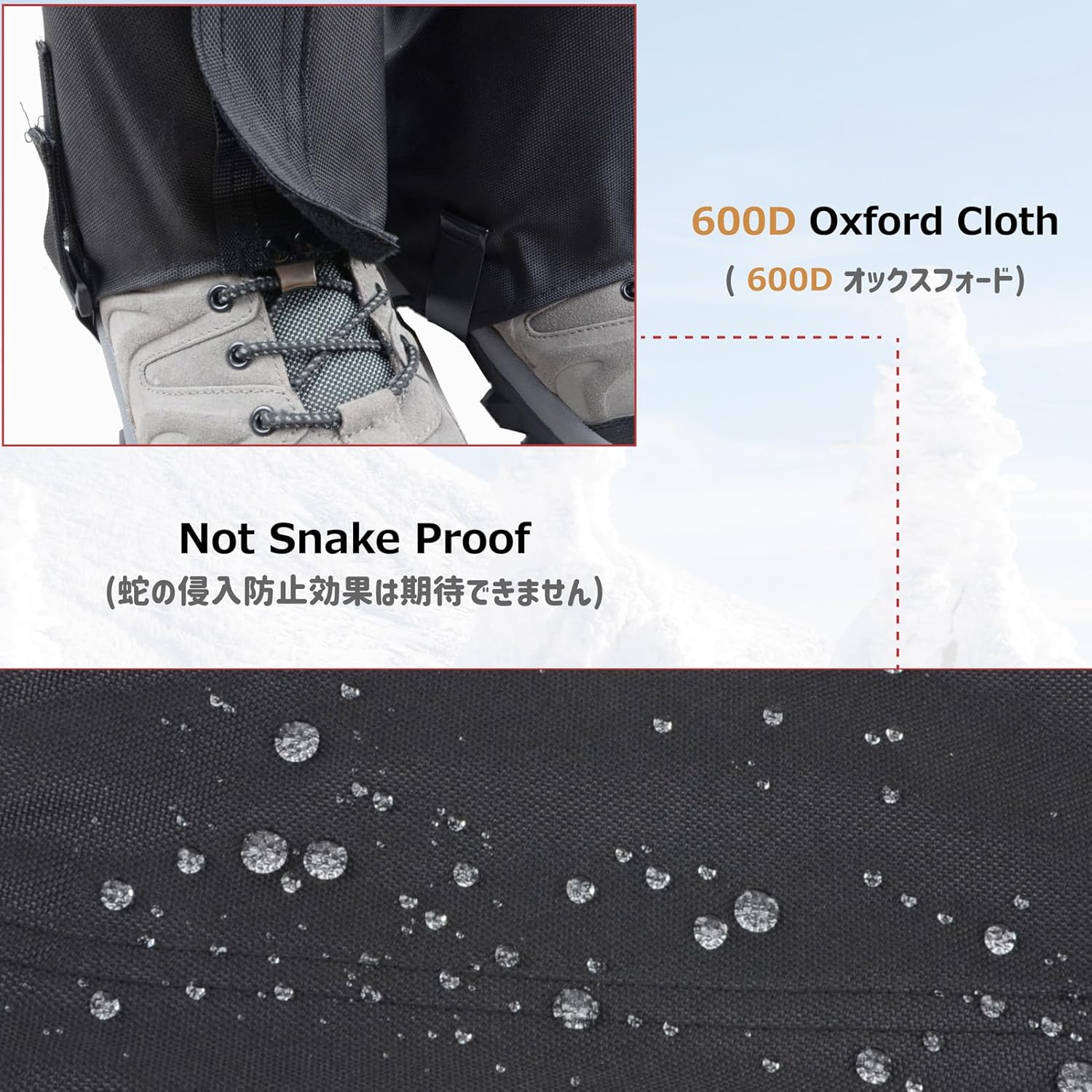
The fabric is 600D Oxford polyester. Denier is the weight of the yarn a cloth is woven from, and 600D is the thick end of the scale: the grade that turns up in budget tent groundsheets and rucksack bases, chosen for scuff resistance rather than for saving grams. The listing backs it with a 6000mm waterproof figure. That number is a hydrostatic head, the height of the water column the fabric can hold back before it soaks through, and 6000mm is a solid mid-tier rating: UK labelling convention treats roughly 1,500mm as the floor for calling a fabric waterproof at all, and entry-level tent flysheets commonly sit between 1,500 and 3,000mm.
In moorland terms, that spec covers the water that actually reaches a gaiter: bog splash, rain running off your knees, and mile after mile of brushing through soaked heather and bracken. It will not make you amphibious, and no gaiter will. The top closes with a drawstring rather than a sealed cuff, so anything deeper than the gaiter itself, 33 to 41cm tall depending on size, is a wellies-or-waders problem.
The listing also calls the fabric windproof and tear-resistant, and one product photo shows rain sitting on the weave in beads rather than soaking in. What the spec sheet never gives is weight. Azarxis calls them lightweight and foldable, the most-upvoted buyer in the review sample says "you do not know that you are wearing them", and an Italian reviewer calls them feather-light, but no gram figure appears anywhere on the page, which is worth knowing if you count base weight.
On, Off, and the One Strap You Set Once
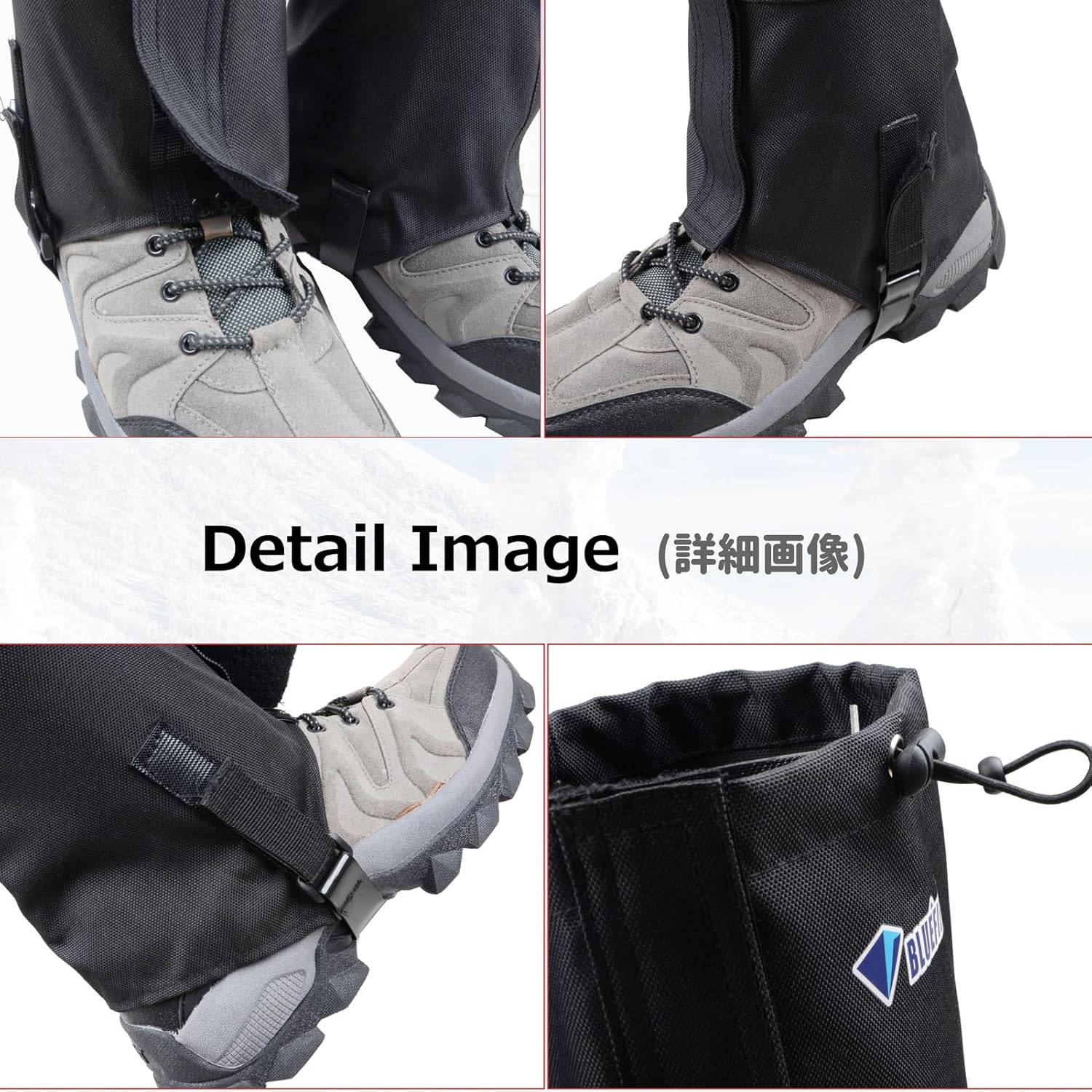
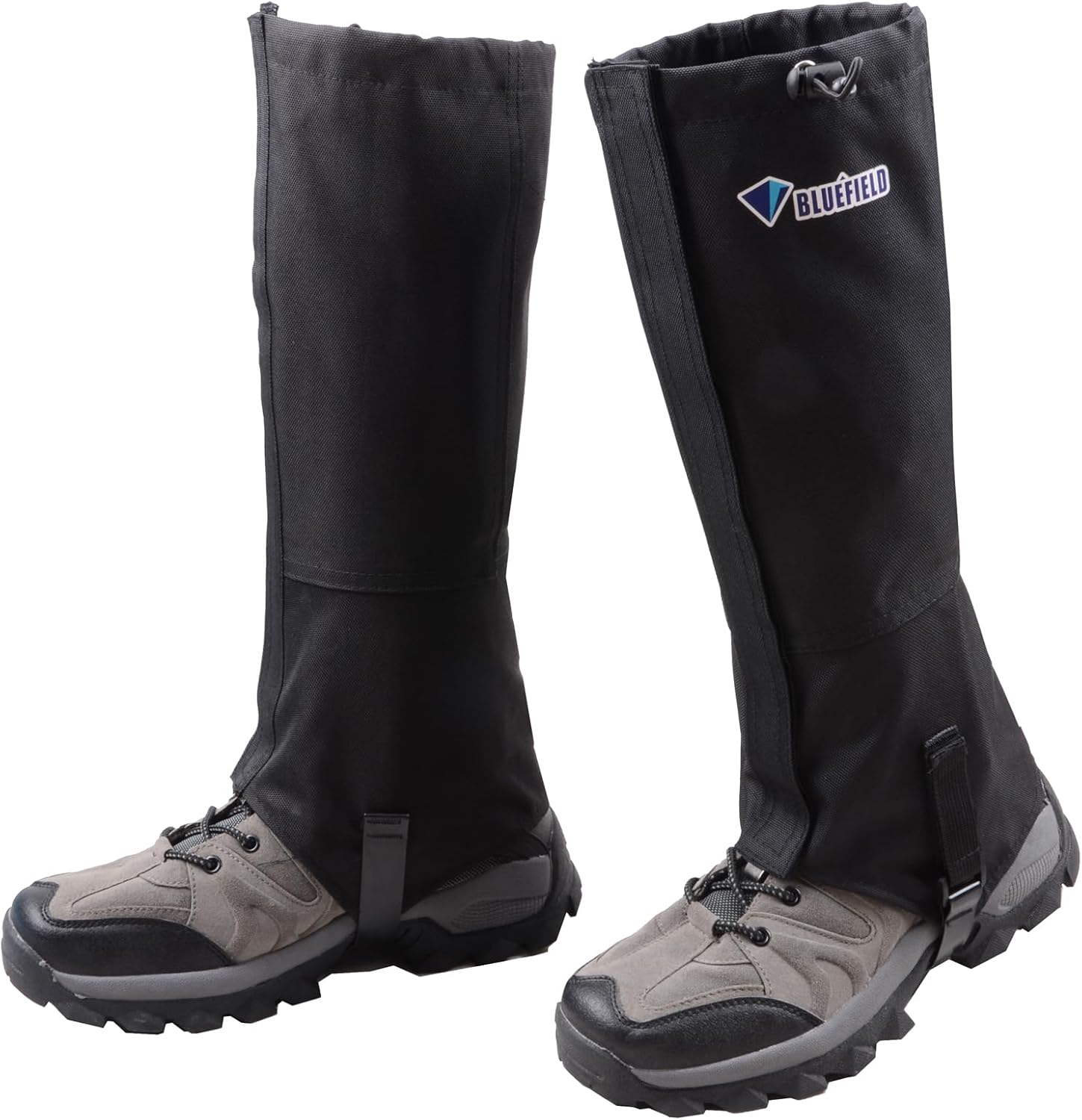
Gaiters live or die by faff. The design here is the simple school: a full-length hook-and-loop opening down the front of the shin, an elastic drawstring with a cordlock at the top, a TPU strap that passes under the instep and closes on a 6.2cm run of Velcro, and a small metal hook that clips to your bootlaces.
The most-upvoted review in the sample, at 7 helpful votes, chose them for exactly this after trying rivals in an outdoor shop: "they were cumbersome to put on with zips at the back. These are SO easy." That buyer's routine is the one the design intends: set the instep strap length once and leave it, step in, close the Velcro, snug the drawstring. Four of the 13 reviews describe them as easy to put on, and nobody reports a struggle getting them off at the end of a wet day.
Two caveats ride along. First, there is a short learning curve. James Reed, back from a four-day Scottish trek in these, advises to "take your time putting them on or taking them off each time - you'll get quicker doing this + won't break anything that way", advice aimed squarely at the Velcro and the buckles. Second, the lace hook is the one fitting with mixed reports: a US buyer who wears them for garden work found it "slipped off my boot laces a couple times" on thin, round laces, while the shop-comparison buyer ignores it entirely and reports it seems to attach itself anyway. No instructions come in the packet, according to that same US buyer, though there is little to instruct.
Two Fit Complaints, Both About Women's Legs
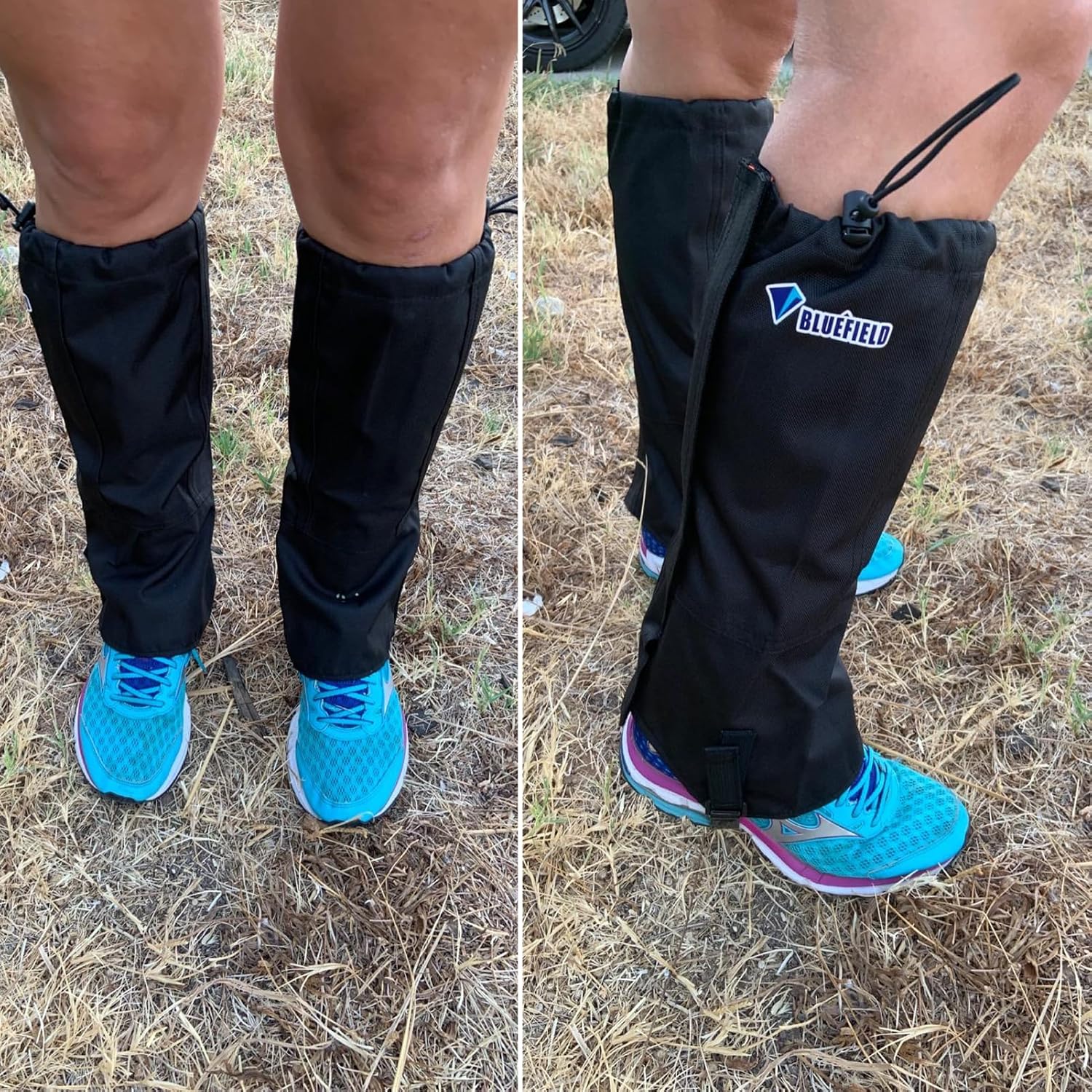
No review in the sample criticises the waterproofing. The complaints that exist are about fit, and both concern women. A four-star buyer, a 6ft woman who ordered the largest size, found "the velcro was only just managing to attach to itself" around calves she describes as large but not massive, and although it never came undone, she did not feel confident wearing them in all situations. James Reed's five-star carries the second case inside it: his wife found the same pair "too long and/or narrow for her legs" and ended up with a Mountain Warehouse pair that fitted much better, while he, a tall thin bloke by his own description, found the Large great.
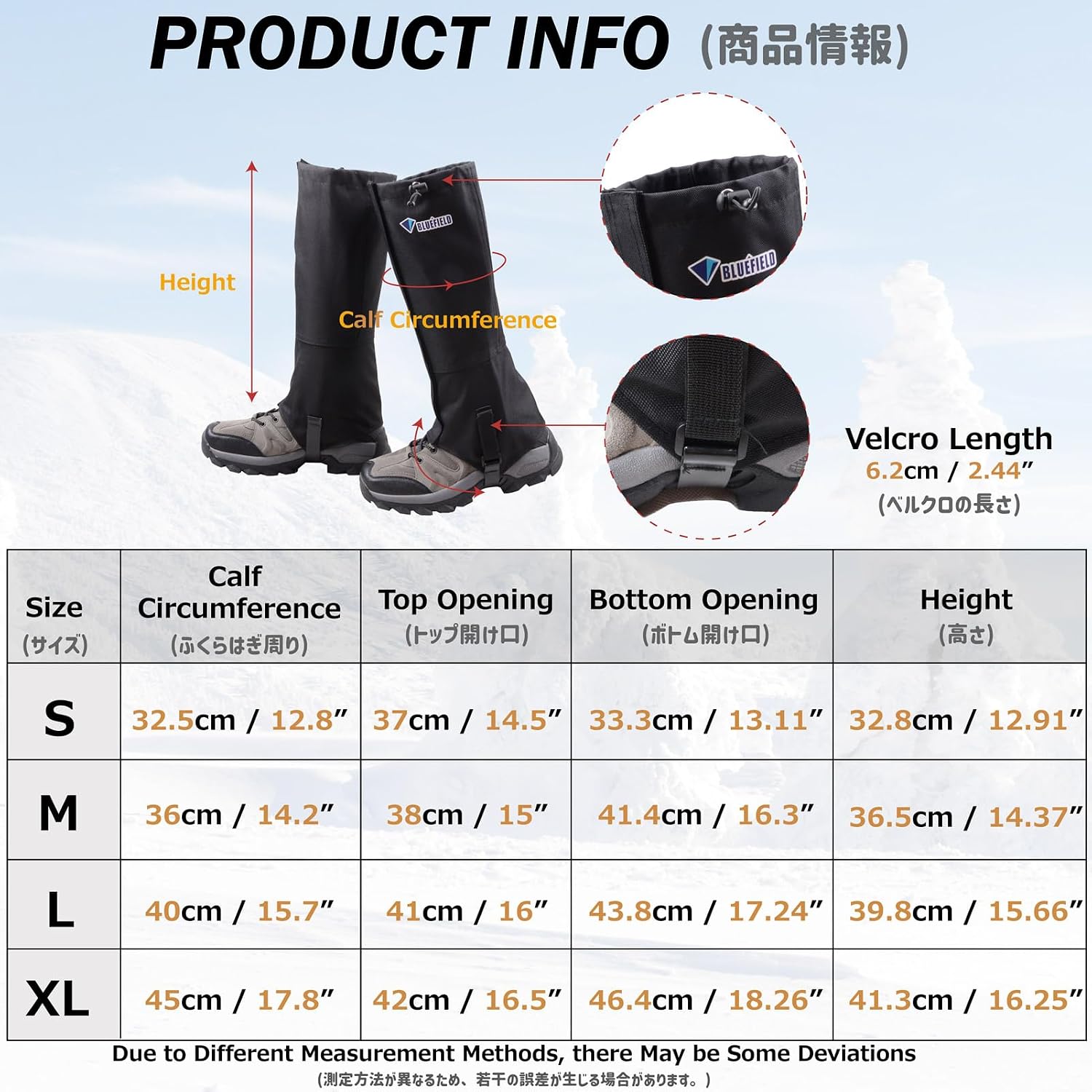
The counterexample sits in the US: a 5ft 3in woman reports the Medium fits well, with room to wear them over waterproof boots and sweatpants. So the cut is wearable for women, but it runs long and lean, and the margin disappears fastest at the calf. The listing's size image gives the numbers to check before ordering:
- Small: 32.5cm calf circumference, 32.8cm tall
- Medium: 36cm calf, 36.5cm tall
- Large: 40cm calf, 39.8cm tall
- XL: 45cm calf, 41.3cm tall
Put a tape measure around the widest point of your calf over your walking trousers. If you land within a centimetre or two of a size's stated circumference, the four-star experience above is what near-the-limit looks like: the Velcro still fastens, but with barely any overlap left. On height, a UK five-star confirms the chart's arithmetic: "Length is good and fit just beneath knee", with no slipping down once worn.
Azarxis Waterproof Leg Gaiters
Front-Velcro 600D gaiters that keep bog splash, mud and ticks off UK moorland walks. Check your calf against the size chart, then see the listing.
Four Days of Scottish Bog, and the Wash-Down After

The closest thing the sample offers to a moorland trial is James Reed's trek: four days in the Scottish wilderness, "up and down rocky mountain paths, mud, bush, wetlands, rain etc", much of it in shorts. His verdict: they "kept my socks/legs dry and protected them from thorns, ticks etc". Shorts plus gaiters is a demanding combination, because there is no trouser layer shedding water above them, and ticks are exactly what you collect crossing tussock and bracken between the wet sections.
He is not alone. Four of the eight UK reviews report dry legs or call the gaiters waterproof outright. A four-star buyer keeps it plain: "It's waterproof and very practical and keeps the mud off." Another five-star, replacing an older pair, calls them fully waterproof and notes a side benefit that matters on an exposed moor in March: the extra layer adds warmth to the lower leg. Abroad, an Italian buyer used them in snow and reports the boot finally stayed dry, which squares with the manufacturer photos pushing snowshoeing as hard as hiking, and a US reviewer wears them over bare skin against thorny garden plants without overheating.
The after-care is the unglamorous part that makes gaiters worth owning at all. Peat stains everything it touches, and the routine James Reed describes is the one to copy: hose them down, give them a brush, and they dry quickly with a bit of sunshine. No review in the sample reports water getting through the fabric, and the only membrane complaint among the 13 concerns a pair three years old, covered next.
The Top Bungee Is the Weak Point
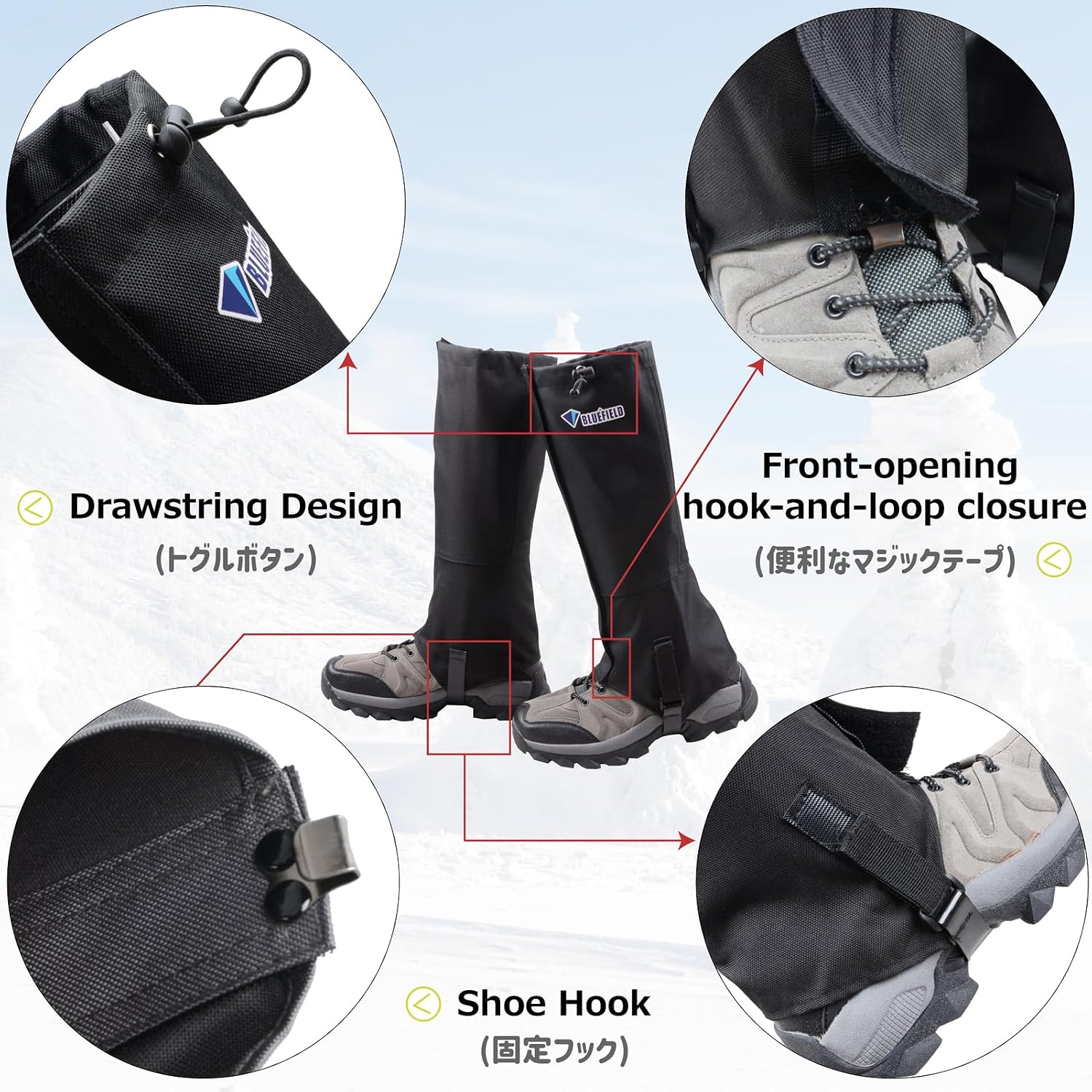
Two of the 13 reviews report something physically giving way, and both failures are small parts rather than fabric. The three-star, the lowest rating in the sample, is the sharper story: the elastic bungee at the top of one gaiter snapped the first time the buyer put tension on it to tighten a loose cuff. Sizing was right, everything else looked fine, and the review signs off with "Pity, because otherwise they seem like a good product." The four-star failure is slower: "The only problem is the stitches start coming off!"
That pattern matches the advice in James Reed's review, passing on what he had seen other buyers suggest: be deliberate opening and closing them, "so as not to rip any material or the buckles". Elastic cords and stitched seams are where a budget gaiter saves its money, and this one is no exception.
The long-term picture comes from Canada, from the sample's only repeat buyer, now on a third pair. Each pair, they report, lasts about three years before "the internal membrane peels off", after which a water-repellent spray keeps it serviceable, and they have never broken a strap or the Velcro on any of the three. Their position on the fragile parts is blunt: "you are buying a cheap item. what do you expect. just replace them." That is the deal on the table. Treat these as consumable kit with a rough three-year service life per pair, handle the elastics with some care in the first week, and the price of entry keeps making sense; expect heirloom build and the three-star experience is waiting.
Not Snake Proof, by Their Own Photo
Read the bullet points and you will find a promise that these "help guard against insects, snake bites, thorns, briars, and debris". Scroll the photos and you will find a close-up of the fabric captioned, in plain English, "Not Snake Proof". When a listing argues with itself, believe the caption over the sales copy: 600D polyester is thorn kit, not bite kit. On UK moorland the stakes are low, adders are shy and bites are rare, but nobody anywhere should be buying fabric gaiters as snake armour.
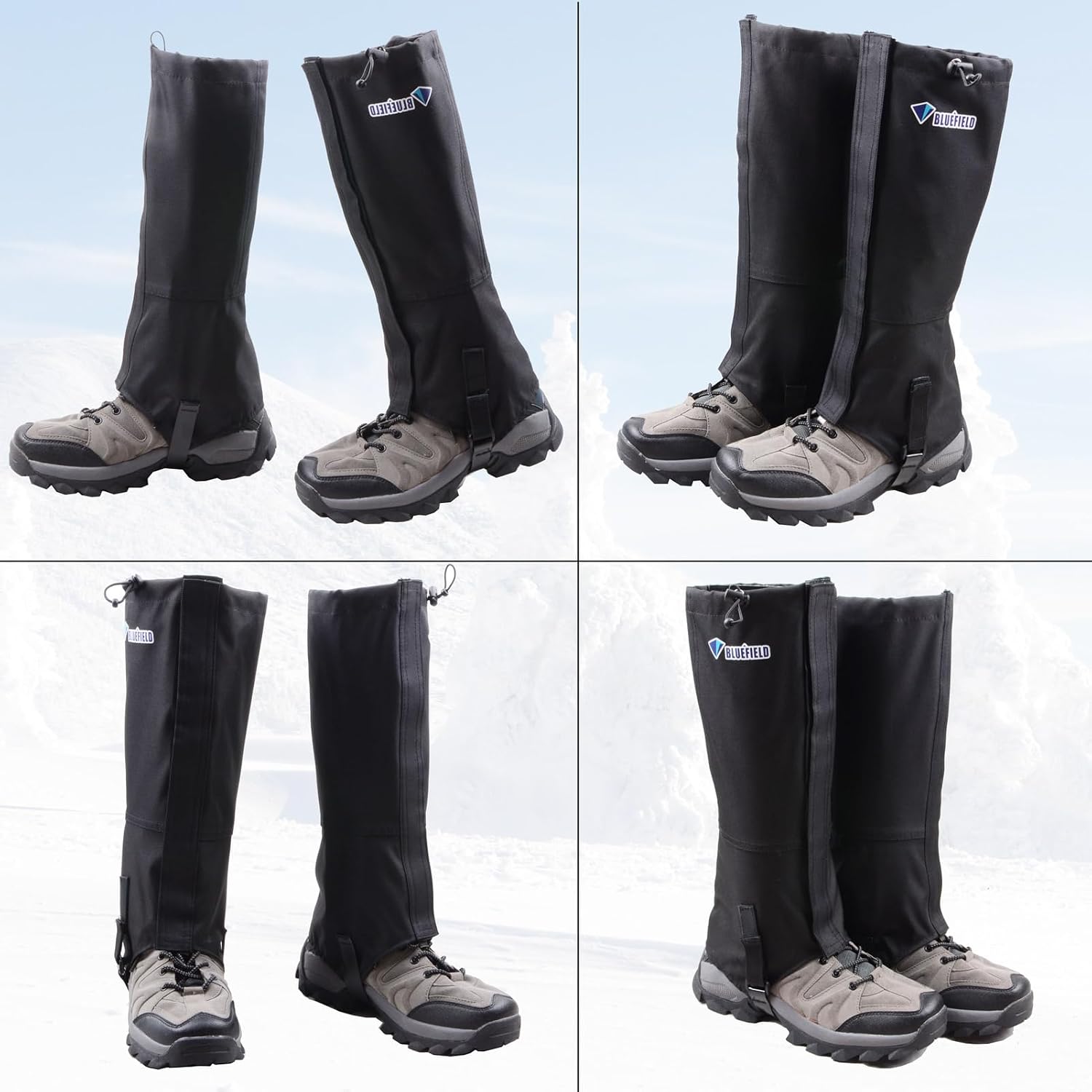
The photos give away something else. The logo on the gaiter in the product photos reads Bluefield, not Azarxis. This is white-label outdoor kit: the brand on the order page and the badge on the product are simply two different names, so do not be thrown if the pair that arrives wears a logo you did not order. In the same spirit, the product title manages to wedge in the words Outdoor Research, which happens to be the name of a premium American gaiter maker, alongside hiking, climbing, cycling and gardening. Search-bait, in short.
Nothing here changes what the gaiters are. It does tell you how much weight to give the listing's adjectives, and it is why this review leans on the 13 buyers and the measurable numbers instead of the marketing.
A 4.0 From Us, and Why the Lifetime 4.2 Still Stands
Our score needs its provenance on the table. It rests on the 13 customer reviews Amazon publishes on the product page itself, not the full 3,049, and that sample skews positive because the page surfaces top and recent reviews: ten five-stars, two fours, one three, and not a single one- or two-star among them. For the product's overall standing, the listing's lifetime figure of 4.2 stars across 3,049 ratings is the fairer number. Eight of the 13 are UK purchases; the rest come from Italy (two), Canada, the US and France. Two entries carry an asterisk of their own: one five-star comes from a buyer who says they have not worn them yet, bought for someone else, and one Italian five-star discloses it arrived through a review programme and is the only non-verified purchase of the 13.
Weighing all of that, we land on 4.0 out of 5. The case for: no review in the sample reports water getting through, the front-opening design wins converts from zip-back gaiters, and four of the 13 separately describe them as well priced for what they do. The case against a higher score: a bungee that snapped on first wear, stitching that works loose, a long narrow cut that two of the 13 reviews flag for women's fit, and a listing that oversells snakes and under-labels brands, so the size chart and the buyers deserve more of your trust than the adjectives.
If your calf measures comfortably inside the chart and you want light, consumable insurance against bog, mud, ticks and thorns, check the current listing on Amazon. If you are hard on kit, between sizes or shopping for wider calves, follow James Reed's wife toward a different cut, or the premium shelf this listing borrows a name from.
Azarxis Waterproof Leg Gaiters
Front-Velcro 600D gaiters that keep bog splash, mud and ticks off UK moorland walks. Check your calf against the size chart, then see the listing.