
When to reproof a waterproof jacket UK: the beading test that decides it
Most jackets get reproofed a season late, by which point the wearer has already spent a walk cold and clammy. The beading test takes ninety seconds at the kitchen tap, and what it tells you matters more than any date on a calendar.
We earn commission from qualifying Amazon purchases. It costs you nothing and does not affect what we recommend.
Quick answer
When to reproof a waterproof jacket UK walkers can settle in ninety seconds at the tap: if water stops beading into tight droplets and the face fabric goes dark and soaks in, the repellent finish has gone. For a British autumn that usually means September, before the wet weather returns rather than during it.
The signs the coating has given up
A waterproof jacket almost never fails all at once. The membrane usually outlives everything else, and what goes first is the durable water repellent finish on the outside, the thin treatment that makes rain bead up and roll off. It is sacrificial by design: pack straps, grit and washing all take it off.
So the question is not the jacket's age, but whether the outside still sheds water.
The beading test
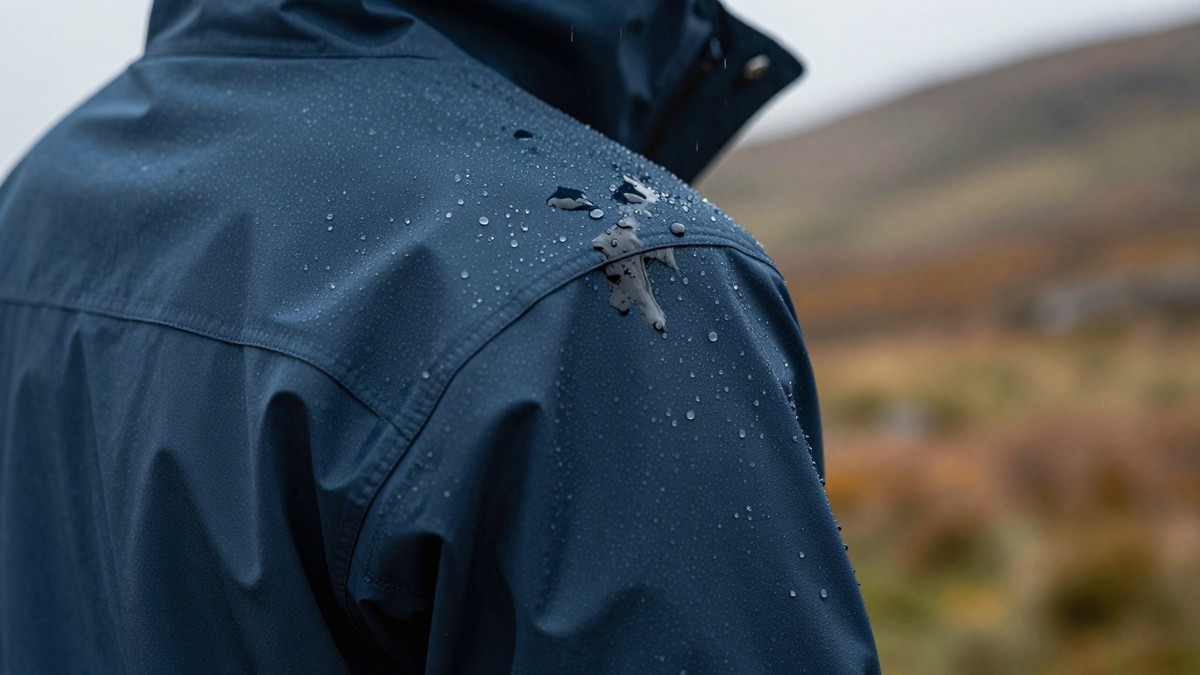
Run a slow cold tap over one shoulder of the dry jacket, or flick water at it from a cup. A finish that still works throws up tight round droplets that chase each other off the fabric as you tilt it. A finish on its way out makes droplets that slump into flat discs and stay put.
Then look at the fabric underneath. If it has turned dark and stays dark after you blot it, water has gone into the weave rather than sitting on it. That is wetting out, and it settles the question. Repeat on a forearm, because panels wear at different rates.
Five checks you can run in ninety seconds
- Flat droplets instead of tight beads. The repellent layer goes at the shoulders and the tops of the forearms first, so a jacket can bead perfectly on the chest and be finished where the rucksack sits.
- Dark patches in light rain. A shell going from mid blue to near black across the shoulders after ten minutes of drizzle is wetting out, and the dark area maps where the finish went.
- Clammy inside on an easy walk. Once the outer face is saturated your vapour cannot cross it, so the membrane effectively stops breathing and sweat condenses inside. Feeling wet in trivial weather is a repellency problem.
- It dries slowly. A shell with a working finish shakes mostly dry and hangs dry in an hour. One still cold and heavy next morning is holding water in the weave.
- Stiff, shiny or crackly panels. Grime, sweat salt, sunscreen and campfire smoke sit on the face fabric and pull water in. This one calls for a wash first, and the wash alone often brings the beading back.
Wet from the inside is not a leak
The commonest misdiagnosis in British hillwalking is treating condensation as a leak. Wet spread evenly across your back and chest, worst under the rucksack and on climbs, with the outside gone dark all over, is wetting out plus your own vapour with nowhere to go. Vent early and reproof; a repair patch will not help.
A real leak is local: a wet line along a lifted seam, a rub hole at the hip belt, water tracking up a sleeve off the cuff. It is the same physics that turns up inside a waterproof bivvy bag that seems to leak overnight, where the moisture is almost always the sleeper's own.
Hardshells, softshells and insulated jackets are not the same job
Reproofing does the same chemical thing to every garment, but how urgent it is, and which product to use, depends on what you own. Waxed cotton is the exception: it wants reproofing wax and heat, not any of this.
- Membrane hardshells, two, two and a half or three layer. These keep liquid water out even after the beading has gone, so you get cold and clammy long before you get wet through. A spray-on treatment is usually the better fit because it only touches the outer face.
- Softshells and coated windproofs. With no membrane, the repellent finish is most of the waterproofing, so when beading goes water comes through in minutes. These need re-treating more often and take a wash-in reproofer well.
- Insulated and lined waterproofs. A face fabric that wets out soaks the insulation behind it, and wet down stops insulating almost entirely. Keep the treatment on the outside.
Why newer jackets seem to need this sooner
Almost every jacket and aftermarket treatment sold in the UK now uses fluorocarbon-free repellent chemistry, after restrictions on the long-chain compounds that used to do this job. The trade-off is widely acknowledged rather than hidden: the newer finishes bead well when fresh but wear off faster. If a recent jacket wants re-treating sooner than the one it replaced, that is why, and it is not a defect.
Month by month, late summer into winter
The fabric beats the calendar, but the calendar tells you when to look. Adjust for use, not for where you live: a shell worn under a loaded rucksack most weekends may want this twice a season, while one that hangs on a peg between family walks can go years.
Late August and early September: the season handover
The jacket comes home from the last long trip of the summer, salty and dusty and probably shoved damp into a pack. Run the beading check now, while nothing depends on the answer and dry evenings are still in hand.
September: the month most people should act
September is when the wet weather returns properly and the jacket comes out of storage, and it is the best month of the year for this. A wash, a treatment and a proper dry take an evening and a morning, so doing it before the first sodden weekend rather than during one is most of the trick. If you only do this once a year, do it now.
October: catching up, and check the legwear too
By October the jacket is in constant use and short days give you less chance to dry anything. If you skipped September, take the first clear weekend. Look at the waterproof trousers too: they usually wet out first, thanks to constant flexing at the knees and spray off the ground. Our write-up on waterproof over trousers for hillwalking covers what that failure looks like on legwear.
November: constant use and spray-on top-ups
November is when the jacket stops drying between outings, and cold air makes wetting out feel far worse, because a saturated face fabric sits against your insulation and pulls heat out of you. This is the month for a spray-on top-up on the shoulders, hood and forearms after a wash, rather than a full rewash you cannot dry.
December to February: repairs, not projects
Winter is hard on the shoulders and hips and offers almost no drying weather. Keep to spot treatments on the panels that have failed, hang the jacket somewhere warm and airy between trips, and leave the full wash for a gap in the diary.
March to August: nothing yet, and then storage
The honest answer for most of spring and summer is that there is nothing to do. If a hard winter finished the finish off, spring is the calmest time for a full wash and treatment, and the moment to get lifted seam tape looked at.
Otherwise the jacket lives at the bottom of a pack until autumn. Never put it away damp, and hang it rather than leaving it compressed for months: a shell stored screwed up in a humid loft comes out with grime pressed into the face fabric, and that is what stops it beading in September.
Washing and re-treating, step by step
Give this an evening and the following morning. The washing is quick, the drying is not, and rushing it is how people conclude a treatment failed.
- Read the care label first. Manufacturers do not agree about heat, machine cycles or ironing. Where a general guide and the label conflict, the label wins.
- Prepare the garment. Empty the pockets, close every zip including the pit zips, and fasten the storm flaps.
- Purge the machine. Wipe out the detergent drawer and run an empty rinse cycle. Residue from ordinary laundry is the commonest reason a fresh treatment fails: the surfactants left behind are what makes fabric attract water.
- Wash with a technical wash. A cleaner made for waterproof clothing, gentle cycle, low spin, extra rinse. No biological detergent, no fabric conditioner, no bleach. The jacket has to be clean before any treatment goes near it, because repellent applied over grime comes off with the grime.
- Choose wash-in or spray-on deliberately. A wash-in reproofer coats every surface including the lining, which can leave a lined or insulated jacket feeling less breathable. A spray-on treats the outer face only. If it were our own jacket: spray-on for anything lined, insulated or three layer, wash-in for unlined shells and softshells that depend entirely on the finish.
- Apply it to a clean, damp jacket unless the bottle says otherwise. Hang it up, work from the collar down, and go over the shoulders, forearms and hood twice. Wipe drips off the lining and zips as you go.
- Add heat only if the label allows it. Many repellent finishes bond better with warmth, which is why a low tumble dry gets recommended so often, and plenty of garments cannot take it because taped seams lift and inner coatings can be damaged. If the dryer is ruled out, an airing cupboard for a day works, or a cool iron through a tea towel where ironing is permitted. No heat still works; the finish just fades sooner.
- Check the result before you rely on it. Once the jacket is fully dry, run water over that same shoulder. Tight beads mean it worked. Flat dark patches on a freshly treated shell nearly always mean it was not clean enough, so wash again and repeat.
What goes wrong, and how to recover
Ordinary detergent, or soap left in the fabric. Biological powders and liquids leave a residue that holds water against the fabric, so a jacket washed this way wets out faster than one that was merely dirty, and skipping the extra rinse does the same. Recovery is easy: two cycles with a technical wash, then treat it.
Fabric conditioner. The worst thing you can do to a shell: it leaves a soft, water-loving film across the face fabric and in the membrane's pores. Repeated technical washes shift most of it, but some jackets never bead as well again, so treat it as damage rather than a setback.
Tumble drying a garment that cannot take it. The one real casualty on this list. Heat can lift taped seams and separate a membrane from its face fabric, and a shell gone bubbled or sticky inside cannot be brought back at home. Delamination in the first few years is often a warranty matter.
Wash-in used where a spray was wanted. On a lined or insulated jacket a wash-in reproofer treats the lining too, and the inside ends up clammy and slow to dry. Two technical washes strip most of it out, then spray the outer face instead.
Treating a dirty jacket. The most commonly wasted evening of the lot. The repellent bonds to the dirt rather than the fibres and disappears on the first wet walk. Wash, then treat, always in that order.
Putting it away wet. Mildew spots and a smell that will not shift. Hang it until it is dry through, hood and cuffs included, before it goes in a cupboard.
Frequently asked questions
How often should a waterproof jacket be reproofed?
There is no fixed interval worth trusting, which is why the beading check exists. A shell worn hard under a rucksack through a UK winter often wants doing once or twice a year, while an occasional-use jacket can go several. Wash it far more often than you treat it.
Does washing a waterproof jacket ruin it?
No, and skipping the wash does more harm. Dirt, sweat salt and sunscreen on the face fabric are what stop it repelling water in the first place. The damage blamed on washing comes from biological detergent, fabric conditioner and hot cycles.
Should you tumble dry a waterproof jacket to reactivate the coating?
Only if your care label says you can. Warmth helps many repellent finishes re-bond and plenty of brands recommend a low tumble, while others state that their garment must never go near a dryer. Manufacturers disagree, so your own label is the only answer that counts.
Wash-in or spray-on, which one should you use?
They do different jobs rather than one being better. Spray-on treats the outer face only, which is what a lined, insulated or three layer hardshell wants. Wash-in coats every surface and suits unlined shells and softshells. If you are choosing blind for a modern hardshell, take the spray.