
Yellowstone EVA Camping Mat With Foil: Why It Keeps Ending Up Behind Radiators, Under Airbeds, and Cut Into Seat Squares
We earn commission from qualifying Amazon purchases. It costs you nothing and does not affect what we recommend.
One reviewer cut this mat into squares for people to sit on and keep dry. Another put pieces behind their radiators to heat rooms faster. A third has used the same one for four years, through winters down to minus five. The Yellowstone EVA mat is the most quietly useful £6.69 in UK camping, as long as you buy it for the right job.
- What You Actually Get For £6.69
- Why The Same Mat Gets 5 Stars And 1 Star From Two Different Campers
- The Airbed Underlay Trick (And Why So Many Buyers End Up Doing It)
- Scouts, DofE, and Kids' Camps: Where It Belongs, And Where It Doesn't
- The Secondary Uses Reviewers Can't Stop Mentioning
- The Three Durability Complaints Worth Naming
- Should You Buy It?
Scroll the reviews for this mat and you find something unusual. Five-star buyers and one-star buyers often agree on exactly the same thing: the mat is thin, lightweight, and basic. The difference is what they wanted from it.
At £6.69 on Amazon, the Yellowstone EVA Camping Mat With Foil is one of the cheapest bits of kit in UK camping. It has a 4.2-star average across 2,229 ratings, but if you drill into the 100 most recent reviews the average drops to 3.65. That gap tells a story. Half of buyers arrive expecting a budget sleeping mattress. The other half arrive knowing it's an insulation layer and a compact sit pad, and they're the ones leaving the glowing reviews.
This isn't a mat we'd pick for comfort. It's a mat we'd pick for a Scout camp bag, a wild camping pack, a car boot, or, as several reviewers have discovered, a radiator wall.
What You Actually Get For £6.69
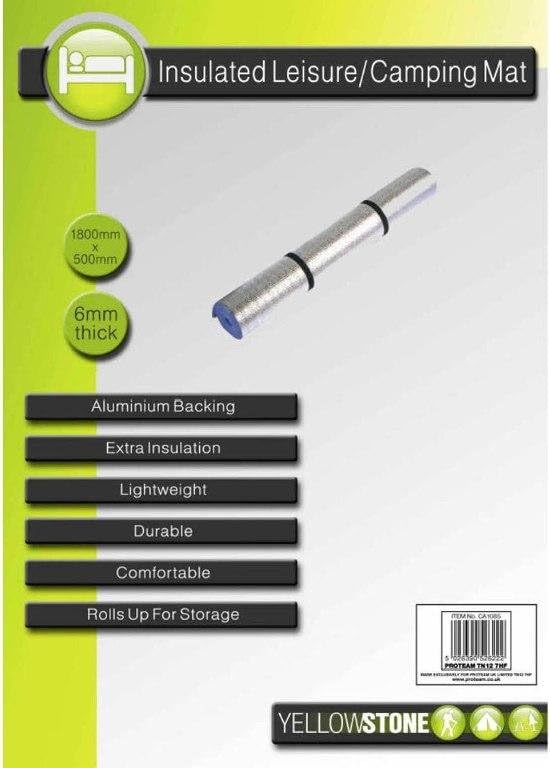
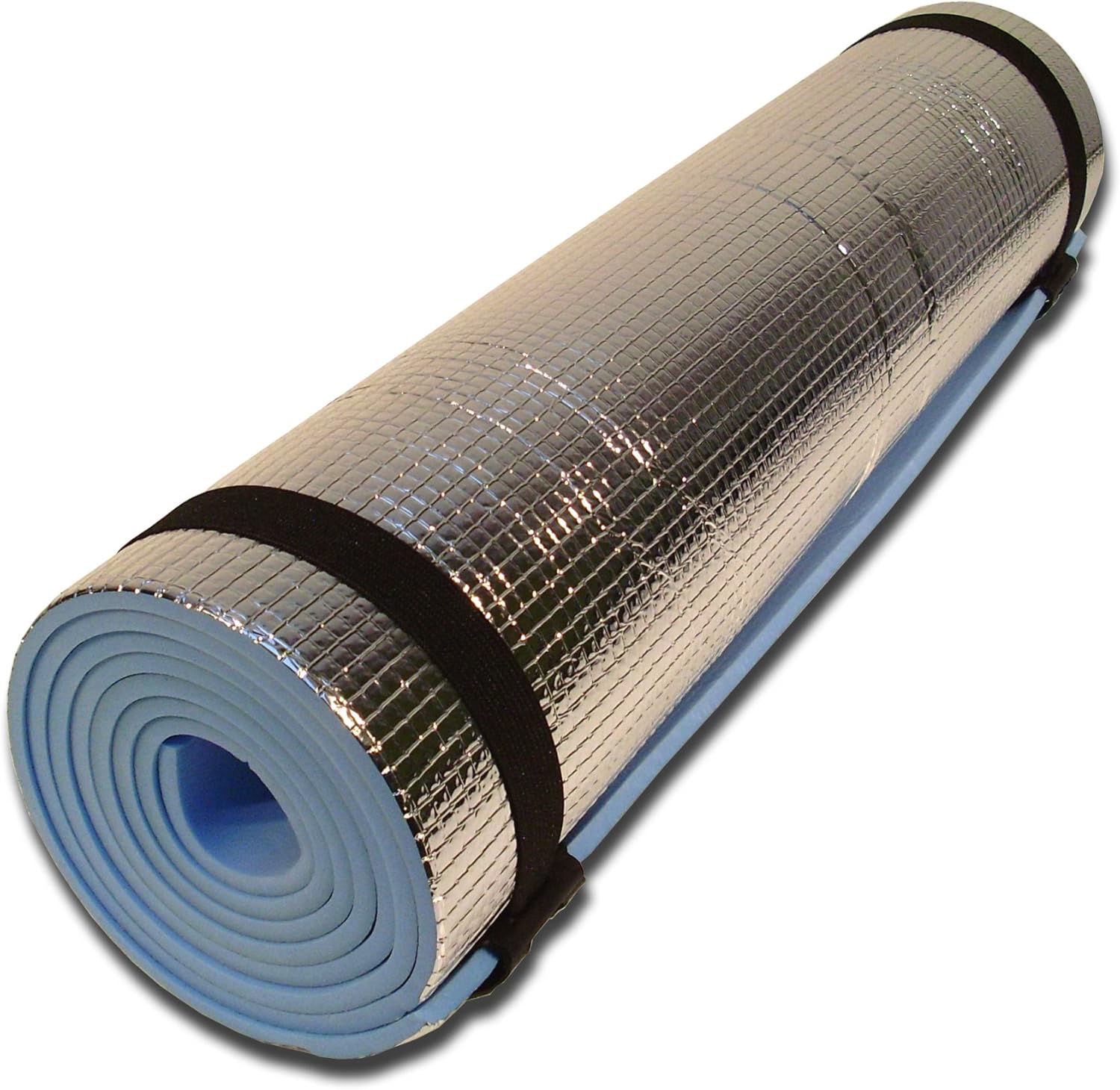
The Yellowstone EVA mat is a closed-cell foam roll mat with a reflective foil backing. The foil is the only reason to buy this specifically over a plain foam mat: it reflects body heat back up and stops cold ground pulling warmth out of your sleeping bag. Yellowstone lists it as lightweight, rollable, and as a camping essential. It comes with elastic ties to hold the roll closed for transport.
That is the entire product. No valve, no self-inflation, no insulation rating, no season rating. EVA foam is the same closed-cell material used in yoga mats and sandal soles, so it's water-resistant and doesn't soak up dew or spilled tea.
Where the listing gets awkward is the thickness claim. A handful of reviewers have taken a tape measure to theirs and reported measurements of 3mm to 4mm where 6mm was advertised. Whether that's a batch quality issue or an accuracy issue with the listing, it's come up enough times to be worth flagging before you buy.
Why The Same Mat Gets 5 Stars And 1 Star From Two Different Campers
This is the pattern that jumps off the review page. The five-star reviewers keep using variations of the same sentence: it does what it says, it's light, it keeps the cold ground away, it's fine for the money. The one-star reviewers keep using a different sentence: it's too thin to sleep on, it rips after one night, it's not a proper mattress.
Both groups are right. The split is about expectation, not product quality.
Look at who's praising it. One reviewer has used the same mat for four years, through winters down to minus five Celsius with a good sleeping bag, and has only just bought a second. Another forgot their inflatable pad and the mat kept them warm at about 7C by itself. A third said there was a noticeable temperature difference between the woodland floor and the mat. All of them are using it as designed: a cheap thermal barrier underneath something else, or a compact option for short trips where pack weight matters more than comfort.
Now look at who hates it. A mum bought it for her daughter's Duke of Edinburgh expedition and the daughter came back saying she felt like she was sleeping on the floor. Another buyer left it on soft ground for thirty minutes and got up to find holes where his elbow and hip had been. Another's son, at school camp, said it felt like a piece of paper. Every one of those complaints is fair. The mat isn't the problem, it's the expectation that 4-to-6mm of EVA foam will substitute for a proper sleeping pad.
Yellowstone EVA Camping Mat With Foil
Lightweight foil-backed foam mat at a price that makes it worth keeping in the car boot permanently. Best used as an insulation layer under an airbed or self-inflating mat.
The Airbed Underlay Trick (And Why So Many Buyers End Up Doing It)
One of the most consistent repeat uses across the reviews: putting this mat UNDER an airbed or a thicker self-inflating pad, not on top of it.
It's a clever move. Airbeds lose heat fast because the air inside them cools to the ground temperature and convects it straight into your back. A foil-backed foam layer underneath reflects body heat back up, insulates the airbed from the cold ground, and also protects the airbed from any sharp bits of gravel, grit, or twig that might have found their way through the groundsheet. One reviewer put it under their kids' mattresses in a family tent. Another bought it specifically to go under her new air mattress. Several mentioned pairing it with a proper sleeping mat or camp bed in winter.
If you camp in a family tent with airbeds, this is possibly the cheapest insulation upgrade you can make. At £6.69 per mat it's less than a takeaway coffee per sleeping position.
Scouts, DofE, and Kids' Camps: Where It Belongs, And Where It Doesn't
Skim the reviews and you'll spot a pattern: a big chunk of buyers are parents kitting out children for Scouts, Cubs, school camp, or Duke of Edinburgh. The results are mixed, and it's worth understanding why.
When it works, it works well. One parent bought it for their son's November Scout camp in Scotland and called it great value. Another bought it for a daughter's DofE expedition and she came back having slept comfortably, much to her surprise. A third used it for children's scouting winter adventures and was happy at the price.
When it fails, it fails quickly. One mum's son used the mat for a single DofE night and it returned with holes, rips, and a broken elastic strap. Another parent's teen complained it felt like cardboard. The durability issue seems real, and younger users who drag kit across rough ground, sit on rocky pitches, or pack carelessly can destroy a 4mm foam mat in a single weekend.
Our read: fine for shorter school or Scout camps on pitched ground, paired with a decent sleeping bag. For a proper DofE gold expedition or anything longer than two nights on varied terrain, spend another £15 or £20 on a thicker self-inflating mat instead.
The Secondary Uses Reviewers Can't Stop Mentioning
This is the section that finally convinced us the Yellowstone EVA mat is worth having in the house even if you only camp twice a year. Reviewers keep finding jobs for it that have nothing to do with sleeping.
- Cut into squares as waterproof sit pads for picnics, events, or sitting on damp grass at the side of a hike
- Used as a sit pad in a bivvy to get rid of the chill from the ground when you can't be bothered carrying a chair
- Rolled out on a wooden garden seat before cushions, to stop the cushions getting damp
- Cut up and wedged behind radiators to reflect heat back into the room (one reviewer said their rooms heat up in half the time)
- Repurposed as a thermal cover for a campervan windscreen
- Used for floor insulation inside a shed
- Used as a mat for working under a car
None of these are what the listing describes. All of them are plausible, cheap, useful ideas. A £6.69 roll of foil-backed foam is quietly one of the most versatile household items you can own, and we suspect that's a big part of why so many people buy it even after leaving a mediocre review about its sleeping performance.
The Three Durability Complaints Worth Naming
There are three recurring quality issues in the reviews. If you buy this mat, you should know about them.
The foam tears easily. Multiple reviewers describe the foam ripping after one use, particularly when pressed by an elbow or hip on uneven ground. One buyer saw massive holes after thirty minutes on soft ground. This isn't universal (plenty of owners report years of use), but it's common enough that you shouldn't expect this mat to survive rocky pitches or heavy-handed kids.
The foil delaminates over time. A few owners mention the reflective silver layer peeling off after a few nights or after dragging across rocky ground. Once it's gone, you lose the insulation benefit and you're left with a plain foam mat.
The elastic straps pull out. The small black plastic bits that anchor the elastic ties into the foam can tear out, sometimes taking a chunk of foam with them. One reviewer had to fix theirs with a hole punch. If the straps fail you can replace them with any cheap cord or bungee, but it's an annoyance on a brand-new product.
None of these are deal-breakers at the price, but they do mean this is a consumable, not a long-term investment. Budget accordingly.
Should You Buy It?
Yes, if you see this mat for what it actually is: a cheap, light, multi-purpose insulation layer.
Buy it if you want a thermal underlay beneath an airbed or self-inflating mat, a compact option for your wild camping rucksack where every gram matters, a spare mat for Scout camps or short school trips, a sit pad for bivvy trips or picnics, or a versatile lump of foil-backed foam to cut up for household insulation jobs.
Don't buy it if you want a standalone sleeping mat for adults who care about comfort, a durable mat for heavy use on rocky or rooty pitches, something that will last more than a season of regular use without wearing, or a proper insulated pad for sub-zero winter camping on its own.
At £6.69 this is a buy. At double the price we'd be harder on it, and at four times the price there are obviously better mats. But as a £6.69 bit of kit that can live permanently in your car boot, camping box, or Scout bag, it's hard to say no. Pair it with an airbed or a decent self-inflating mat and a warm sleeping bag, and you've got a sensible UK camping sleep setup for well under £50 total.
Yellowstone EVA Camping Mat With Foil
Lightweight foil-backed foam mat at a price that makes it worth keeping in the car boot permanently. Best used as an insulation layer under an airbed or self-inflating mat.