
Will These KEPLIN Pegs Survive Your Pitch? It Comes Down to One Thing
We earn commission from qualifying Amazon purchases. It costs you nothing and does not affect what we recommend.
Half the campers who bought these pegs swear by them. The other half bent a fistful before the tent was even up. The deciding factor isn't luck, it's what's under your grass.
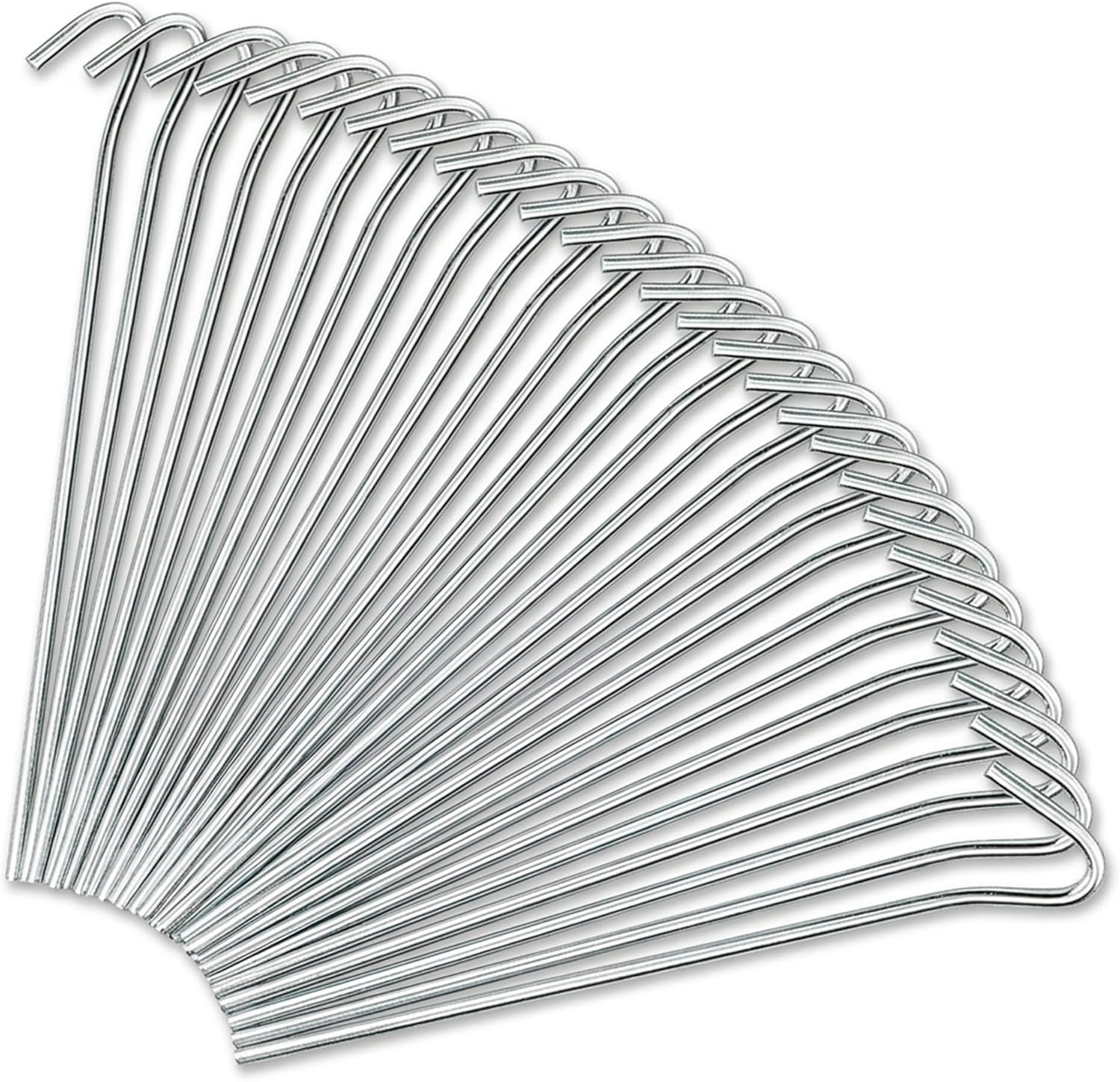
Read the reviews for these KEPLIN tent pegs back to back and you would swear people were describing two different products. One buyer calls them “lovely good quality tent pegs very strong that do the job”. The next reckons you would be “better off using plastic cutlery”. Same peg, same £6.49, wildly different verdicts.
So which is right? After going through the 100 most-recent reviews, the answer turns out to be boringly simple, and it has almost nothing to do with the peg itself. It is about the ground you are hammering it into. Get that one variable right and these are a perfectly good bag of cheap pegs. Get it wrong and you will be straightening metal at midnight.
The bending is the one complaint you cannot ignore. Of the 100 reviewers we read, 26 mentioned the pegs bending or curling, which is far too many to wave away even on a £6.49 bag. Plenty of people are still delighted, mind, and the 4.4-star average sits on more than 2,000 ratings for a reason. So let's pin down exactly when these pegs are the right call, and when £6.49 is £6.49 wasted.
One variable decides everything: what's under your grass
If you take nothing else from this review, take this. The difference between a happy KEPLIN buyer and an angry one is ground hardness, and it shows up again and again in the reviews.
On soft, give-y ground these pegs are fine. Doodledad used them at a festival and reported the “tent was still there at end of festival”. Mike Williams found they “secured the tent very well”. Charlie red even pushed them into ground that was “exceptionally hard” after a dry summer and said they “stood up to being hammered down” and “came out easier than thought”. So it is not as if they are guaranteed to fail.
But the moment there is anything firm or stony in the soil, the complaints pile up fast. An Amazon Customer warned they “bend very easily, so they are best suited to areas where there are no rocks beneath the grass”. Brendan Powell tried them on “quite firm” ground and they “bent after going in about an inch”. Maria liked the pegs overall but noted they “bend quite easily if trying to push into hard ground”. Even soaking-wet clay caught a few people out: nathaniel said they bent “just trying to get them into soaking wet, soft soil”.
The most useful summary came from Kindle Customer, who wrote: “Hit hard ground, it'll bend. Get it in but get some gusts, it'll bend. Hit it just slightly off centre, it'll bend. If everything is perfect (which it rarely is when camping), they work.” That last clause is the catch. UK pitches are rarely perfect. Spring and autumn ground can be baked hard one week and waterlogged the next, and stony pitches in the Peak District or coastal sites are exactly where a thin peg gives up.
About that 'heavy duty' label
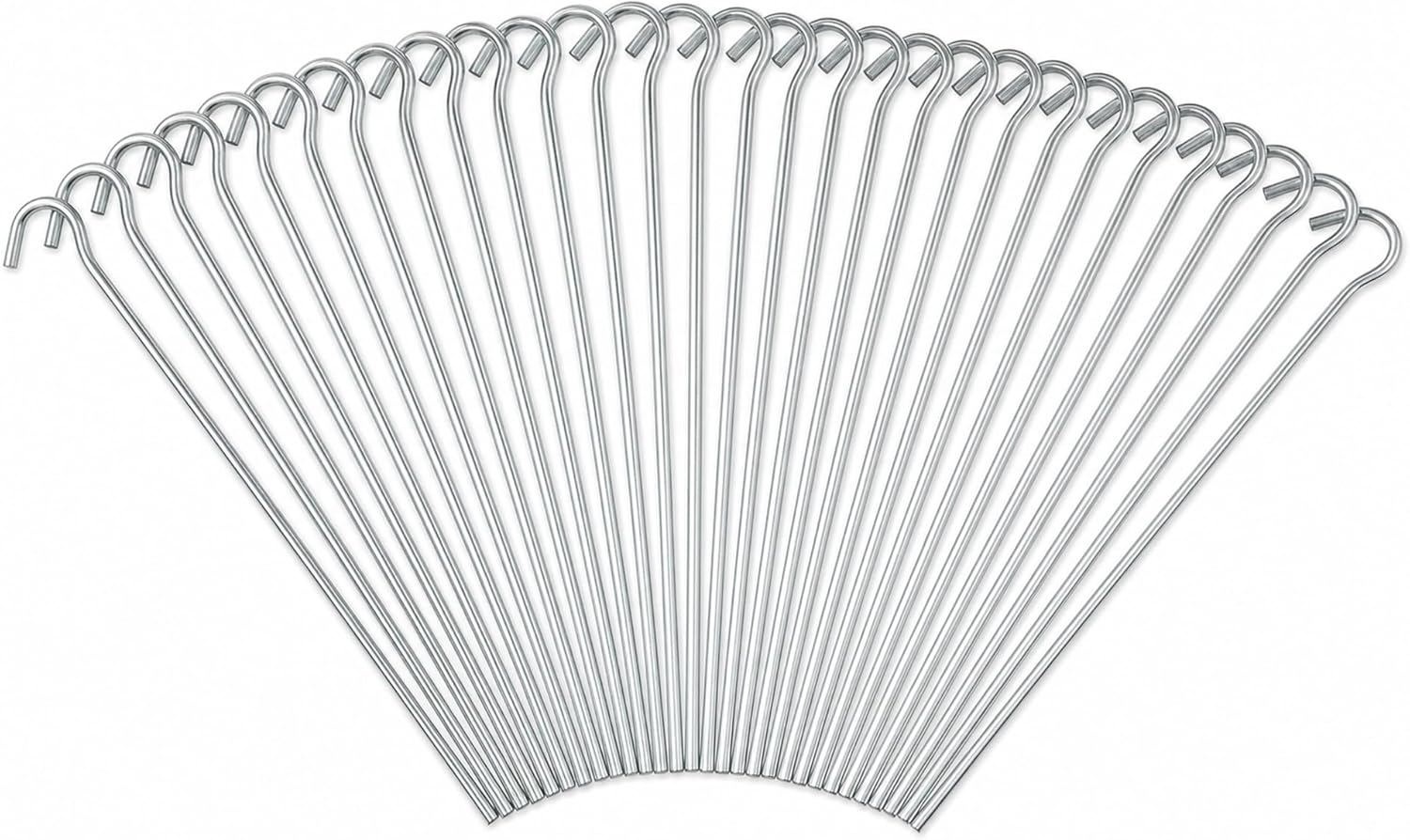
KEPLIN markets these as “Heavy Duty” with “Unyielding Strength” that “prevent bending”. That wording is doing a lot of heavy lifting, and several buyers called it out directly.
Brendan Powell was blunt: “Calling them 'heavy duty' is a joke.” Justus Vermaak said “I can bend these by hand”, and Anthony Walsh reported bending “quite a few just by pushing with my hand”. The most vivid description came from one buyer whose pegs “curled up like pigs tails when going in to ordinary ground”. C Morgan reckoned they “bend as easily as the pegs you get with the tent”, which for a lot of campers is the whole reason they were shopping for replacements in the first place.
Here is the fair way to read this. The Amazon listing gives no peg weight, no steel gauge or thickness, no specific alloy grade, and no coating depth, so there is no spec sheet to hold the marketing to. What we have instead is the verdict of people who used them, and a meaningful slice of that verdict says the metal is thinner and softer than “heavy duty” implies. Treat these as light-to-medium-duty pegs and the listing copy stops mattering. Treat them as bombproof storm pegs and you will be disappointed.
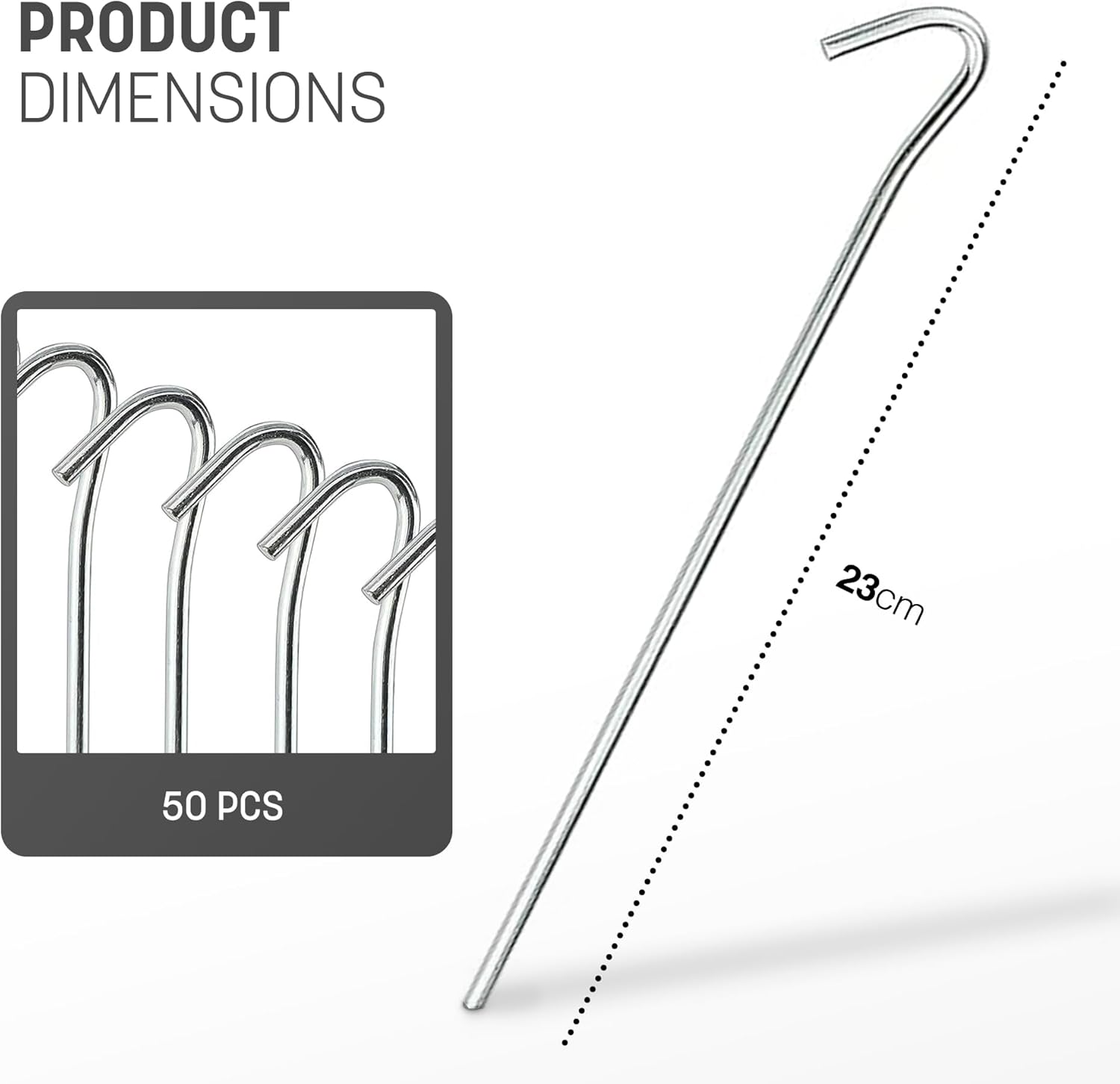
KEPLIN Steel Alloy Tent Pegs (50 Pack - 9 inch)
Fifty 9-inch galvanised ground pegs for soft-ground camping, festivals and garden staking. Great value as spares and light-duty pegs, with a 4.4-star average across 2,331 ratings.
The crowd that quietly loves them isn't campers

One pattern jumped out of the reviews that the product title barely hints at. A lot of the happiest buyers are not using these for tents at all. They are gardeners.
More than ten of the 100 reviews we read mentioned a garden or allotment use, and the tone in those is noticeably warmer than the camping ones. Allotment Man uses them “to secure netting” and called them “good quality for a good price”. Helen B stakes garden netting with them and says they “work a treat” with “a brilliant length”. maremma pegs down weed membrane because they “bypass stones much more easily than plastic ones” and liked them enough to reorder. Mr J T Goodchild stakes out his beans. Dawn uses them for “protecting new grass”, and Days bent the tops into a U-shape to stop a “nutty dog” pulling up the astroturf.
There is even a small seasonal following: elaine holliday buys them for “securing wreaths at xmas on graves”, and Ian lonsdale used them to hold down Christmas decorations “in the last strong winds all safe and sound”. The logic checks out. For netting, membrane and light staking jobs you are not driving the peg through compacted ground or fighting a flapping flysheet in a gale, so the thin metal never gets tested the way a windy hillside pitch tests it. If your main job is round the garden rather than up a mountain, a 50-pack at this price is hard to beat.
Rust, miscounts and the rest of the small print

The listing leans on “Rust Free” and a “Weather-Resistant Finish”, and on this point the reviews split down the middle rather than line up against the product. Four people in our sample mentioned rust, and they disagree. barbara walker found hers “rust resistant” and Days said they “Dont seem to rust” even after outdoor use. Against that, Alan Eaton said they “do rust after 6 months of use” despite the galvanised coating, and A. Taylor was annoyed that “some were already corroded in the package”. So the coating clearly holds up for some buyers and not others, which is about what you would expect from budget galvanising. For occasional use they should be fine; for pegs left staked out year-round, do not be shocked by a bit of orange.
One more thing worth flagging, because it is the kind of small print that ruins a trip. I.B opened the box to find “only 41 and not 50 in the packet”. That is a single report out of 100, so it reads as a one-off packing slip rather than a pattern, but it is worth counting your pegs before you rely on having a full set. On the plus side, several buyers were happy with the sheer quantity for the money. Raymond Newton summed up the value angle nicely: “Better to have and not need than to need and not have.”
How to make a soft-metal peg behave

If you have read this far and still want a cheap 50-pack, there are ways to stack the odds in your favour, and they come straight from the buyers who got on best with these.
First, mind your technique on firm ground. Alan Eaton shared the most practical tip in the whole review set: “using where the ground is stoney, use lots of light taps, this breaks/moves the stones (this way 1 in 10 bends)”. Battering a thin peg with a heavy lump hammer is how you get the pig-tail curl. Lots of small, square-on taps with a rubber mallet is far kinder to the metal.
Second, use them as the supporting cast, not the lead. Mark Johnson nailed the right mindset, calling them “Ideal throw away pegs” that are “Good to work alongside sturdier pegs”. A sensible setup is heavy-duty steel or rock pegs on the main guy lines that take the wind load, and a bag of these KEPLINs for the low-stress points and as spares. Ellie Andrews liked that there are “enough it doesn't matter if you bend one or two”, which is the real upside of buying fifty cheap pegs rather than ten expensive ones.
Third, match them to the trip. For a calm-weather pitch, a back-garden tent, a festival on soft turf, or any garden staking job, they are plenty. Lorax McGee put it well: fine to “hold the tent down” in still conditions, but “You will need some thicker stronger ones for camping in windy conditions”. Save your good pegs for the exposed coastal and hill pitches where a failure actually matters.
So, should these go in your kit?

For £6.49, fifty 9-inch (23cm) galvanised pegs are a fair bit of metal for the money, and the 4.4-star average across 2,331 ratings tells you plenty of people are content. But content with what, exactly, is the part the star rating hides.
Buy them if you are a soft-ground camper, a festival-goer on turf, a gardener staking netting or membrane, or anyone who wants a big bag of cheap spares to sit alongside better pegs. In those jobs they do exactly what people hope, and the price is the main event.
Skip them, or at least do not rely on them alone, if you regularly pitch on stony, baked or exposed ground, if you camp in properly windy spots, or if you want one set of pegs you can trust in any conditions without thinking about it. Too many reviewers bent too many pegs on firm ground for these to be your only line of defence in a blow. Go in with the right expectations and they are a useful, cheap workhorse. Go in expecting “unyielding strength” and the ground will quickly correct you.
KEPLIN Steel Alloy Tent Pegs (50 Pack - 9 inch)
Fifty 9-inch galvanised ground pegs for soft-ground camping, festivals and garden staking. Great value as spares and light-duty pegs, with a 4.4-star average across 2,331 ratings.