
Two Years, A Snapped Lid, Or A Melted Sauna Bottle: The Roe Tenpo 1L Sorts Buyers Into Three Camps
We earn commission from qualifying Amazon purchases. It costs you nothing and does not affect what we recommend.
Push-button straw, time markings down the side, a wrist strap, and a £5.11 price tag. So why do so many buyers end up loving it for two years while others have the lid snap off in a fortnight?
- How The Roe Tenpo Actually Works In The Hand
- Where It Fits On A UK Camping Trip
- The Time Markings: Do They Actually Help?
- The Lid Mechanism: The Recurring Failure Point
- Heat: The One Thing That Will Definitely Kill It
- The Smaller Niggles: Straw Length And Drinking Noise
- Who Should Buy It, And Who Should Look Elsewhere
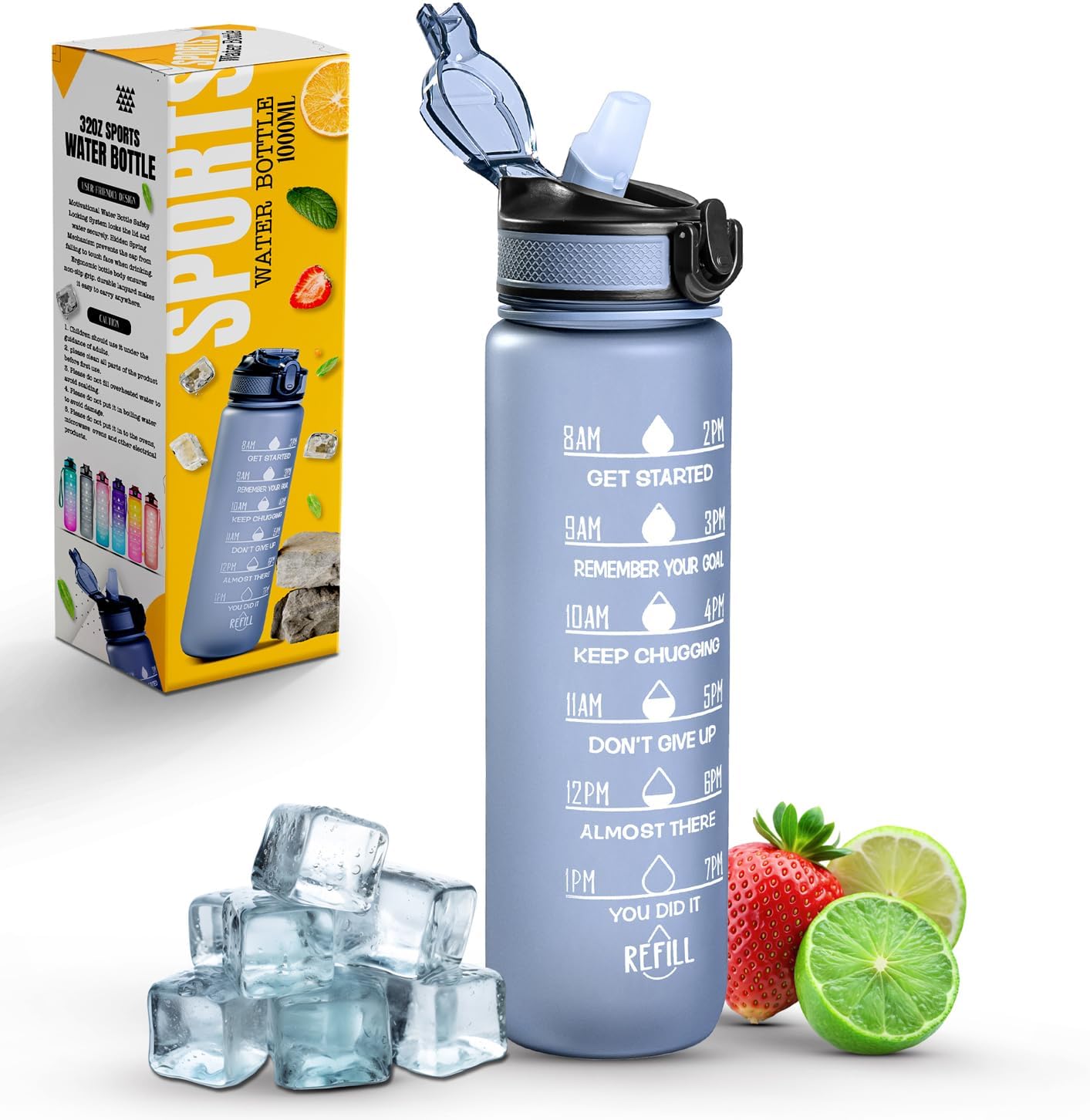
Push-button straw, time markings down the side, a wrist strap, and a £5.11 price tag. The Roe Tenpo 1L sports water bottle sits at the cheap end of the motivational-bottle category, and it gets there by stripping things back to a simple hinged lid with a pop-up straw underneath. For day hikes, festival camping, and weekend trips where you just need a chunky bottle to clip to a rucksack, the question isn't whether the markings work. It's whether the lid mechanism survives the trip back.
We went through the most recent 100 reviews on Amazon UK to see what holds up and what doesn't. The pattern is clearer than the 4.5-star average suggests, and it shapes who this bottle is actually right for.
How The Roe Tenpo Actually Works In The Hand
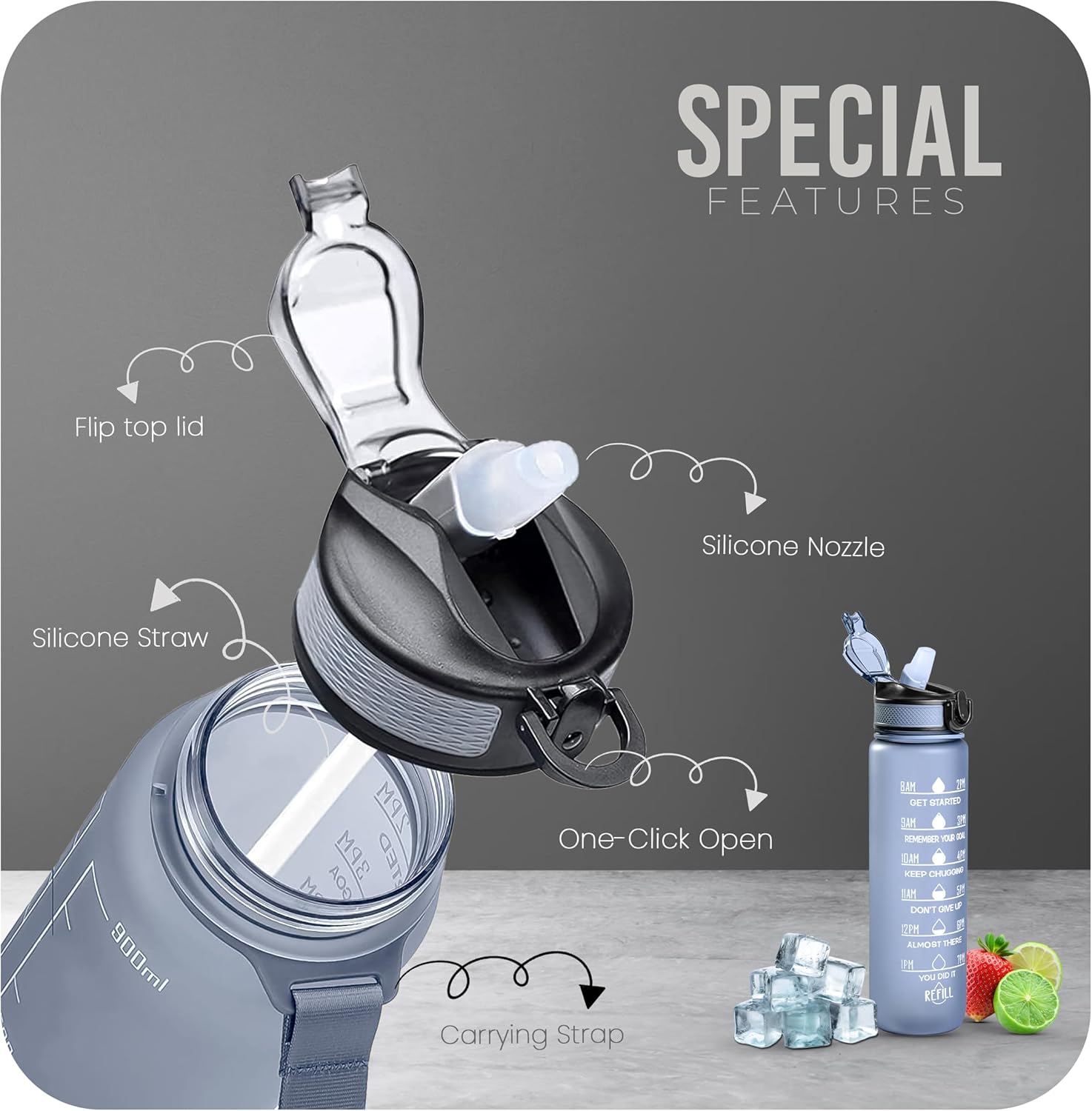
The shape is a fairly standard 1-litre cylinder in BPA-free Tritan plastic, with a flat-fronted face that carries the time markings and motivational quotes. The lid is the bit that defines the bottle. You press a button on top, a small flap pops up, and the soft rubber straw underneath lifts into drinking position. There's a secondary lock that stops the button being pressed accidentally inside a rucksack or gym bag, which Amy called out as a satisfying feature: "the pop up straw has a catch to stop it opening by accident."
The wrist strap loops onto the lid through a metal ring, and several buyers described the strap as the thing that turns it from a desk bottle into a hands-free outdoor bottle. Merin sums up the appeal: "the strap makes it so convenient, lid closes satisfyingly perfect, and the straw makes it so easy to use." For a campsite walk to the tap, a festival queue, or a circular hike where you don't want to keep unzipping a side pocket, the strap matters more than you'd expect.
Where It Fits On A UK Camping Trip
1 litre is the right size for most British outdoor situations. It's enough to cover a half-day walk between water stops, big enough to stand on a picnic table without falling over, and it slots into the standard side mesh pocket on most rucksacks. Buyers consistently mention three settings where it works best:
- Festivals and outdoor events. Several reviewers bought multiples for events. The hinged lid keeps the straw clean from grass and dust, the strap means you don't have to hold it while you queue, and the dark colour options hide whatever's actually in there. One parent wrote that their son's school bottle "hides what is in it too so he can have weak squash at school without anyone knowing."
- Day hikes and DofE expeditions. One reviewer bought it specifically for a Duke of Edinburgh expedition: "Bought for my daughter's duke of Edinburgh expedition. Really sturdy and didn't leak, also the reminders on the side of the bottle are a great help to keep drinking." That's a useful data point for parents kitting out teenagers for a weekend in the hills.
- Car-camping water carry. A 1-litre bottle per person, refilled at the standpipe, covers a standard weekend pitch without anyone running out. The wrist strap is helpful when your hands are also carrying a kettle and a head torch.
Where it doesn't fit: backpacking trips where every gram counts. This is a chunky plastic bottle with a complex lid, not an ultralight squeeze bottle. If you're walking the Pennine Way self-supported, look elsewhere.
Roe Tenpo 1L Sports Water Bottle With Straw
A cheap, colourful 1-litre motivational bottle with a pop-up straw, hourly time markings, and a wrist strap. Right for festivals, day hikes, school, and weekend camping at a price that makes the lid risk easy to live with.
The Time Markings: Do They Actually Help?
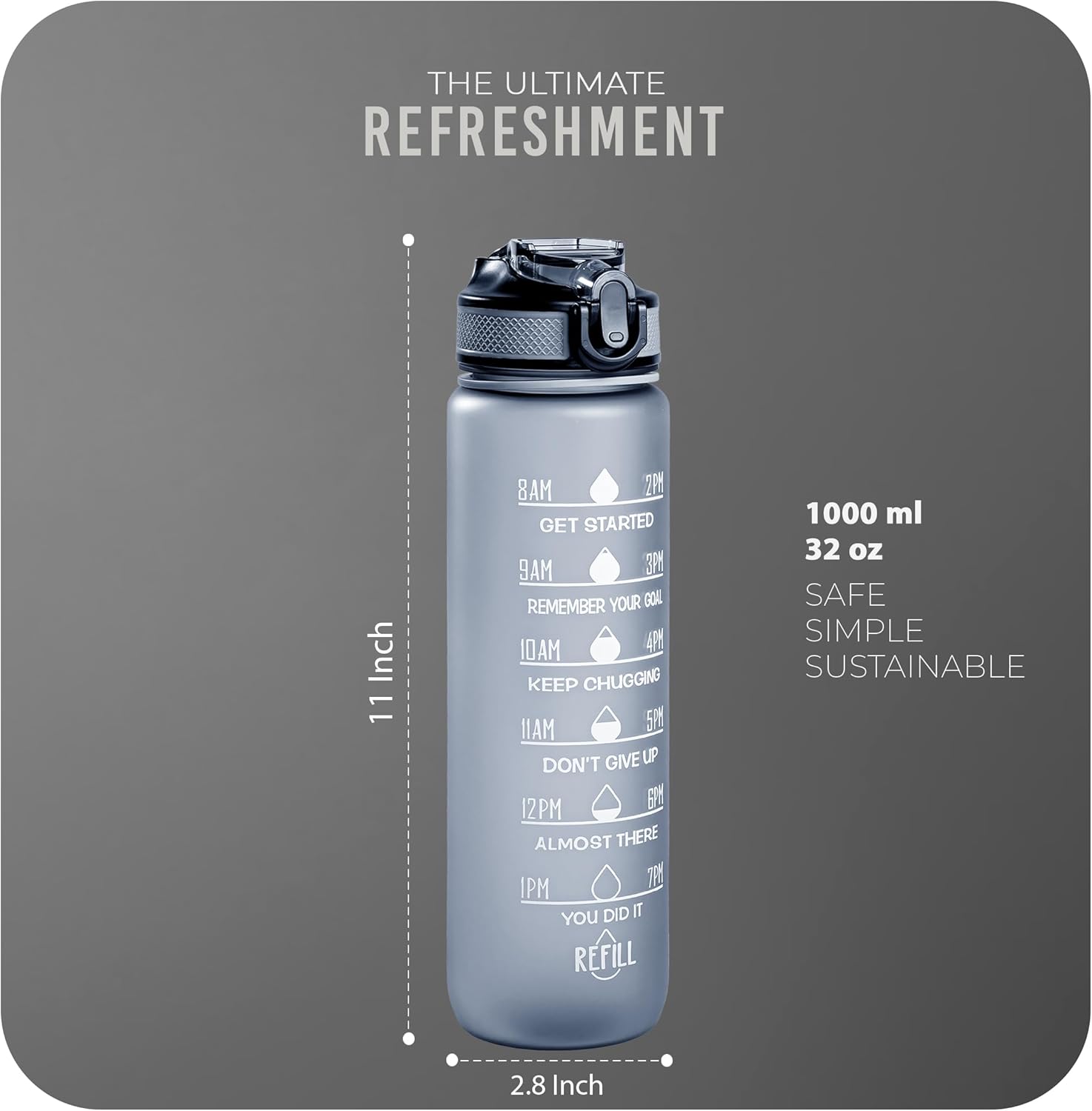
The face of the bottle is printed with time markers running from a starting line near the top down to a finish line at the bottom, with motivational phrases between them. One reviewer (Glenys) describes them as showing "how much to drink regularly with markings on side every 2 hours." The premise is simple: drink to the next line by the next prompt, hit the bottom by the end of your day, refill if you want more.
Reviewers who struggle with hydration habits said the markings actually work. One wrote: "It has really helped me with keeping me on track of water intake." Another, who admitted struggling with daily water targets, said: "I struggle to drink enough water and this has been perfect for me. Nice big size, great time indicators on the side with motivational phrases to help keep you on track."
This isn't a feature that suits everyone. If you already drink plenty without prompts, the printed face is just decoration. But if you're using camping or a festival weekend as the prompt to start a hydration habit, the visual progress down the bottle is the whole point of buying it.
The Lid Mechanism: The Recurring Failure Point
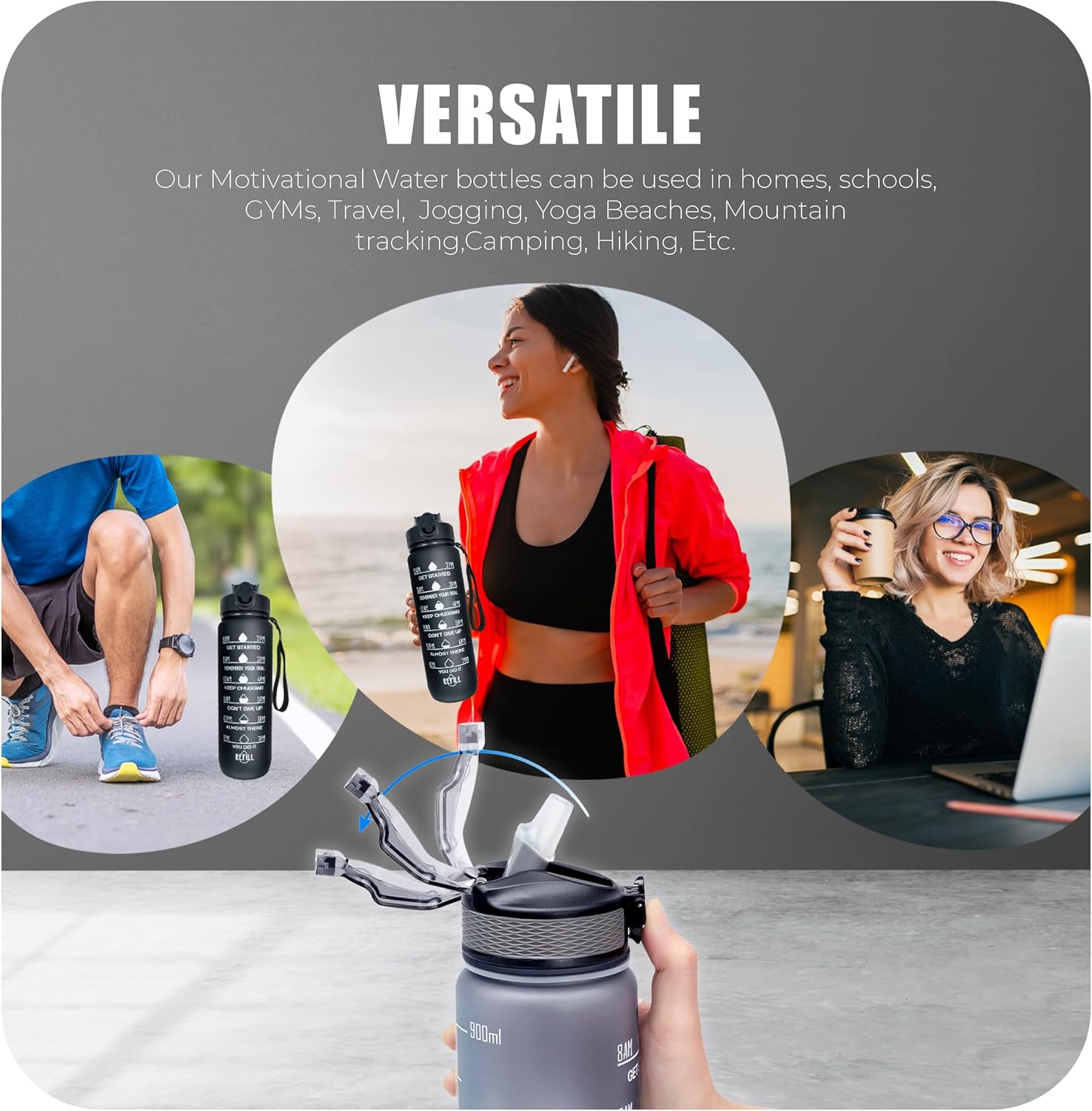
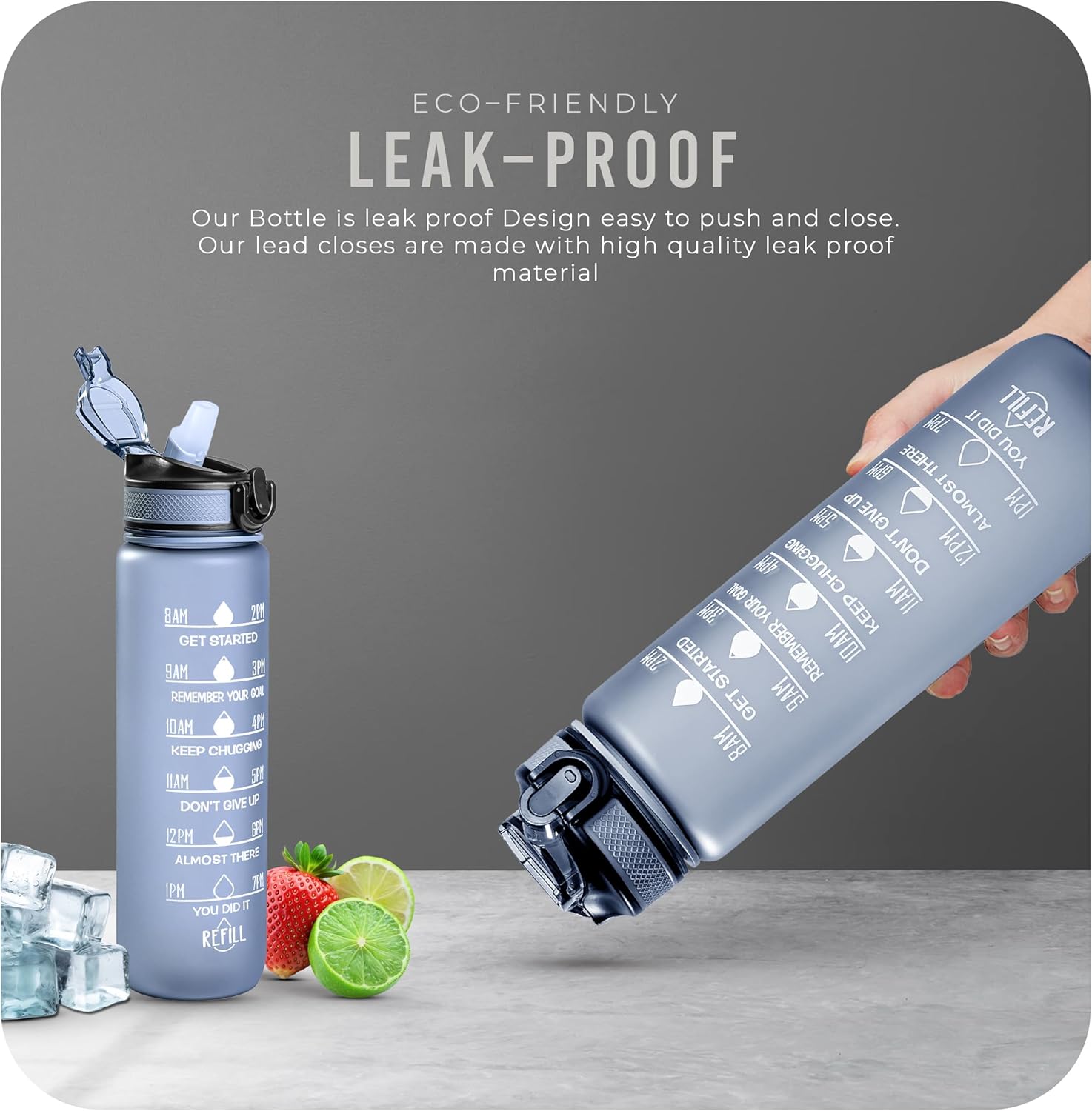
The complaint that comes up most often in the reviews is not about the bottle itself, it's about the lid. Specifically, the small plastic hinge or flap that pops up when you press the button.
Counts from the most recent 100 reviews: at least nine separate buyers reported the lid breaking, snapping, or losing the button mechanism within weeks or months. A representative selection:
- "The flip over part of lid broke within a couple of weeks."
- "Two bottles have now broken as the cover for the spout has snapped off!"
- "When I pressed it for the straw to come up, the top plastic part broke off and flew across the room."
- "The plastic hinge on the lid is extremely fragile and has broken after only a handful of uses."
- "The opening mechanism broke so the lid no longer closes. Shame as otherwise a good sized, quality bottle."
That's a real signal, not noise. If you press the button with your thumb every day, multiple times a day, the hinge is doing more work than the rest of the bottle put together, and a small thin piece of plastic is the part that gives.
The flip side is that plenty of buyers have used theirs without issue for two years. One reviewer wrote: "Great bottle, I've had this for almost 2 years now." Another, on their second purchase: "I've just ordered a new one of these. I found the one I've had for nearly 2 years was easy to use in the gym and on the go." The mechanism isn't doomed to fail, but the failure rate is high enough that it's worth knowing about before you commit.
Heat: The One Thing That Will Definitely Kill It
Tritan plastic is durable, but it has a clear temperature ceiling, and several reviewers found it the hard way. Two specific scenarios came up:
Dishwashers. One review states: "Not dishwasher safe… plastic peeling off." Another, more dramatic: "States dish washer safe on description. Clearly not as bottle melted first time in dishwasher." Whatever the listing claims, treat this bottle as hand-wash only. Cool or warm soapy water with the included brush (where reviewers got one in the box) is enough.
Saunas. A four-star review from a long-term owner had a memorable warning: "I've recently found out it's not good in the Sauna where it has melted and now resembles the leaning tower of Pisa." Probably not a common camping problem, but the underlying message applies to anything similar: leaving it in a hot car on a south-facing dashboard for hours, or filling it with boiling water, will deform it.
The fix is simple. Cool or warm water in, hand-wash out, store somewhere shaded. Treat it as a sports bottle, not a kettle.
The Smaller Niggles: Straw Length And Drinking Noise
Two complaints come up often enough to mention but aren't dealbreakers for most users.
The first is straw length. The straw doesn't quite reach the bottom of the bottle, so the last small amount of water has to be poured rather than sipped. One reviewer summed it up cheerfully: "Yes the straw doesn't quite go to the bottom of the bottle but that doesn't bother me." Another, less cheerfully: "Straw does not go to the bottom of the bottle so you have to pour out the last amount." If you obsessively drink to the very last drop without tipping the bottle, this will frustrate you. If you just drink and refill, you'll never notice.
The second is noise. The straw setup makes a noticeable sucking sound when you drink, which a few reviewers found awkward in shared spaces. "Great bottle, holds plenty but makes a hell of a noise when drinking. Even my colleagues look at me." "Good bottle. But makes a nose whe drinking. Would not use it in public." In a tent, on a hill, or at a festival this isn't an issue. In a quiet office or a library, it might be.
Who Should Buy It, And Who Should Look Elsewhere
This is a £5.11 bottle. At that price, the calculation is simple: even if the lid hinge fails after six months, it's still cheaper than most £15 motivational bottles, and the majority of buyers (a 4.5-star average across 2,485 reviews) get a robust, well-coloured, well-marked bottle that does what it should.
Buy it if:
- You want a cheap motivational bottle to start a hydration habit on a camping trip, festival weekend, or daily commute
- You want a 1-litre size with a wrist strap and a covered straw for outdoor use
- You're kitting out a child for school, a teenager for DofE, or yourself for the gym
- You're prepared to hand-wash it and keep it out of dishwashers and saunas
Look elsewhere if:
- You want something for serious backpacking where weight and pack-down matter
- You want a guaranteed multi-year-of-daily-use bottle (consider a metal Chilly's or Hydro Flask at 4 to 5 times the price)
- You drink in quiet offices and want a silent bottle
- You can't avoid a dishwasher
For the price of two pints at a campsite pub, this is a low-risk way to test whether time-marked bottles actually change how much you drink. Buy two if you're worried about the lid, and you've still spent less than £11.
Roe Tenpo 1L Sports Water Bottle With Straw
A cheap, colourful 1-litre motivational bottle with a pop-up straw, hourly time markings, and a wrist strap. Right for festivals, day hikes, school, and weekend camping at a price that makes the lid risk easy to live with.