
The Lid Is Where the Tanness 24L Cool Box Wins or Loses
We earn commission from qualifying Amazon purchases. It costs you nothing and does not affect what we recommend.
Fifty-seven of its hundred most recent reviews are five-star raves. Twenty-seven are one-star warnings. The Tanness 24L cool box splits UK campers like few products we have covered, and the gap comes down to ice blocks, expectations, and a lid that may or may not have anything inside it.
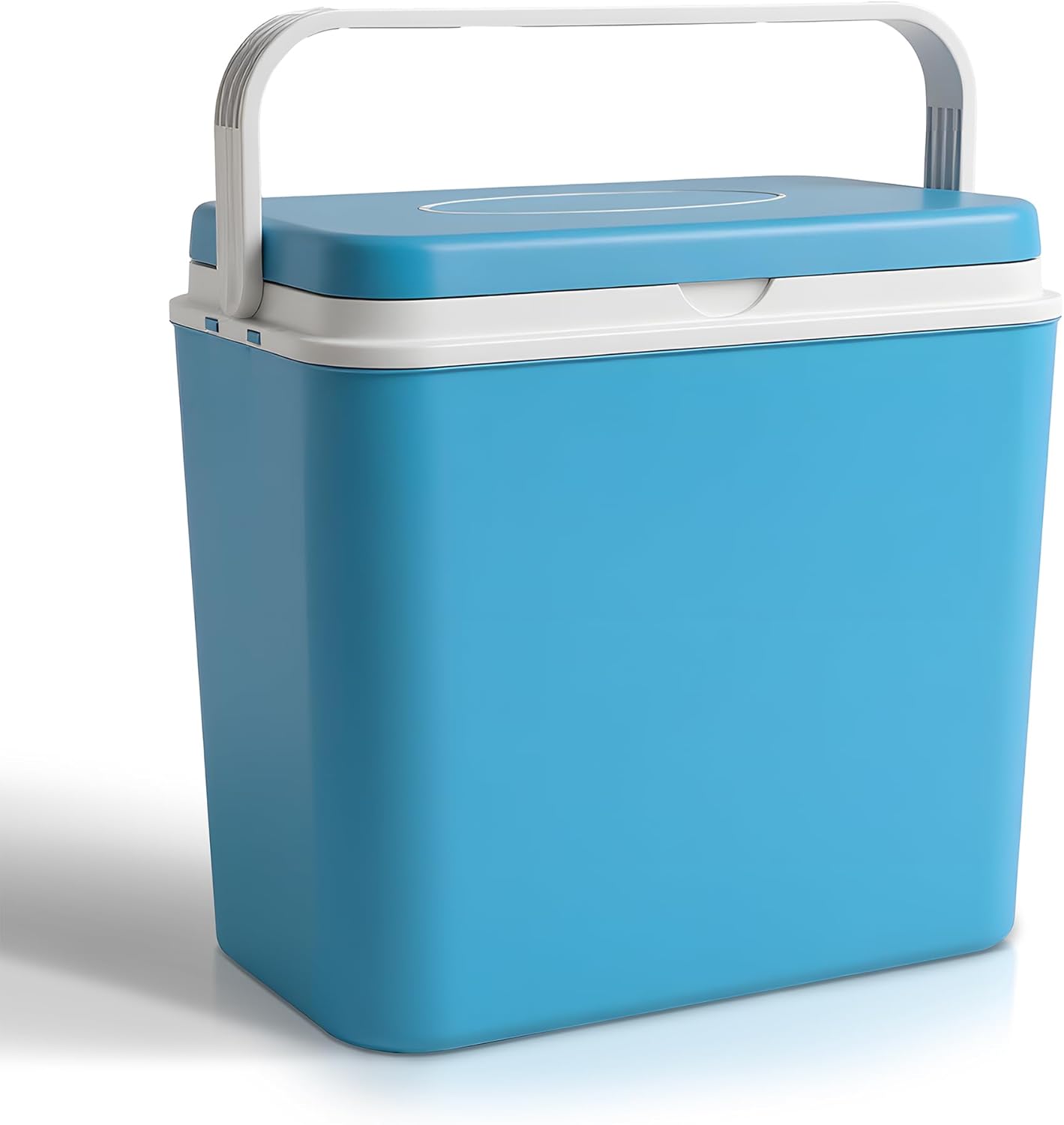
A cool box that kept food chilled through two days of 31-degree heat, according to one camper. A flimsy plastic box with no visible insulation, according to another. Both are describing the same product: the Tanness 24L Cool Box, a budget hard cooler that has become a common sight in UK supermarket car parks, campsite pitches and beach car boots.
The headline figure on Amazon is 4.1 stars across 639 ratings, which sounds comfortable enough. Dig into the 100 most recent UK reviews, though, and the picture sharpens: 57 of them are five-star, 27 are one-star, and the average across that recent sample works out at just 3.61. Very few people think this box is average. They either got a cheap cooler that did its job on a hot weekend, or they got a box they insist barely outperforms a carrier bag.
We read all 100 of those recent reviews, checked the listing's own infographics against what buyers report, and worked out what separates the happy trips from the angry returns. Most of it traces back to one component: the lid.
Two Trips, Two Completely Different Cool Boxes
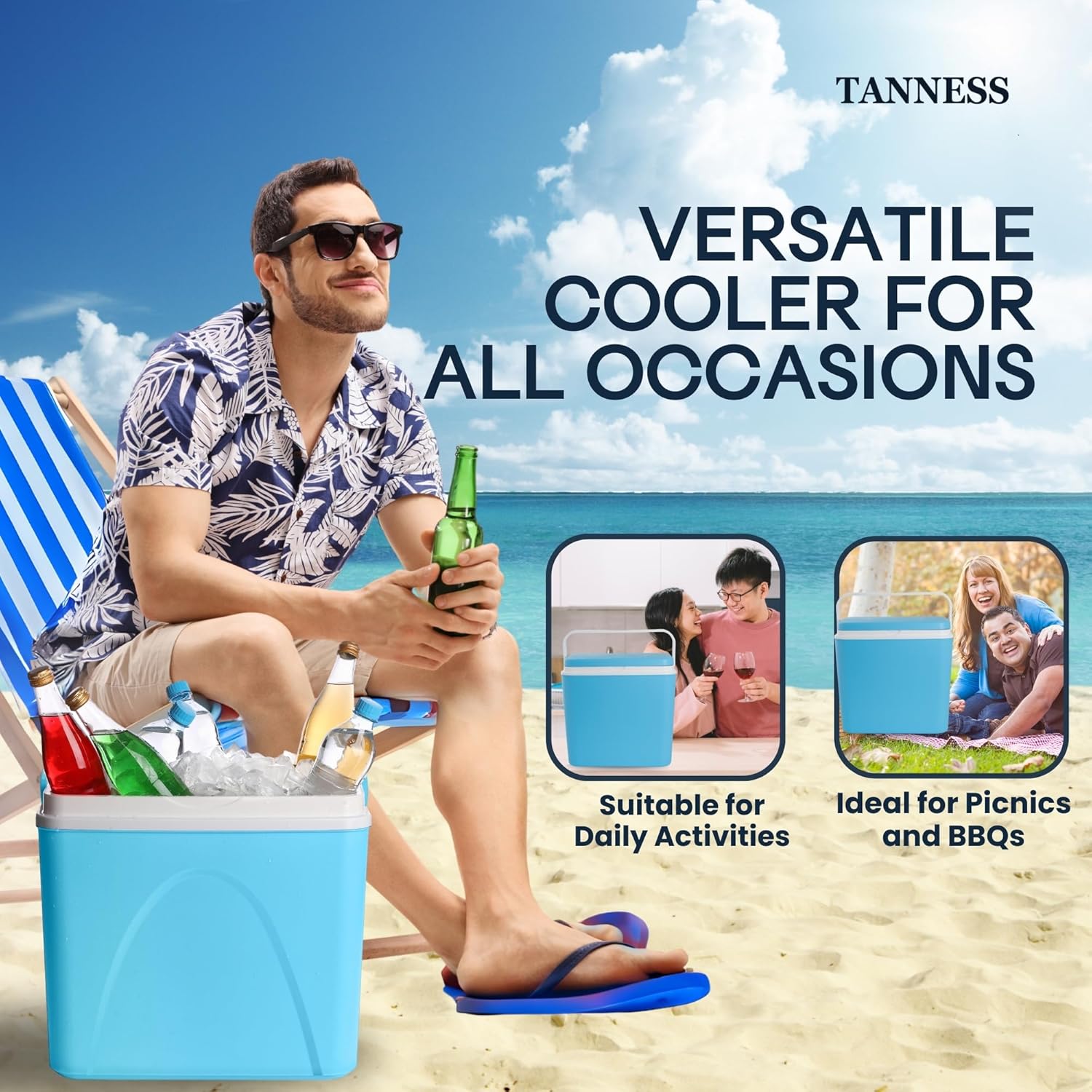
Start with the five-star end. Sanita took it camping in serious heat and reported: "Went out for camping in +31 for two days and even after second day box inside was still slightly cool at the bottom." D J L bought one last minute for a heatwave holiday, packed it with ice blocks in the car footwell, and found "everything was still very cold after a couple of hours on what turned out to be the hottest day of the year so far." JFB got "a good 10 hours or more" of proper chill from a couple of ice packs, and Dominic Pierrepont, a four-star reviewer, went further still: "even 18 hours after first packing with some ice blocks it was still very cool in the box."
Now the unhappy end. Simon Wyatt says "all the frozen stuff I put in it was immediately defrosting", comparing it to a previous cool box that kept food mostly frozen for the best part of a day, whereas "This was about 1hr!!" Oliwia K "tried using this with 4 ice packs and it didn't hold temperature." Gigi2017 reports that "After 12 hours with lots of frozen cool blocks, it was room temperature inside", in a cool British April, no less.
These accounts cannot all describe the same experience, yet they are all verified UK purchases of the same box. Some of the gap is expectation. Some of it, as we will get to, looks like a design shortcut. And some of it may be unit-to-unit variation, because the quality control complaints in this review set are hard to ignore.
The Spec Sheet Is Hiding in the Listing Images
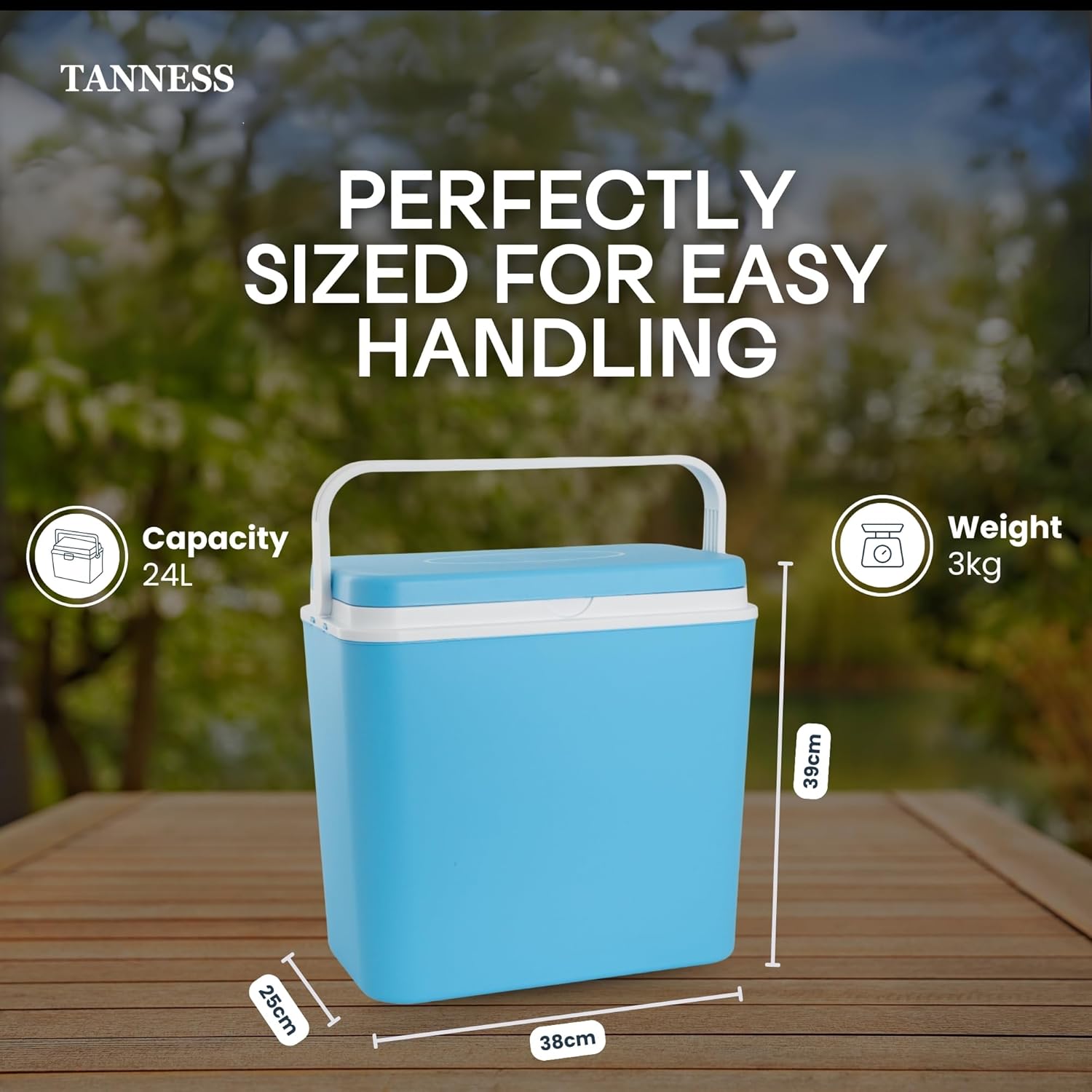
The listing text is thin, but the product images fill in the spec sheet. The box measures 38cm wide, 25cm deep and 39cm tall, weighs 3kg empty, and holds 24 litres, enough for most bottles to stand upright. Conrad, a reviewer who is otherwise realistic about the build quality, confirms he fitted two 2-litre bottles of soft drink standing up, plus beers and a few ice packs around them. Reviewers repeatedly describe it as roomy enough for a family BBQ or a weekend's chilled food, and light enough to carry one-handed.
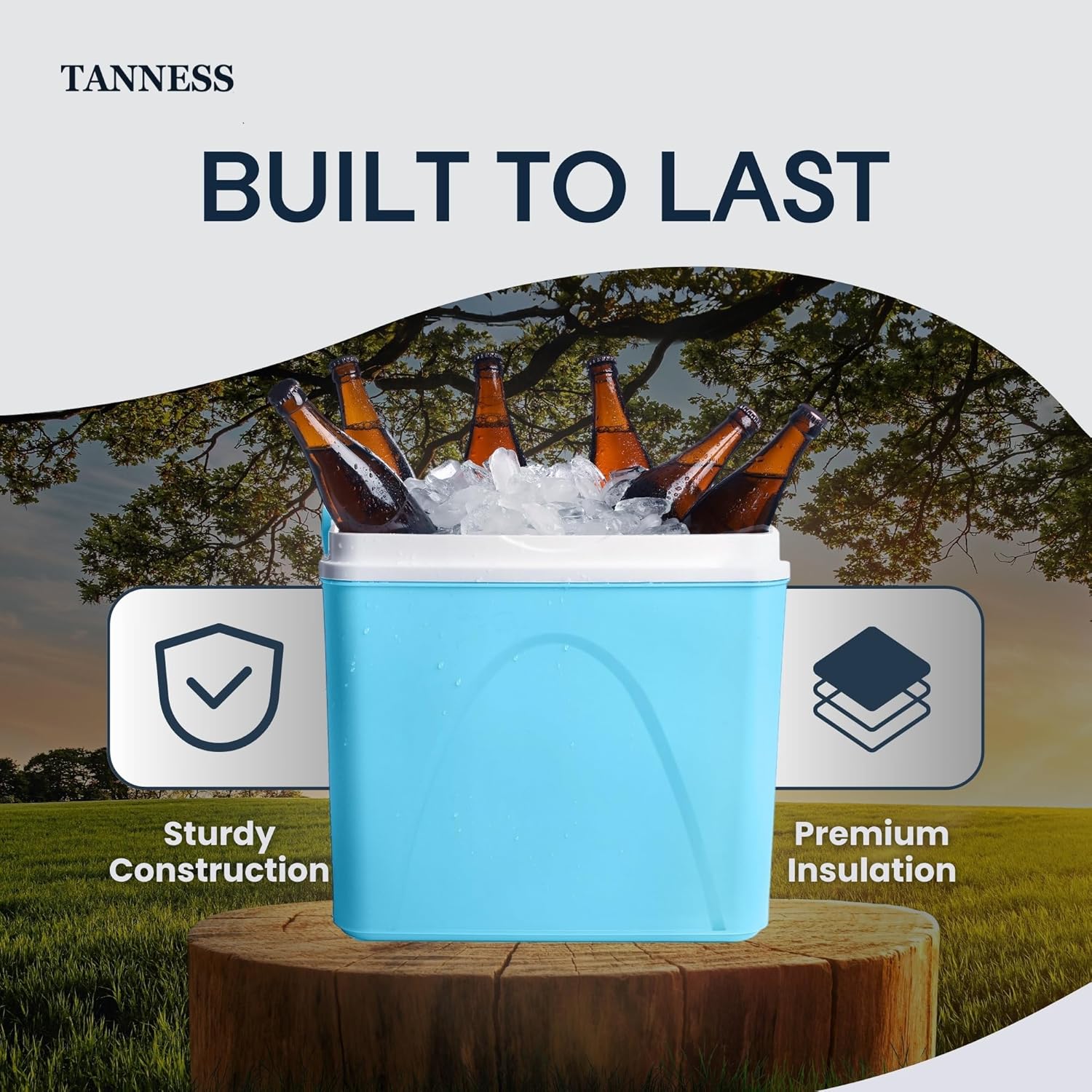
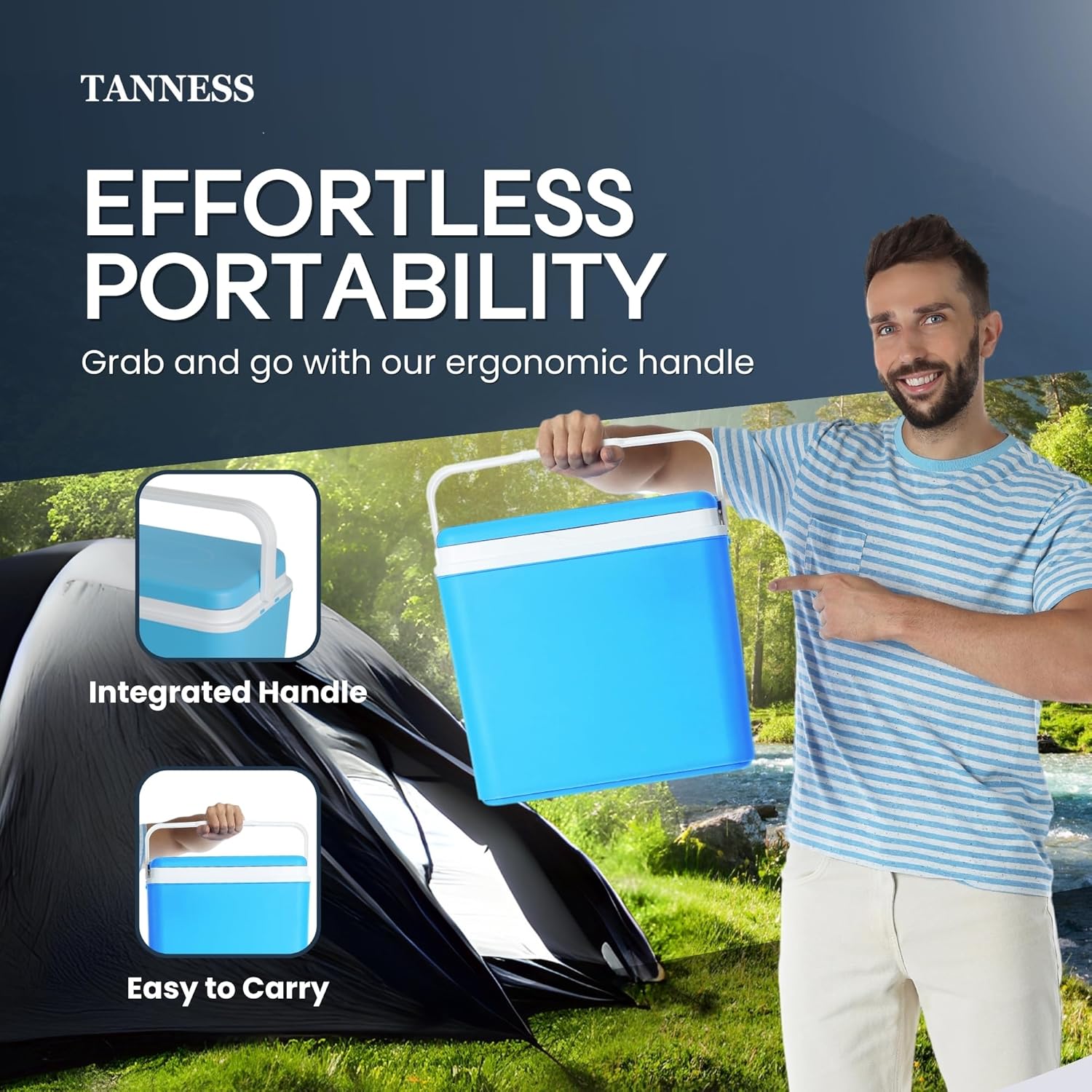
Construction, per the manufacturer's own infographic, is three layers: an HDPE plastic outer shell, a middle filling of EPS foam (that is expanded polystyrene, the same lightweight stuff cheap bodyboards are made of, and a perfectly normal insulator at this price), and a food-safe inner liner. The fold-over handle doubles as the lock: fold it flat one way and it pins the lid down, fold it the other way and the lid releases.
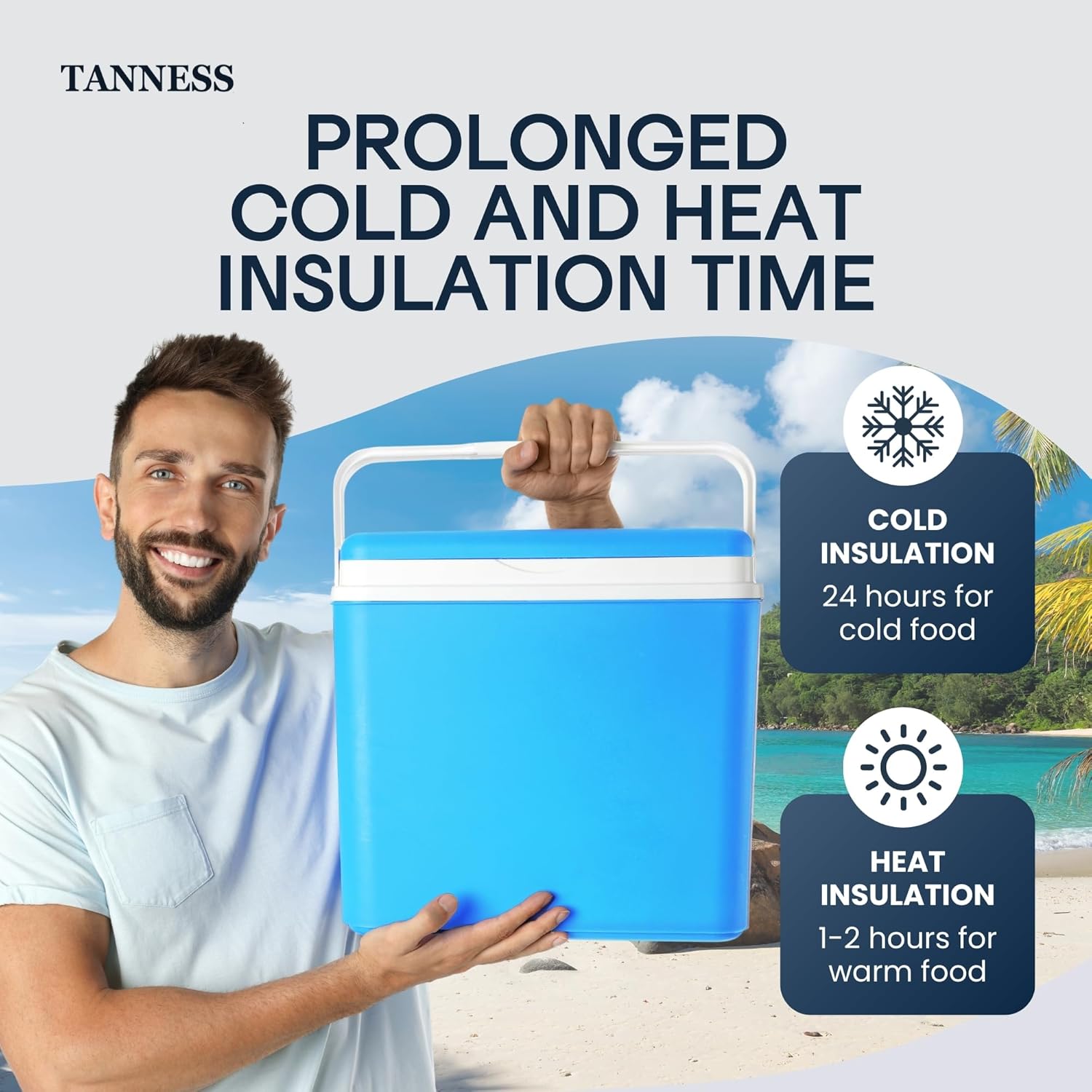
Two claims on the listing images deserve your scepticism. The first is "24 hours for cold food". JLF's one-star review responds directly to that label: "Its not 24hr for cold food." On the evidence of the 100 recent reviews, sustained cold beyond a working day needs plenty of frozen blocks and minimal lid-opening, and even then results vary. The second claim, oddly, runs the other way: Tanness promises only 1-2 hours for warm food, yet Ty, who bought it specifically for hot food at an event, reports it "Kept food warm for about 4 hours." Under-promising on heat and over-promising on cold is a strange combination, but it matches what buyers describe.
Tanness 24L Cool Box
Lightweight 24-litre day cooler with a lock-down handle. Add your own ice blocks and it covers picnics, BBQs and beach days without fuss.
Eight Reviewers Say the Lid Lets It Down
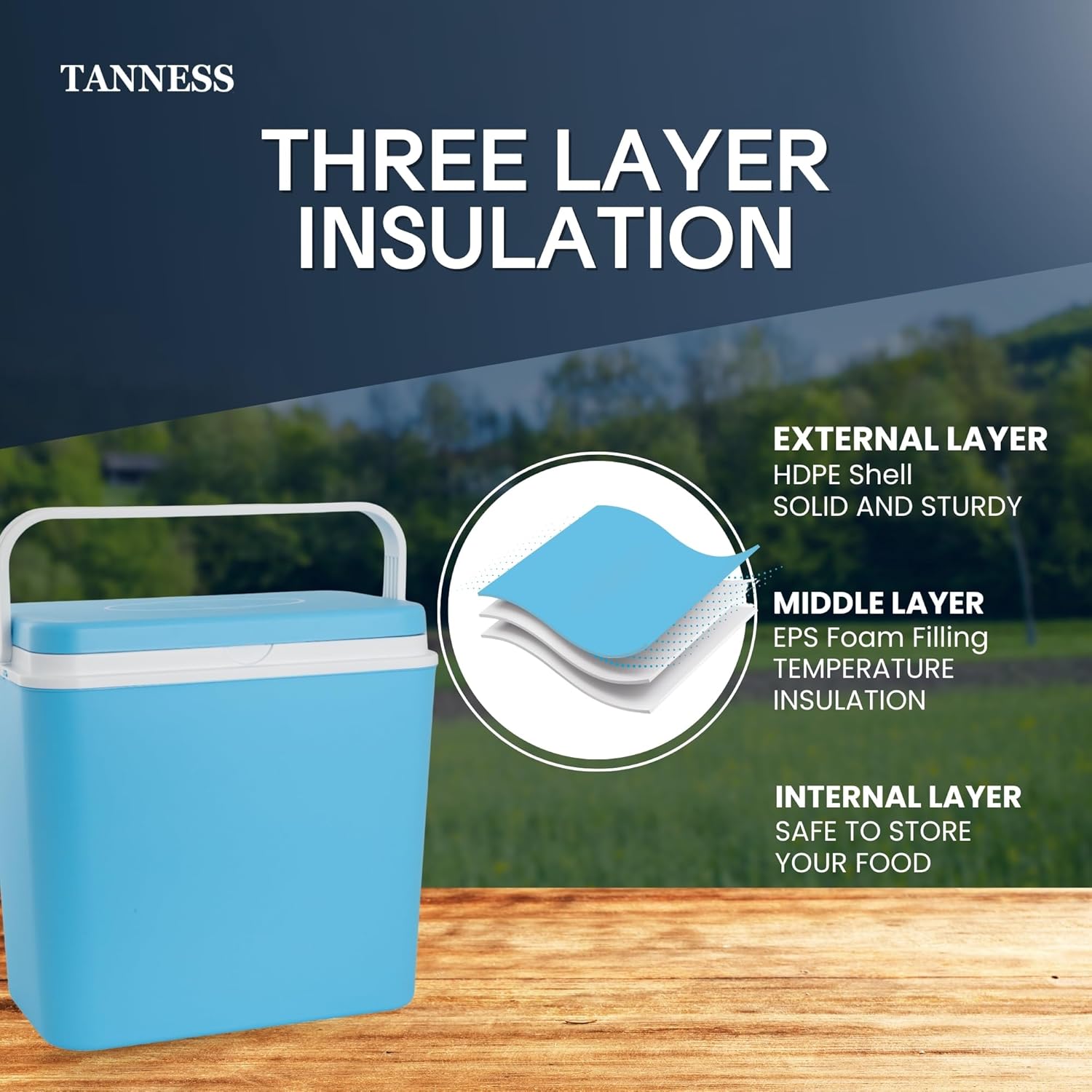
Here is the core dispute. The listing's insulation diagram shows the three-layer wall construction. What it does not show is a cross-section of the lid, and 8 of the 100 most recent reviews state outright that the insulation is missing where it matters, most of them pointing specifically at the lid.
Simon Wyatt calls the lid "totally uninsulated". Char-91, a measured three-star reviewer, writes: "Ive bought other cool boxes at a similar price point and they've had insulation in the lid." Rae took it away for a weekend with ice packs inside that "hardly lasted couple of hours" and blames the same hollow lid. Nick Aldham's arrived with the lid split across the top, which at least settled the question of what was inside it. Cold air sinks and warm air enters from above, so an uninsulated lid is exactly the failure that would produce the pattern in these reviews: contents stay coolest at the bottom (Sanita's "slightly cool at the bottom" fits this) while anything near the top warms quickly.
Mokapin's one-star review adds a second lid grievance: "The lid doesn't have insulation and the locking mechanism is a joke", and even locked properly, "apparently ants can still fit through the openings and feast on your food". Six of the 100 recent reviews mention the lid or lock failing to hold, from Kieran's "Lid comes off easy" to gemma's warning that it will open if it tips over in the car. If your plan involves a box wedged sideways in a packed boot, that matters.
The Ice Block Rule Behind Most of the Five-Star Trips
Read the 64 five- and four-star reviews in a row and a pattern emerges: almost every specific report of long-lasting cold involves ice blocks, and usually several of them. D J L used "plenty of ice blocks". JFB got 10+ hours from "a couple of ice packs". Dominic Pierrepont packed "some ice blocks" for his Lake District trip. C. reports it "Keeps things cold, as long as its not opened & closed numerous times, for 2 - 3 days", which is the most optimistic account in the whole sample and comes with that important caveat about keeping the lid shut.
None are included in the box. One four-star reviewer grumbles that "you have to buy freezer blocks separate" and thought at least one should come with it. Budget accordingly: a 24L box realistically wants three or four large blocks, frozen solid overnight, and it helps to chill the food and the box itself before packing rather than asking warm plastic to cool your shopping down.
Treat it as cold storage, not a fridge. It cannot pull temperature down; it can only slow the warm-up, and with a hollow lid it slows it less than better-sealed rivals. That is why the same box delivers a two-day camping win for one buyer and a soggy defrosted disappointment for another who expected freezer-like performance from the 24-hour label. The two reviewers who used multiple blocks and still watched everything go warm are harder to explain away, and unit variation (or a missing chunk of that EPS foam) is the most plausible culprit.
Check It the Day It Arrives
The other big cluster in the recent reviews has nothing to do with cooling. At least 12 of the 100 describe a box that turned up damaged, marked or looking second-hand: split lids, cracked shells, broken clasps, scuffed and distorted plastic. Gemma's arrived with black marks over the base as if "it had been rubbed in charcol"; Hasan's came with a brown stain and stray bits of plastic inside that made him suspect a previous owner. This is a lightweight 3kg HDPE box, at least one buyer reports it arriving with no outer packaging, and it clearly does not enjoy the courier network.
The practical response is simple: open it, inspect the lid edges and clasp, and sniff-test the interior on day one, while an Amazon return is a two-minute job. Conrad's advice is also worth keeping in mind: this is not a box built for being dropped, and he explicitly warns not to complain if it cracks when you treat it that way.
One more thing that trips people up on first use. The handle is the lock, and JFB explains the knack better than the manual: folded flat to one side it keeps the lid pinned shut, folded the other way a slot lines up and frees the lid, so "if you can't open the lid, fold the handle flat the other way." A few frustrated minutes on a campsite can be avoided by knowing that in advance.
A Beach Day, Yes. A Long Weekend, Maybe
For day trips this box makes sense. Beach days, BBQs, picnics, bringing frozen shopping home, keeping drinks cold in a work van: the five-star reviews are full of exactly these uses, and Toni's verdict that it "Does exactly what it says on the tin" holds up in that context, with the ironic exception of the tin's own 24-hour claim. It is light, roomy for its footprint, and cheap enough that many reviewers shrug off its flaws as fair for the money.
For a full camping weekend it is a gamble you can partly hedge. Load it with three or four solid ice blocks, keep it in the shade, sit something flat and heavy on the lid to help the seal, and open it as rarely as possible. Sanita's two-day result shows it can be done. But if your trips regularly run past a night, or your food safety depends on it (raw meat for a family, medication, a remote pitch with no shop), spend more on a box with an insulated, gasketed lid. Several of this box's own reviewers, like Livelyone wishing they had bought a mini fridge, arrived at the same conclusion after the fact.
We rate it 3.5 out of 5: a fairly priced day cooler with a real design weakness up top and a delivery lottery you should check on arrival. Know those two things and it serves well; expect a premium ice chest and you will be writing review number 28 in the one-star column. If it fits your kind of trip, check today's price on Amazon.
Tanness 24L Cool Box
Lightweight 24-litre day cooler with a lock-down handle. Add your own ice blocks and it covers picnics, BBQs and beach days without fuss.