
How to Choose a Sleeping Pad for Winter Camping in the UK
Choosing a winter sleeping pad comes down to one number most budget pads never print: R-value. This guide explains what it means, how to read the three pad types, and the cheap layering trick that keeps UK campers warm on cold ground, built around pads we have actually reviewed.
We earn commission from qualifying Amazon purchases. It costs you nothing and does not affect what we recommend.
Quick Answer
For UK winter camping, choose a sleeping pad by its R-value, not its thickness. Aim for a combined R-value of 4 or more, and on cold ground put a foil-backed closed-cell foam mat under an inflatable pad. That layered stack blocks ground cold for under £30 and beats any single budget pad on its own.
- R-value: the number that actually decides winter warmth
- The three types of sleeping pad, and which suits winter
- The cheap winter trick: stack a foam mat under an inflatable
- Our budget picks for cold-weather UK camping
- Match the pad to your bag and base
- Common winter pad mistakes
- Frequently Asked Questions
- Related Reading
R-value: the number that actually decides winter warmth
R-value measures how well a sleeping pad resists heat escaping into the ground. The higher the number, the more it slows that heat loss. It is the one spec that separates a summer pad from a winter one, and it is the spec budget pads almost never print.
As a rough UK guide: an R-value around 2 is a summer pad, 3 to 4 covers spring and autumn, and 4 to 5 or more is what you want once the ground is cold or frozen. The useful part is that R-values stack. Put a pad rated 2 on top of a foam mat rated 2 and you get close to 4, which is why layering is the budget route to a warm winter setup.
Thickness is not the same as warmth. A tall air pad can still feel cold because the air inside it moves and carries your heat away. Foam, foil and trapped still air are what stop the cold, so judge a winter pad on insulation first and comfort second.
The three types of sleeping pad, and which suits winter
There are three pad designs you will meet on UK shelves, and they behave very differently once the temperature drops.
Closed-cell foam mats
These are the cheap roll-up foam mats, often with a reflective foil face. They cannot puncture, weigh almost nothing, and the sealed foam holds still air that the cold ground cannot push through. The trade-off is comfort: they are thin and firm, so most campers use them as an insulation layer rather than a mattress.
Inflatable air pads
These pack down small and inflate thick for real comfort off rough ground. On their own, though, the open air chamber circulates and lets cold seep up, so an uninsulated air pad is a 3-season tool unless you add insulation beneath it. They are the comfort half of a winter setup, not the warmth half.
Self-inflating mats
These combine foam and air, so they insulate better than a pure air pad and feel more cushioned than foam. They are the natural single-pad winter answer, but they cost more, pack bulkier and weigh more. If you camp in deep cold often, a dedicated high R-value self-inflating or insulated pad is worth the spend; for occasional UK winter nights, the layered budget route below gets you most of the way for a fraction of the price.
The cheap winter trick: stack a foam mat under an inflatable
The most reliable budget answer to cold ground is two pads, not one. A closed-cell foam mat goes on the groundsheet, foil side up, and your inflatable pad sits on top. The foam blocks the ground cold and reflects body heat, while the air pad gives you the comfort the foam alone lacks.
This is the same physics we cover in our guide on how to stop an airbed going cold at night: insulate underneath, not just on top. The foam also shields the air pad from sharp stones, which is no small thing on a frosty pitch where a puncture leaves you on the ground.
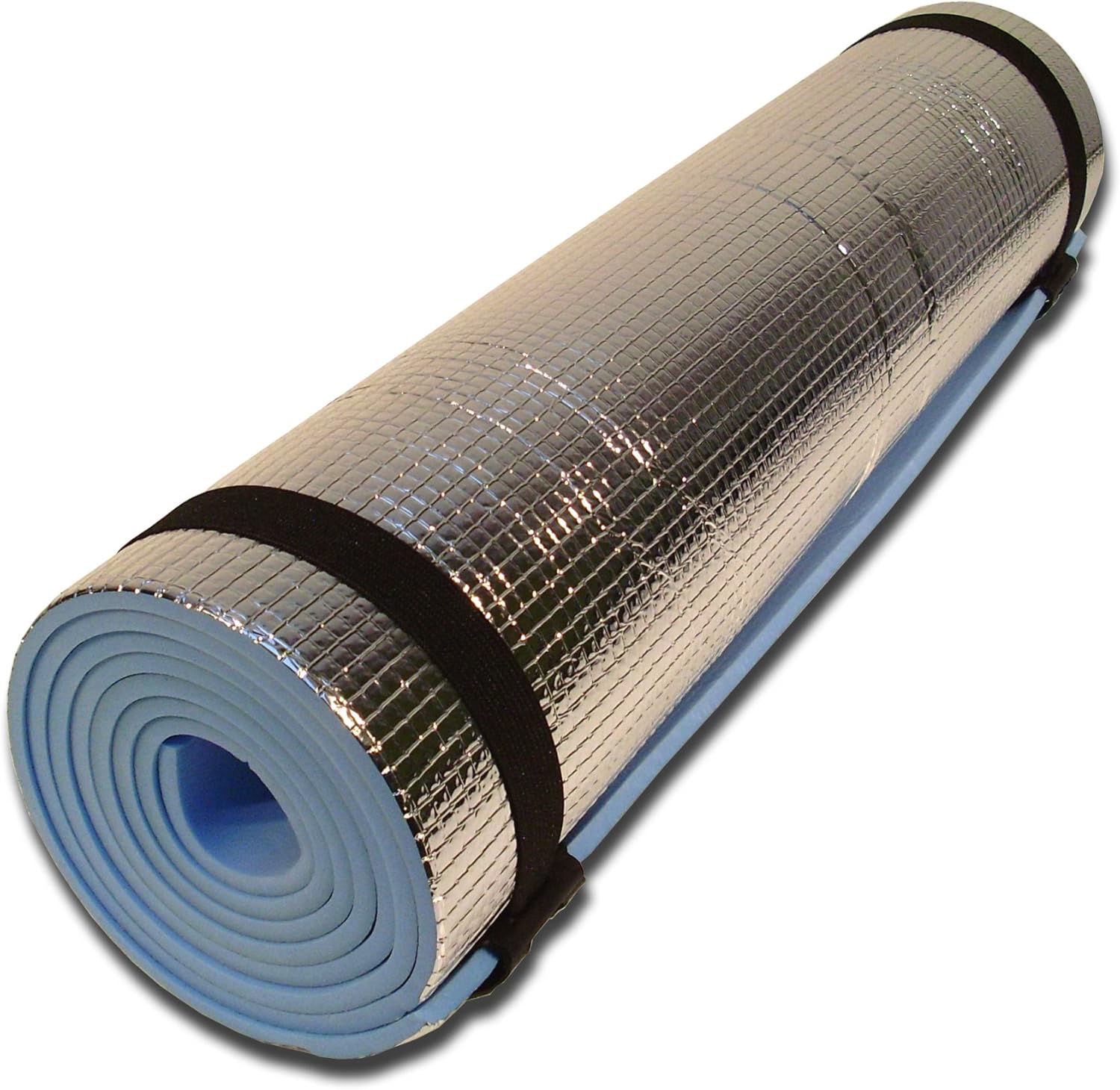
The Yellowstone EVA Camping Mat with Foil is the insulation layer in this stack, and at £6.69 it is almost free relative to what it does. Across more than 2,200 reviews the pattern is consistent: too thin to sleep on alone, excellent as a layer underneath. One camper used it solo at around 7C and stayed warm off the cold ground; another noted the foil backing made a clear difference on colder nights.
Reviewers repeatedly describe pairing it with an airbed or inflatable for extra warmth, and several keep it for scout and DofE winter trips. Buy it for the foil-backed insulation, lay it foil side up, and let your inflatable handle the comfort.
Our budget picks for cold-weather UK camping
Here is how the three pads we have reviewed line up for winter use. Read the foam mat as the warmth layer and the two air pads as the comfort layer that sits on top of it.
| Pad | Price | Type | Thickness | Maker R-value | Best winter role |
|---|---|---|---|---|---|
| Yellowstone EVA Mat with Foil | £6.69 | Closed-cell foam | Thin foam, foil backing | Not stated | Insulation layer underneath |
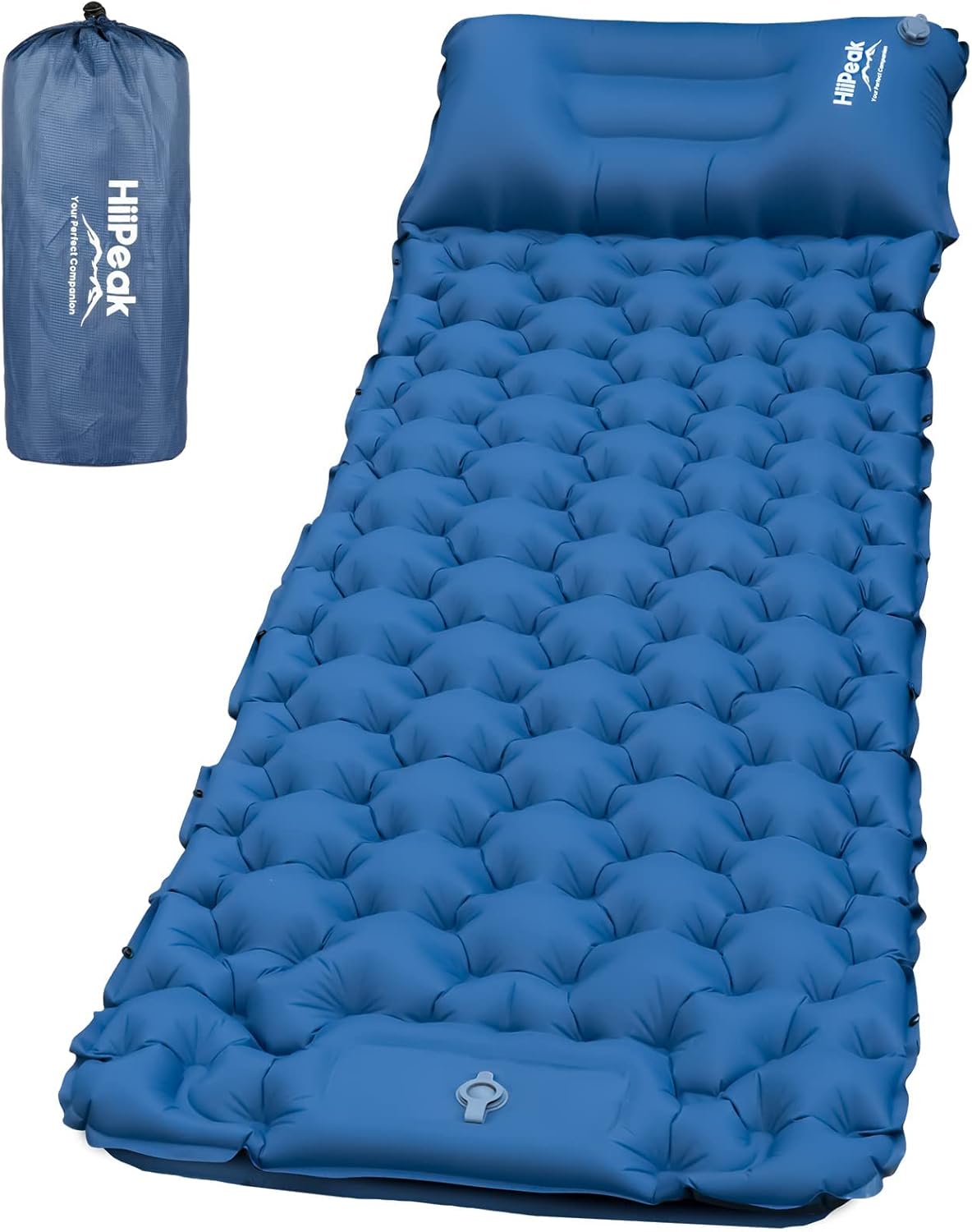
| HiiPeak Sleeping Pad | £23.96 | Inflatable air pad | 8 cm (3 in) | Not stated | Comfort layer on top of foam |
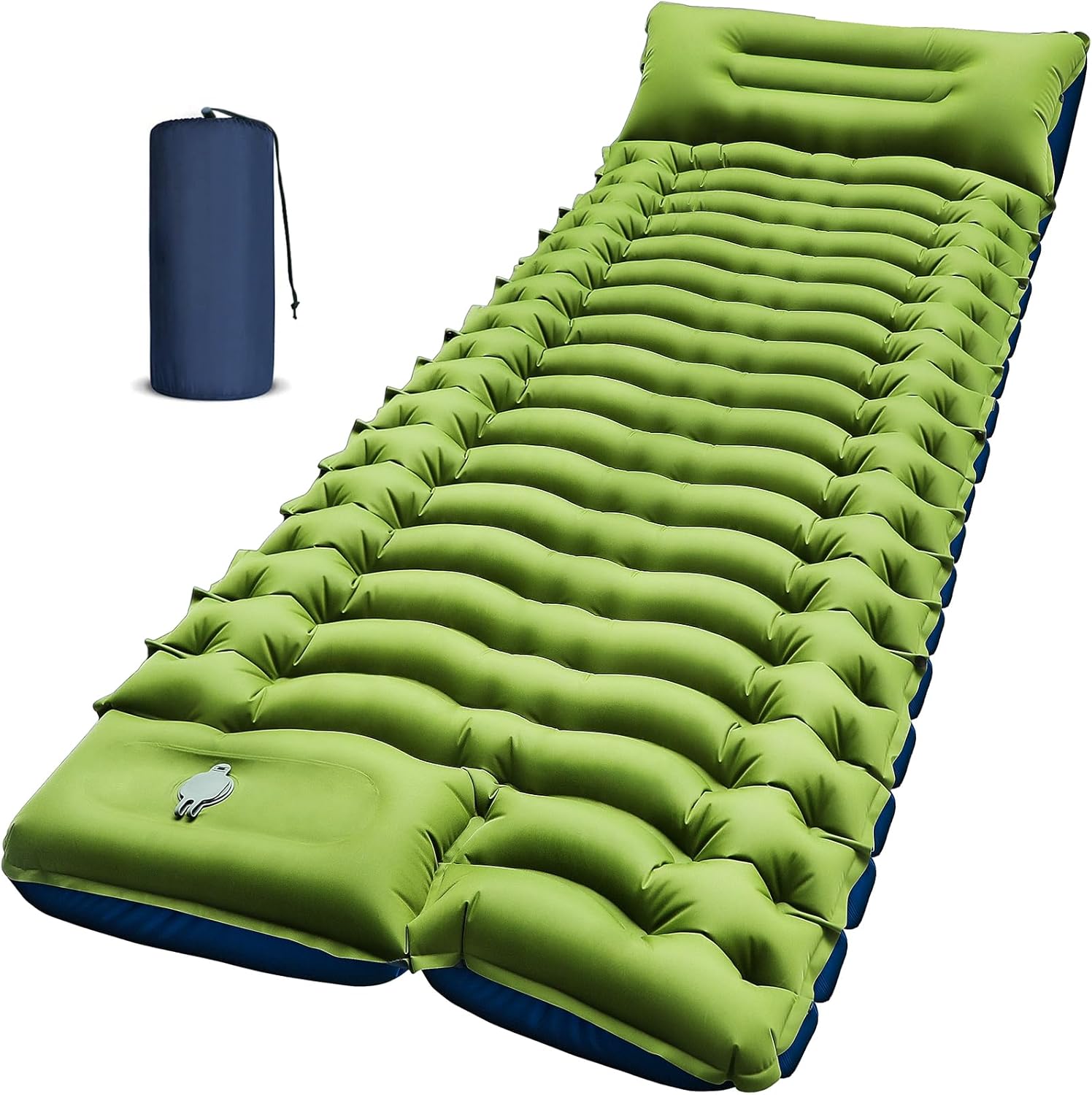
| Yuzonc Sleeping Pad | £23.99 | Inflatable air pad | 15 cm | Not stated | Comfort layer on top of foam |
None of these pads publish an official R-value, which is normal at the budget end of the market. That absence is the single most important thing to understand for winter: it means you cannot assume any of them blocks ground cold on its own, and it is why the foam-under-inflatable stack below does the heavy lifting.
The HiiPeak Sleeping Pad (£23.96, 4.2 stars from over 5,200 reviews) is the comfort half of a winter stack. It is 195 x 65 cm and 8 cm thick, weighs about 930 g, and inflates in a couple of minutes with a built-in foot pump, which matters when your hands are cold. One reviewer slept through a frosty night and woke warm and comfortable on it.
On its own it is an uninsulated air pad, so put the Yellowstone foam mat underneath for cold ground. A handful of reviews report valve or durability issues, so check it holds air at home before you rely on it in the field.
The Yuzonc Camping Sleeping Pad (£23.99, 4.5 stars from around 2,460 reviews) is the most cushioned of the three at a thick 195 x 68 x 15 cm, with egg-shaped air cells, a built-in pillow and a foot pump. Side sleepers and anyone on uneven ground rate it highly for comfort.
It is honest about its limits: one reviewer specifically noted it does little against ground cold and that insulation underneath is worth adding on colder nights. That makes it a strong comfort layer for the foam-under-inflatable stack rather than a standalone winter pad.
Match the pad to your bag and base
A winter pad is only half of staying warm. Heat escapes downward through the pad and upward through your bag, so both have to be right. Get the pad stack sorted first, because no sleeping bag fixes a cold base, then choose a bag rated for the season.
For colder UK nights our warmer-rated pick is the Coolzon sleeping bag, which reviewers have taken through proper cold-weather trips. If you mostly camp in milder shoulder-season conditions, the SWTMERRY 3-4 season bag is a lighter option, though reviewers treat it as closer to a summer bag, so save it for the warmer end of the year.
Common winter pad mistakes
The first mistake is judging a pad by thickness alone. A tall air pad feels luxurious in the shop and cold in a January tent, because comfort and insulation are different things.
The second is laying a foil mat foil side down. The reflective face needs to point up toward your body to bounce heat back, not down into the soil.
The third is skipping the groundsheet or pitching straight onto frozen ground without a foam layer. Even a thick inflatable loses heat fast to cold earth, so the foam mat is not optional in winter; it is the part doing the insulating.
Frequently Asked Questions
What R-value do I need for a sleeping pad in winter camping?
For UK winter camping on frozen or near-frozen ground, aim for a combined R-value of around 4 or higher; a value of 5 or more is safer for snow. R-value measures how well a pad resists heat loss into the ground, and the numbers add up when you stack pads. None of the budget pads we have reviewed publish an official R-value, which is exactly why a foam mat underneath them matters in the cold.
Can you use an inflatable sleeping pad in winter?
Yes, but rarely on its own. An uninsulated air pad like the HiiPeak or Yuzonc is comfortable and keeps you off the ground, yet the air inside it circulates and lets cold seep up. One Yuzonc reviewer noted that on colder nights it makes sense to put insulation underneath. Pair it with a closed-cell foam mat and an inflatable becomes a genuine winter option.
Do I need two sleeping pads for winter camping?
For cold UK nights, two pads is the cheapest reliable fix. A closed-cell foam mat under an inflatable pad blocks ground cold, adds insulation, and protects the air pad from sharp stones. This stacking trick is how a £6.69 foam mat turns a 3-season air pad into something you can trust below freezing.
Is a foam mat warm enough for winter on its own?
A foil-backed foam mat blocks ground cold well but offers almost no cushioning, so most people find it too thin to sleep on alone. Reviewers of the Yellowstone EVA mat use it under an airbed or inflatable for warmth rather than as the only layer. As an insulation layer it earns its place; as a mattress it does not.
Does a thicker sleeping pad mean a warmer one?
Not directly. Thickness adds comfort and keeps you off cold rock, but warmth comes from how well the pad stops heat escaping, not how tall it is. A thick uninsulated air pad can still feel cold underneath. Insulation and a reflective foil layer matter more than raw centimetres.
What is the warmest cheap sleeping pad setup for UK camping?
Lay a foil-backed closed-cell foam mat on the groundsheet, foil side up, then an inflatable pad on top, then your sleeping bag. This layered stack costs under £30 together, blocks ground cold, and adds comfort. It is the same logic we recommend for keeping an airbed warm.