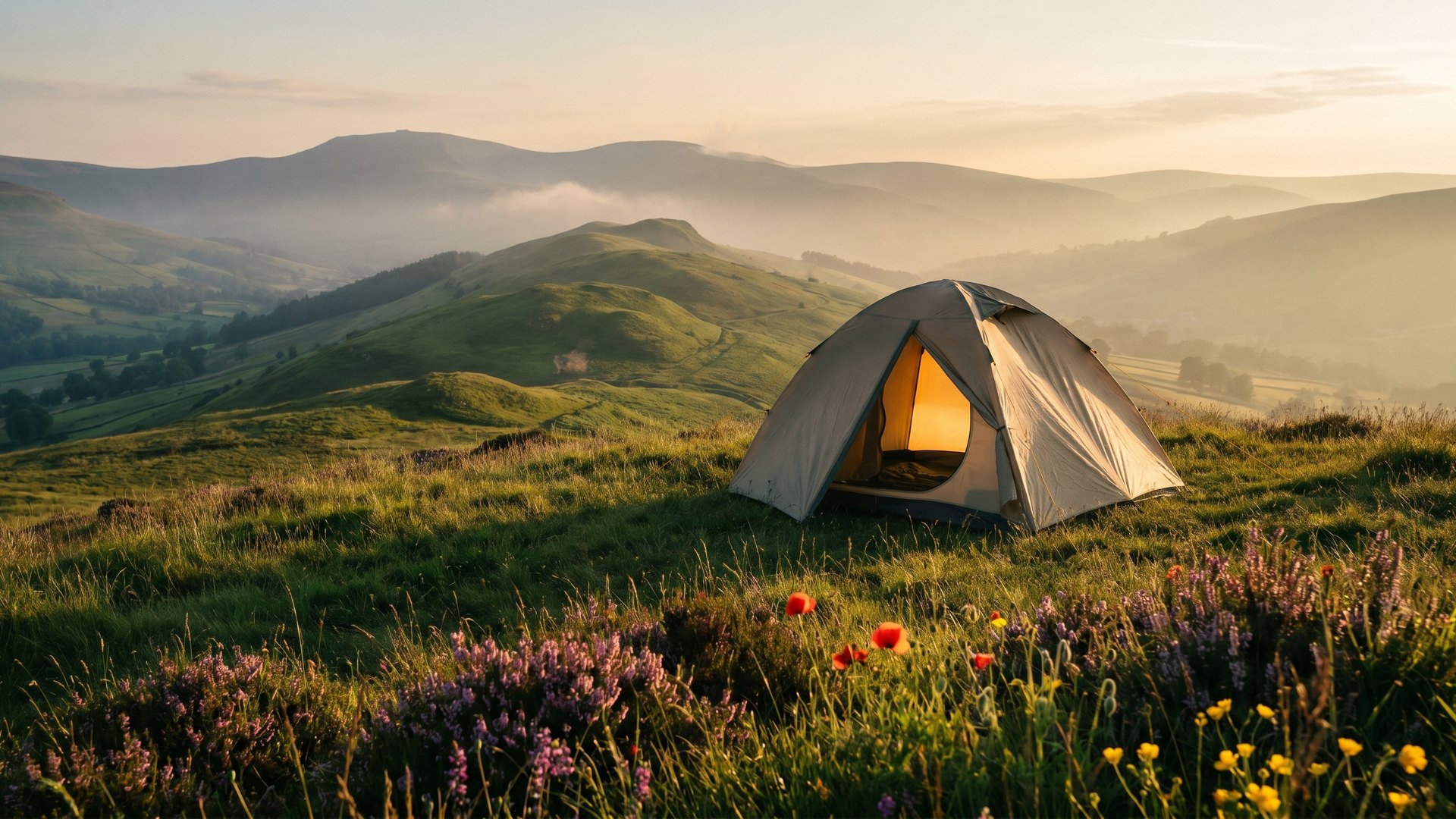
When to start using hand warmers for hiking UK: the numb-finger line and the months that cross it
Fingers do not stop working on a date, they stop at a temperature, and the forecast for the car park will not tell you what it is at the top. Here is the ninety-second check that settles whether the warmers go in the gloves, plus which of the three types suits the day.
We earn commission from qualifying Amazon purchases. It costs you nothing and does not affect what we recommend.
Quick answer
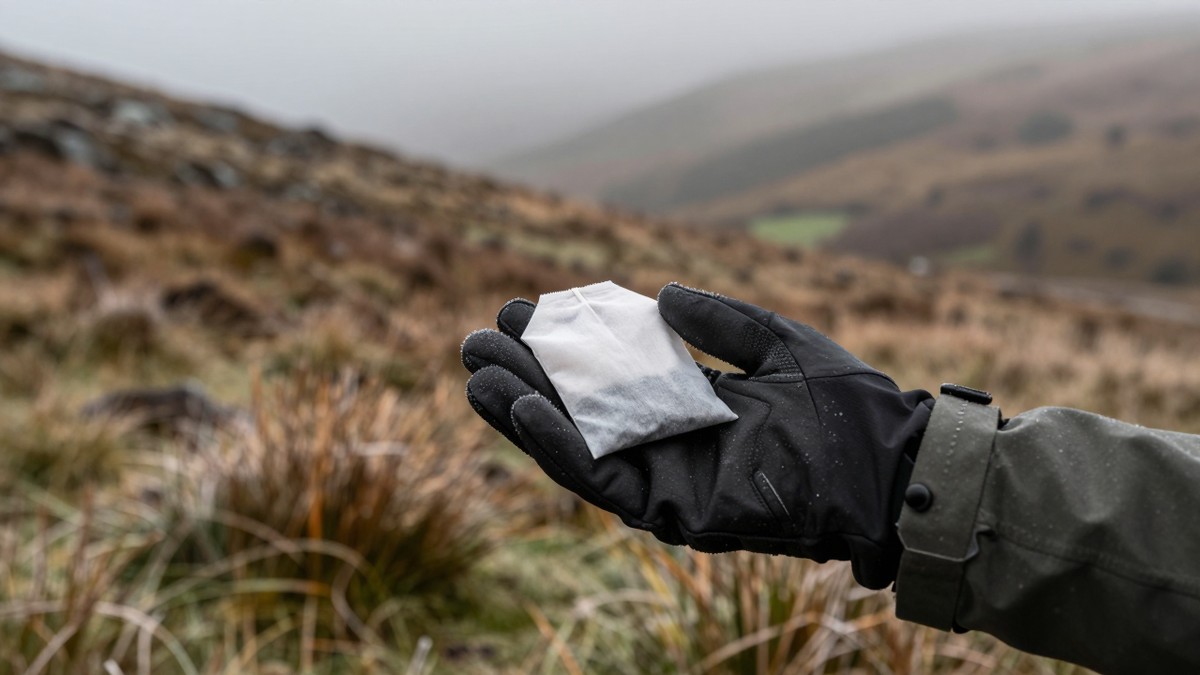
When to start using hand warmers for hiking in the UK: from about mid October on Lake District, Snowdonia and Highland summits, from November on lowland walks, and from the first cool day for anyone with Raynaud's. The signal that overrides every date is a forecast "feels like" temperature of 5°C or below at your high point, or fingers that already fumble a zip in gloves.
The line where fingers stop working
Hands do not fail at a date. They fail at a temperature, and the one that matters is at your skin, which the forecast for the valley car park says almost nothing about. Cold-work research puts the loss of fine finger control at a skin temperature of around 15°C, with fingers going clumsy and then numb as it drops towards 10°C. In a thin glove, in wind, that happens on a hill while the town below sits at 8°C and feels like autumn.
So the calendar frames the answer and three things you can check settle it. Run them the night before and the decision takes ninety seconds.
- Feels like 5°C or below at the top. Use a mountain forecast (the Met Office mountain areas or MWIS), not the one for the nearest town. Air cools by roughly 1°C for every 100 m climbed in dry weather, about half that in cloud, so a 10°C valley is a 2°C summit on an 800 m hill before any wind is counted.
- Wind above about 15 mph. At 5°C, a 15 mph wind brings the feels like figure to freezing and a 30 mph wind takes it below. On a ridge the wind is usually stronger than the forecast, not weaker.
- Wet in the forecast. Rain or wet snow means wet gloves within the hour, and a wet glove loses heat many times faster than a dry one. This is the day a warmer helps least, which is covered below.
Any one of the three on its own is a maybe. Two together and the warmers go in the bag. All three and they go in the gloves at the car.
What your own hands are telling you
The body's signals arrive in order, and the useful one is the first. Fingers that need two goes at a rucksack buckle or a zip pull are at the top of the slope, not the bottom; that is the moment to act. Aching fingertips come next, then the pins and needles of numbness, and by then a warmer takes twenty minutes to bring feeling back rather than five.
Cold hands are also a message about the rest of you. When the core starts to cool, the body narrows blood flow to the extremities to protect it, so hands that go cold while you feel fine elsewhere are the early warning, and a hat, a hood up and an extra layer will do more for them than any pouch. Our guide to staying warm in a tent applies the same logic to the night after the walk.
If you have Raynaud's or poor circulation
For a lot of readers the calendar is simply wrong. Raynaud's narrows the small blood vessels in the fingers in response to cold or stress, turning them white, then blue, then a painful red as blood returns, and an attack can start at temperatures other walkers find merely fresh. The same goes for some people with diabetes or thyroid conditions, and for plenty with no diagnosis who just run cold.
If that is you, the threshold is whatever has triggered an attack before, which for many people is a September morning. Carry warmers from the first cool day of autumn, activate them before the first exposed section, and make the rechargeable type the default because it can be switched on at the first change in colour.
Three kinds of warmer and the day each one suits
The three technologies behave so differently that picking the wrong one for the day is the usual reason people decide hand warmers do not work.
| Type | How it makes heat | Time to warm up | Typical run time | Suits |
|---|---|---|---|---|
| Single-use air-activated | Iron powder oxidises when the pouch meets air | 15 to 30 minutes to full heat | Around 8 to 10 hours, cannot be switched off | Full winter days, spares for the group, emergency kit |
| Rechargeable electric | Lithium battery heating a metal or ceramic plate | Under two minutes | Roughly 2 to 6 hours depending on setting and capacity | Shoulder-season days, Raynaud's, short cold snaps on a long walk |
| Refillable catalytic | Lighter fluid vapour over a platinum catalyst, no flame in use | A few minutes after lighting | Around 12 hours on one fill, burns until the fuel is gone | Long, dry, very cold days |
Run times are the makers' typical figures at full heat inside a pocket. Every one of them shortens in wind, in a wet glove or on the highest setting.
The single-use pouch is light, cannot fail to switch on and is worth carrying as a spare pair for someone else, but it needs half an hour to reach working heat and then runs to the end whether you want it or not. The rechargeable is hot in a minute and can be switched off on the sunny side of the hill and on again for the summit, which is the whole case for it on a changeable day; against that, lithium cells give less in the cold than the box promises. The catalytic warmer gives the most heat for longest, but it smells faintly of fuel, burns skin without its fleece sleeve, cannot easily be turned off once lit, and must never be used inside a sleeping bag or a zipped tent because it consumes oxygen and gives off combustion fumes.
Our pick for most readers is a pair of rechargeables for October to early December and single-use pouches from then on, with two single-use spares in the bottom of the bag all year. We would only reach for a catalytic warmer for a full day above the snowline in dry, still conditions, and never for a wet Welsh one.
September to February on UK hills, month by month
Where you walk moves these dates by a month or more. Highland summits and the tops of the Lake District and Snowdonia run three or four weeks ahead of lowland footpaths, and a cold year runs a fortnight ahead of a mild one. Use the months as a frame and let the ninety-second check make the call.
September
Nothing yet for most people. Lowland afternoons are still mild and even a Highland summit is usually above the line in the middle of the day. Two exceptions: anyone with Raynaud's should have a rechargeable in a pocket from the first cool, windy day, and a dawn start on a high ridge in the last week of the month can already be a feels like 3°C job. It is also the month to charge last winter's rechargeables and bin any pouches that have gone hard in the packet.
October
The month the hills cross the line and the lowlands do not. On Scafell Pike, Snowdon or the Cairngorm plateau, a windy day from mid October onwards routinely reads feels like zero on the mountain forecast, and cloud means wet gloves. Put warmers in the rucksack for every hill day and expect to use them from the middle of the month.
The clocks go back on Sunday 25 October, and the change matters to hands as much as eyes. The last hour of a walk now lands at dusk, the temperature falls fast once the sun is off the slope, and the finish becomes the cold, tired, fumbling part of the day. Our guide to when to start carrying a head torch has the sunset tables; the same finish-time check tells you when the warmers go in.
November
Peak demand for hand warmers in the UK, and for a reason: this is when lowland walks cross the line. Ground frost in the mornings, days that feel like 3°C by mid afternoon, wet leaves and wet gloves. A single-use pair activated at the start of a full hill day now makes sense, and the rechargeable covers the lowland Sunday. The first proper cold snap usually arrives in the last ten days of the month.
December
Under eight hours of daylight in the south at midwinter and under seven in the Highlands, so more of every walk happens in the coldest part of the day. Summits are regularly below freezing before wind chill, so the single-use pouch becomes the default, activated at the car and kept in the glove, and the rechargeable becomes the spare that lives inside your jacket rather than an outer pocket.
January
Usually the coldest month of the walking year and the likeliest for snow above 600 m. Plan for two pairs on a long day, one activated at the start and one at the halfway point, because a pouch that has spent four hours in a damp glove is not what it was. This is where catalytic warmers earn their place on dry, still days, and where toe warmers stop being a luxury.
February
The light is coming back and the temperature is not. February holds many of the UK's coldest hill days and the sun still leaves north-facing slopes by mid afternoon. Keep everything in the bag until the check says otherwise on two consecutive walks, which for lowland routes means March and for high ground means April or later.
Getting the heat where it is needed
- Decide at home, not on the summit. Run the ninety-second check the night before: feels like at the top, wind, wet. Charge rechargeables to full and pack single-use pouches somewhere reachable without emptying the bag. Our guide to packing a rucksack puts them in the lid pocket for exactly this reason.
- Activate before the fingers go, not after. A single-use pouch opened at the car is at working heat by the first steep section. Opened on a windy col with numb fingers, it is a cold lump for the next twenty minutes and you will struggle to tear the wrapper. Shake it for a few seconds, then put it straight in a pocket to warm up.
- Put it on the back of the hand, over a liner. Inside the glove is warmer than any pocket, and a thin liner glove between skin and pouch removes the burn risk from hours of contact. The back of the hand is where most people can tolerate it while using their fingers; the palm is warmer but gets in the way of a pole.
- Wrist and pocket are the second-best options. A warmer tucked under the cuff over the inside of the wrist warms blood on its way into the hand and is easier to live with in mittens. A jacket pocket is where hands go to recover between exposed sections.
- Feet get the toe version, on top of the toes. A hand warmer stuffed into a boot is starved of air and goes cool, and it makes a lump under the foot. Toe warmers are made for the lower oxygen inside a boot and stick to the sock above the toes, not below. Dry feet matter more than heat: on a wet day, waterproof socks and gaiters keep the sock the warmer is stuck to from soaking through.
- Swap gloves before they are soaked. Carry a dry spare pair in a waterproof bag. The moment the first pair is wet through, change, move the warmer across, and bag the wet pair. A warmer in a sodden glove is heating water that then evaporates and takes the heat with it.
- Pause or dispose properly. A single-use pouch not needed for a while can be sealed in a small zip bag, which starves it of air and pauses it for the next stop. Spent pouches go in general waste, not recycling. Rechargeables are electrical waste at the end of their life and go to a battery recycling point, never a bin.
Why a warmer disappoints, and the fixes
Opened too late. The most common failure. By the time hands hurt, a single-use pouch is thirty minutes from helping. Recovery: put the pouch in an inside pocket to speed it up, put the cold hands in your armpits under the layers for five minutes, and get moving uphill to raise the core.
Sealed away from air. A pouch pushed into a tight glove finger, a zipped chest pocket or the bottom of a boot goes lukewarm because it has used up the oxygen around it. Recovery: take it out, shake it in the open air, and give it somewhere with a little airflow.
Wet gloves, hot warmer, cold hands. The warmer is working and it makes no difference, because water is pulling heat out of the skin faster than a few watts can put it back. Recovery: dry gloves first, then the warmer. A pouch will not dry a glove; it only warms a wet one for a while.
A burn from direct contact. Single-use pouches and rechargeables on their top setting can cause a low-temperature burn over hours of contact, and a catalytic warmer without its sleeve will do it in minutes. Most at risk are people with reduced sensation in the hands, which includes anyone whose fingers are already numb. Recovery: cool the area under running water for twenty minutes, cover it loosely, and see a pharmacist or GP if it blisters. Prevention: a liner glove or sock between skin and heat, always.
The rechargeable that died. It showed full at home and switched off on the ridge, because lithium cells deliver less in the cold and an outer pocket at freezing is a bad place for one. Recovery: warm it inside your jacket for fifteen minutes and try again, and carry a single-use pair as the backup on any day the check says warmers.
Cold hands that are not really about the hands. If hands go white and painful at temperatures other walkers shrug at, that is worth a conversation with a GP about Raynaud's rather than a bigger warmer. And if somebody in the group has stopped shivering, gone quiet, clumsy and cold to the core, hand warmers are the wrong tool: get them into shelter, dry layers and an emergency foil blanket, give warm sweet food or drink if they can swallow safely, and call for help.
Frequently asked questions
What temperature should you start using hand warmers for hiking?
A feels like temperature of 5°C or below at your high point is the working line for most people in ordinary gloves. That is where fingers begin to lose fine control after an hour or so of exposure, and where a warmer moves from nice to necessary. People with Raynaud's or poor circulation should use whatever temperature has set them off before, which is often well above 5°C.
How long do hand warmers take to heat up?
Single-use air-activated pouches take 15 to 30 minutes to reach full heat and warm faster if shaken and kept in a pocket. Rechargeable warmers are hot in under two minutes. Catalytic warmers give heat within a few minutes of being lit and blown out.
Can you reuse a single-use hand warmer?
Not once it has run its course, but you can pause one. Sealing an active pouch in a small airtight bag starves it of oxygen and slows the reaction almost to a stop, and it restarts when opened again. This works well for a warmer opened at the car and not needed until the summit.
Are hand warmers safe to hold against bare skin?
No, not for long. All three types can cause a low-temperature burn over prolonged contact, and catalytic warmers can do it quickly. Keep a liner glove, a sock or the supplied sleeve between skin and warmer, and be especially careful if your fingers are already numb, because you will not feel it happening.
Which type of hand warmer is best for hiking in the UK?
A pair of rechargeables for the shoulder months and single-use pouches for full winter days, with two single-use spares in the bag all year. Rechargeables win on control, switching on in a minute and off in the sun; single-use pouches win on run time and on never failing to start. Catalytic warmers make sense for long, dry, very cold days and little else.